
Livraison le jour même ou le lendemain

Qualité garantie

Débloquez vos offres de bienvenue: Livraison GRATUITE | Jusqu'à -80 % | 30 jours d'essai gratuits à JoyPlus
Téléchargez l'application
The world of DJI drones is vast and fascinating, but it can quickly become a real headache. Between the different series (Mini, Air, Mavic, Avata), endless spec sheets, and accessory bundles, it's easy to feel lost or, worse, make the wrong choice. This guide is here to help you see things more clearly, decoding the marketing jargon to focus on what really matters.
Before you start, watch out for these three common and potentially costly pitfalls?:
To make the right choice, three criteria must be examined closely. These are the factors that will truly shape your experience with your future DJI drone.
This is the essential starting point. Regulations are defined by classes, which are primarily based on weight.
Ignoring this classification can expose you to fines and serious complications. Always check the drone's class before purchasing.
Almost all recent DJI drones shoot in 4K, but not all 4K cameras are created equal. The real differentiating factor is the sensor size.
If image quality is your absolute priority for semi-professional or creative work, investing in a model with a larger sensor makes perfect sense.
The flight time advertised by the manufacturer (e.g., 38 minutes) is always measured under ideal conditions. In real-world use, realistically expect about 70-80% of that value due to wind, temperature, and your flying style. This is why Fly More Combo bundles, with their 2 or 3 batteries, are so often recommended?: they prevent the frustration of having to pack up your drone after just 20 minutes.
Also, consider intelligent flight modes like the follow-me mode (ActiveTrack) or QuickShots (automated camera movements)?: they radically simplify capturing complex shots, even for a novice.
To help you visualise which drone suits which need, here are a few suggestions based on different user profiles.
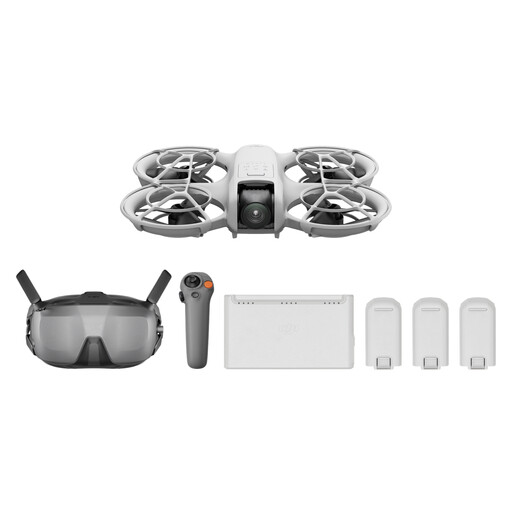
Why we chose it : This drone was designed for absolute ease of use. With its 135 g weight, palm-of-your-hand takeoff, and integrated propeller guards, it's perfect for capturing family moments or making your first flights with complete peace of mind, even indoors.
Its weight places it in the C0 class, simplifying the legal requirements. Its automatic functions (tracking, QuickShots) let you create superb videos with no piloting skills, saving you from paying for complex and unnecessary features.
Instant, out-of-the-box usability and safety. Its full propeller guards and gesture or smartphone control make it incredibly accessible.
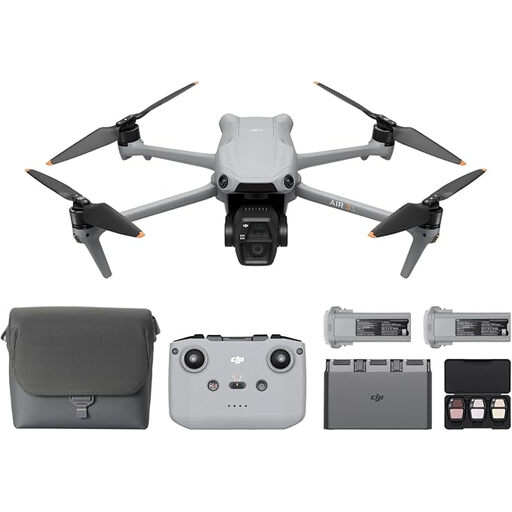
Why we chose it : This is the perfect balance between the portability of a mini-drone and the image quality of a pro model. Its large 1-inch CMOS sensor allows it to excel at capturing detailed landscapes and HDR video, even in low-light conditions.
It offers image quality that surpasses entry-level drones, justifying its price for image enthusiasts without reaching the budget of professional equipment. The Fly More bundle is almost essential here for long shooting sessions while travelling.
Stunning low-light image quality (thanks to the 1-inch sensor) and enhanced flight safety with 360° obstacle detection.
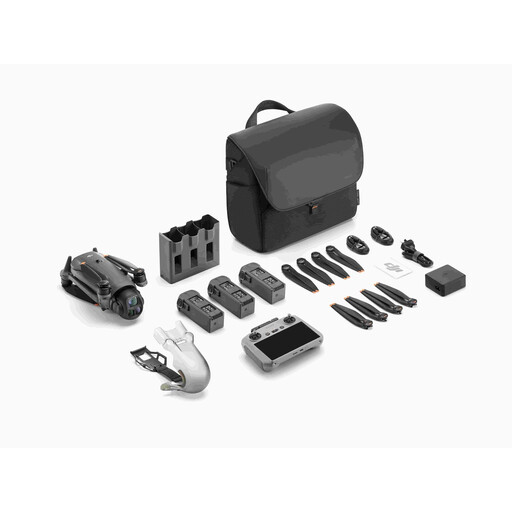
Why we chose it : This is the ultimate aerial production tool. Its triple-camera system, including a main Hasselblad camera with a 4/3 sensor, offers uncompromising flexibility and image quality for commercial projects, fine art photography, or high-end videography.
This device is a considered investment. It is not for beginners, but for professionals who can monetise its extraordinary capabilities. Its price is justified by performance that meets specific production requirements.
Versatility and cutting-edge image quality thanks to the triple-camera system and the main 4/3 Hasselblad sensor.
And for the thrill-seekers? The DJI Avata series offers a truly unique immersive flight experience (FPV drone), thanks to its headset and motion controller.
Discover our full selection of drones that meet these criteria and comply with local regulations.
Absolutely. Civil liability insurance is mandatory in many regions, including the EU, to cover any damage your drone might cause to third parties (people or property). Most home insurance policies include this coverage for recreational models, but it is crucial to verify this with your insurer, as not all policies are the same.
A DJI Intelligent Flight Battery is designed to handle several hundred charge cycles. To maximise its lifespan, follow a few golden rules?: avoid draining it completely (below 15-20?%), never store it fully charged for weeks (the auto-discharge feature is your best friend), and let it cool down after a flight before recharging.
Some entry-level models, like the DJI Neo, are indeed designed to be flown using only a smartphone app. This is convenient for occasional use. However, a dedicated remote controller (like the DJI RC) offers far superior transmission range, much better command responsiveness, and ultimately, a more precise and safer flight experience, especially outdoors. It's an almost indispensable accessory.