
Livraison le jour même ou le lendemain

Qualité garantie

Débloquez vos offres de bienvenue: Livraison GRATUITE | Jusqu'à -80 % | 30 jours d'essai gratuits à JoyPlus
Téléchargez l'application
The world of DJI drones is so vast that it's easy to get lost. Between the Mini, Air, and Mavic series, each model is designed to meet very specific needs. Whether you're a budding pilot looking to capture your holidays or a seasoned videographer searching for the perfect tool, the choice can quickly become a daunting task. This guide is here to break down the brand's flagship models and help you find the DJI drone that truly fits your style and budget.
Before diving into the spec sheet for each model, a few key criteria deserve your attention. They will help you make an informed decision that aligns with your needs and current regulations.
In the European Union, legislation is much more lenient for recreational drones weighing less than 250 grams. A drone under 250g (classified as C0) generally exempts you from complex training and tedious registration for recreational use. This is a decisive advantage for beginners and anyone who prioritizes simplicity and portability. Above this weight, models in the C1 class and higher require you to familiarise yourself with EASA rules and register on your national aviation authority's platform (like AlphaTango in France).
Today, 4K has become the standard for capturing detailed and impactful videos. But be aware that resolution isn't everything. Sensor size is an equally crucial criterion: a large sensor (like a 1-inch or 4/3-type) captures more light, which ensures better dynamic range and superior low-light performance. This is essential for demanding aerial photography and videography.
Flight time is the name of the game. A long-range drone gives you more freedom to perfect your shots and explore without stress. This is precisely where the Fly More Combo makes perfect sense. Offered for most DJI models, it includes extra batteries, a multi-battery charging hub, spare propellers, and a carrying bag. The investment is almost always more cost-effective than buying these accessories separately.
To give you a clear idea, here are three models that perfectly illustrate the philosophy of each DJI series, from the most accessible to the most advanced.
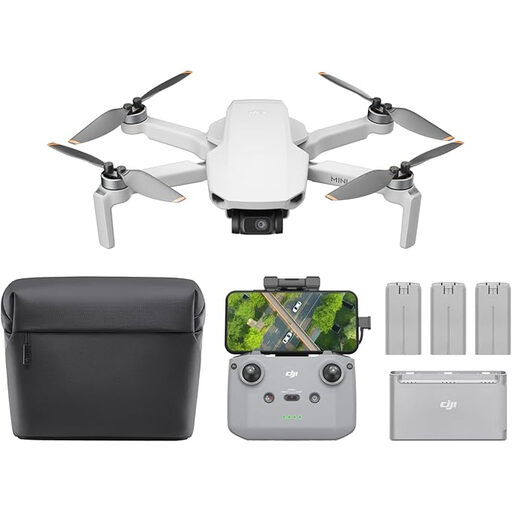
Why it stands out: The DJI Mini 4K is the ideal entry point into the world of aerial imaging. Its key advantage: a feather-light weight under the 250-gram threshold, which places it in the simplest regulatory category. Yet, it makes no compromises on quality, offering excellent 4K video.
Key Features:
Who is it for? This is the quintessential beginner drone. It's perfect for those who want high-quality images without the hassle of regulatory constraints. It's ideal for travel, family memories, or for content creators taking their first steps on social media.
View the DJI Mini 4K Fly More Bundle
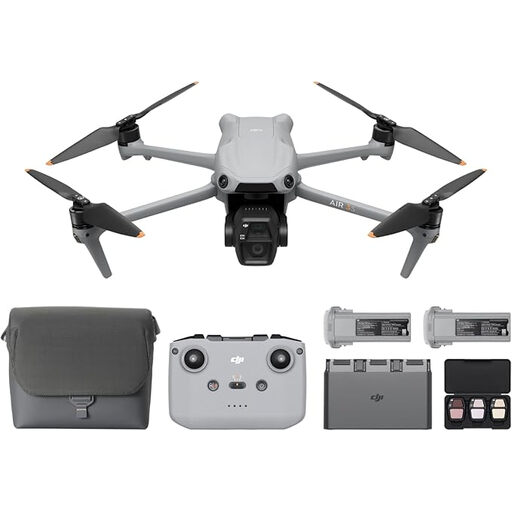
Why it stands out: The DJI Air 3S strikes the perfect balance between the portability of the Mini series and the power of the Mavic line. It distinguishes itself with its dual-camera system, which combines an excellent 1-inch CMOS main sensor with a telephoto lens, vastly expanding creative possibilities. Its omnidirectional obstacle sensors ensure rock-solid flight safety.
Key Features:
Who is it for? It's aimed at content creators and discerning amateur photographers looking for more versatility. The ability to switch between wide-angle and telephoto opens up a vast creative field for aerial photography and visual storytelling.
View the DJI Air 3S Fly More Combo
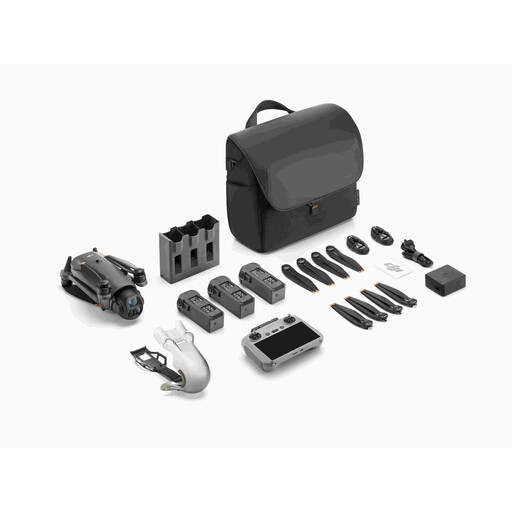
Why it stands out: The DJI Mavic 4 Pro is the ultimate, no-compromise aerial production tool. Its triple-camera system, built around a 4/3 Hasselblad main sensor, delivers stratospheric image quality and unparalleled flexibility. This is the professional drone built for the most ambitious projects.
Key Features:
Who is it for? This drone is for videographers, photographers, and production agencies who demand impeccable image quality. Its versatility and performance make it the tool of choice for cinema, advertising, and even technical inspections.
View the DJI Mavic 4 Pro Fly More Bundle
Of course, this selection is just a glimpse of the possibilities. Your project may have very specific requirements, and other models might better match your needs, whether in terms of budget or features.
Feel free to explore our complete collection of drones with cameras to discover all our models and accessories.
Regulations primarily depend on the drone's weight. For a drone under 250g (C0 class) like the DJI Mini 4K, the rules for use are very lenient. For heavier aircraft (C1, C2 classes, etc.), like the Air 3S or Mavic 4 Pro, you will need to register as an operator on your national aviation authority's portal (e.g., AlphaTango in France) and complete an online training course. In any case, it's a good habit to always check the latest guidelines from the EASA and your local civil aviation authority before taking off.
Yes, absolutely! In the vast majority of cases, the Fly More Combo offers unbeatable value for money. Buying two extra batteries, a charging hub, and a carrying bag separately would cost you much more. For anyone planning to fly for more than 20-30 minutes per session, it's an accessory that quickly becomes essential.
For getting started in 2026, the DJI Mini 4K remains the top choice. It combines the best of both worlds: regulatory simplicity (thanks to its light weight!), intuitive handling, and excellent 4K image quality. It's the perfect tool to learn the ropes of aerial photography without breaking the bank or getting bogged down in complexity.