
Same-day & Next-day Delivery

Quality Guaranteed

Unlock Your Welcome Offers: FREE Delivery | Up to 80% OFF | Free 30-day JoyPlus trial
Download the APP
Planning DIY wedding decor lets you personalise your invitations, table settings and reception space while keeping a firm grip on costs. However, some purchases can turn out to be a waste: wrong dimensions, tricky materials to work with, or accessories too fragile to reuse.
Before you fill your basket, take a moment to check three points that are often overlooked:
The goal isn’t to stockpile accessories, but to choose items that are coherent, reusable and suited to the way you create.
For artificial rose petals, check the composition and care instructions. Polyester satin petals are soft, easy to scatter and can be gathered up again after the reception. Just avoid placing them near a flame or on a smooth floor, where they could cause your guests to slip.
For a wooden wedding guestbook, check whether it comes with a frame, how many pieces are included, and how much space there is for messages. The exact dimensions also matter if you plan to add a box, a display stand or signage nearby.
Metal scrapbooking punches and floral cutting dies aren’t necessarily compatible with every machine. Before you order, check:
A die designed for card making can also be used to create menus, place cards or labels, as long as you choose the right paper weight and do a few test runs first.
For a reception, count the number of tables, chairs and invitations before placing your order. Petals are usually scattered, arranged in baskets or used as small accents on tables. Cutting accessories, on the other hand, can be reused for many projects: wedding invitations, photo albums, thank-you cards or birthday decorations.
Store fabric items in a box away from damp, and keep metal dies flat. Simple organisation cuts down on losses and makes it easier to reuse everything after the wedding.
The options below suit different needs. The features listed are taken from the product descriptions available; always check the dimensions and details shown at the time of ordering.
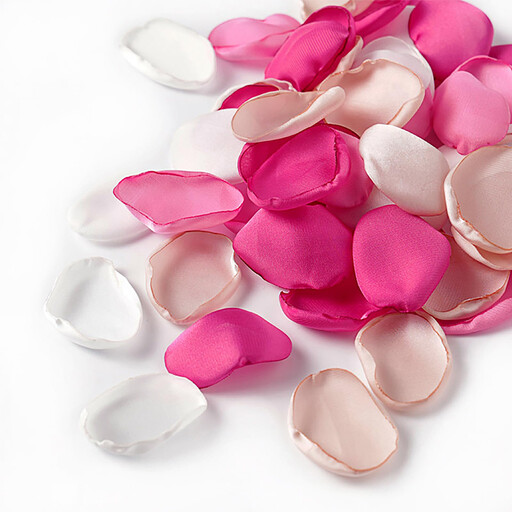
Why this suits this profile: This pack of 200 petals is ideal for couples who want to create an atmosphere quickly, without a cutting machine or any special skills. Their average diameter of around 3.8 cm means you can scatter them on a table, down an aisle or in a basket.
The stated quantity reduces the risk of running out of decoration for a few tables. The fabric is also less fragile than paper, but do be careful on smooth floors and near heat sources.
Pack of 200 pieces in 100% polyester satin, described as reusable and tear-resistant.
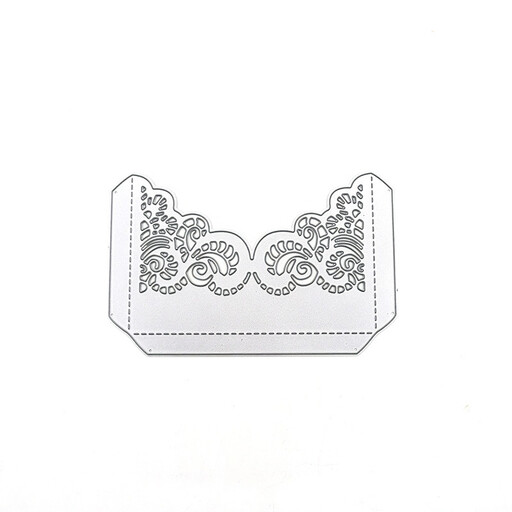
Why this suits this profile: Creators looking for a polished finish on their invitations can use these floral border and lace motifs on different paper types.
The reusable patterns mean you don’t have to buy several single-use designs. Still, do a test run to check the result and compatibility with your tool.
Metal dies designed for scrapbooking, card making and creating decorative borders.
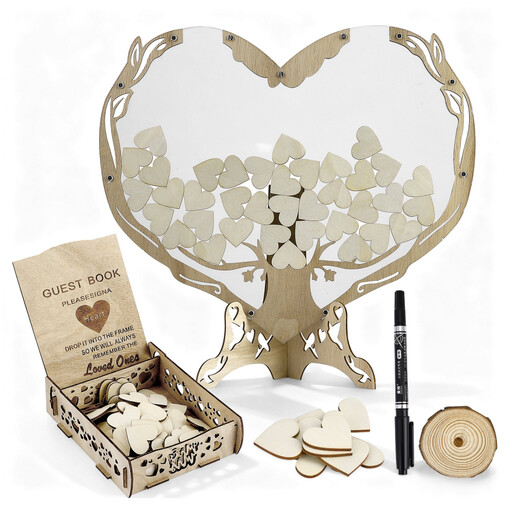
Why this suits this profile: This format is aimed at couples, organisers and reception venues who want to offer a message activity that’s different from the traditional guestbook.
The 100 hearts stated let you tailor the activity to the number of guests. Check the dimensions and make sure you have pens suitable for the wood surface.
Heart-shaped frame and 100 wooden pieces designed to collect guests’ messages.
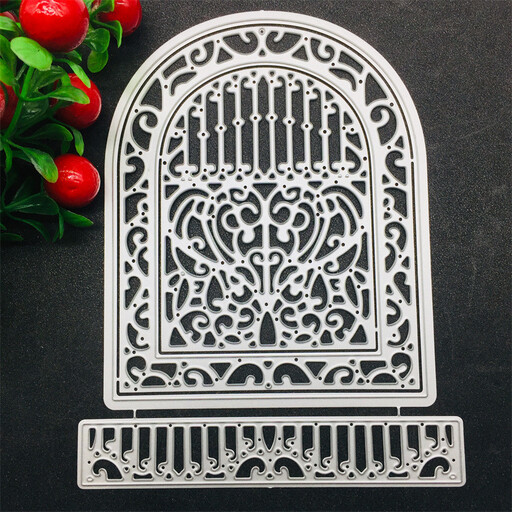
Why this suits this profile: This die is ideal for anyone who wants to create openings, floral frames and invitation covers without buying lots of different supplies.
A versatile pattern can be used for invitations, albums and thank-you cards. However, do check the size before starting a large batch.
Floral frame and lace pattern designed for card making, scrapbooking and paper decorations.
Start by defining a colour palette, then limit yourself to two or three types of creative wedding accessories. Lace borders could, for example, echo the pattern on your menus, while the petals tie in with the flowers in the room.
For invitations, make a prototype before you start full production: check the readability, the folding and the space reserved for any required information. For the table, arrange the items on a surface similar to the one at your reception venue, so you can better judge how much space they’ll take up.
Begin with a simple project: fabric petals, place cards or cards with a cut-out border. Test the materials on a few samples before buying in bulk. A list organised by area — ceremony, tables, guestbook and invitations — will help you avoid buying duplicates.
It all depends on the number of guests and how much personalisation you want. Cutting dies take some time to set up, but then production becomes much smoother. Allow a margin for testing, wasted sheets and assembly.
Satin petals and metal dies can be stored away for other parties or creative projects, depending on their condition after use. The guestbook frame can also be kept as a keepsake. Clean and store each item away from damp, following the safety warnings on the product page.