
Livraison le jour même ou le lendemain

Qualité garantie

Débloquez vos offres de bienvenue: Livraison GRATUITE | Jusqu'à -80 % | 30 jours d'essai gratuits à JoyPlus
Téléchargez l'application
Buying DIY tools can quickly turn into a disappointment if you rely solely on the advertised power or the number of accessories included. Whether you're renovating a home, working with wood, cutting PVC or carrying out precise finishing work, certain technical details matter far more than marketing promises.
A tool that boasts a high number of revolutions per minute isn't necessarily the best choice for delicate tasks. For engraving, polishing or sanding small pieces, what you really need is the ability to adjust the speed and maintain a good grip. A single fixed speed can leave marks, cause overheating or make the tool difficult to control.
DIY accessories aren't all interchangeable. Before placing an order, check the shaft diameter, the fixing system and the material being worked on. A cordless rotary tool designed for 2.3 mm or 3/32 inch accessories won't necessarily accept bits of a different size.
With power tools, the battery and charger are sometimes sold separately. This is particularly the case with certain cordless circular saws. Also remember to check the exact contents of the kit, the availability of replacement blades and the maintenance recommendations. The price shown doesn't always reflect the budget needed to use the tool straight away.
For an engraving and sanding tool, five speed levels or more allow you to adapt the work to the material and the accessory fitted. A lower speed is generally suitable for precision tasks, while a higher speed can speed up certain sanding or polishing jobs. A battery indicator, a USB-C port or fast charging also make the tool more practical for everyday use.
If you're planning extended sessions, pay close attention to the stated battery life, charging time and the possibility of adding a second battery. A brushless motor can contribute to better energy management, depending on the tool's design. In practice, performance varies mainly according to the pressure applied, the material and the accessory used.
For a 165 mm circular saw, the blade diameter gives you an initial indication of cutting capacity, but it's not enough on its own. Also check the maximum depth at 90°, the bevel cutting capacity and the blade arbour diameter.
A 24 V cordless circular saw can be suitable for joinery, furniture making or light renovation work, provided you have the compatible battery. A parallel guide, a stable base plate, a cut-line light and a dust extraction outlet make repetitive cuts easier and improve comfort during use.
For miter shears, the angle range and blade quality are two essential criteria. A scale engraved from 45° to 135° helps you produce consistent cuts on beading, joints, mouldings or flexible profiles. For cutting PVC and plastic, make sure the tool is designed for soft materials and that the blade can be replaced.
These shears cannot replace a saw for thick or rigid pieces. They are primarily intended for small, clean cuts and finishing adjustments.
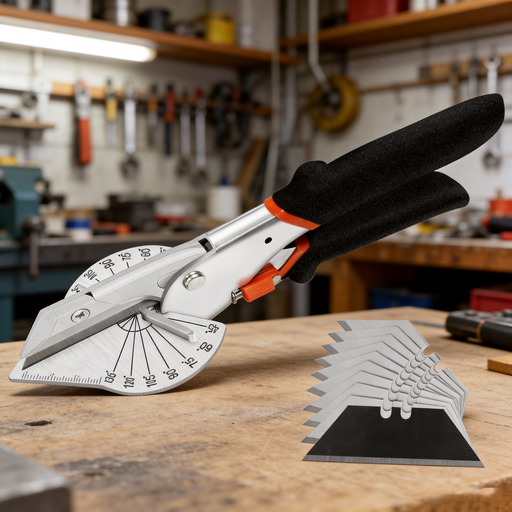
Why this choice suits this profile: This manual tool requires neither battery nor charger. It's ideal for small adjustment jobs, fitting mouldings and cutting soft materials in a flat or home workshop.
The adjustable angle range from 45° to 135° and the engraved scale mean you don't have to rely on guesswork. The 10 replacement blades also save you from an extra purchase after the first few uses.
Replaceable SK5 steel blades, aluminium alloy handle with non-slip coating and a rotating safety lock.
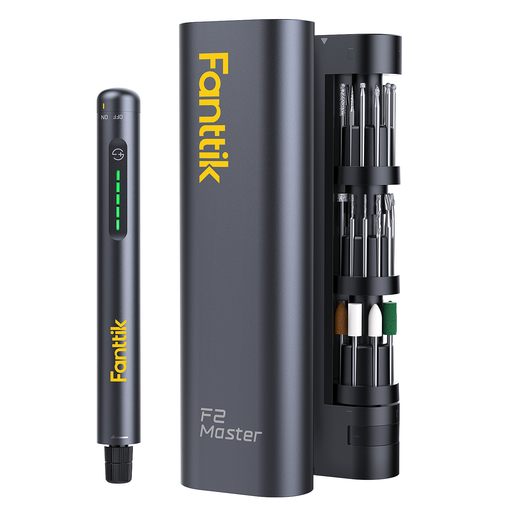
Why this choice suits this profile: Its compact design is aimed at users who tackle a series of precision tasks: engraving, polishing, light drilling, sanding 3D-printed parts or creative hobbies.
The five adjustable speeds reduce the risk of applying too much rotation on a small piece. The kit includes 35 accessories of 2.3 mm, stored in a rotating magnetic holder.
Stated weight of 100 g, stated maximum speed of 25,000 rpm, LED light and USB-C charging stated at 60 minutes.
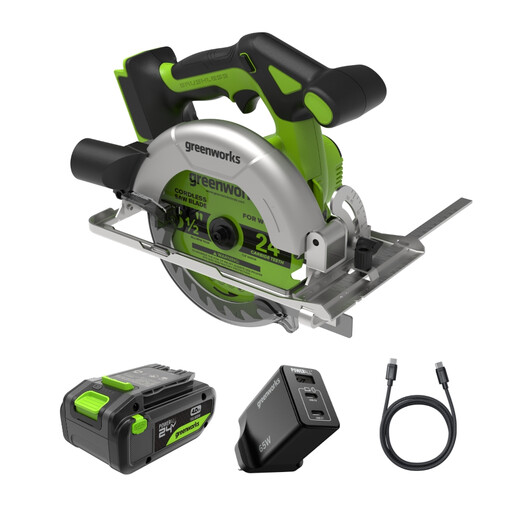
Why this choice suits this profile: This saw is suitable for woodworking, furniture making, cutting panels and certain renovation projects that require straight or angled cuts.
The specification states a maximum cutting depth of 57 mm at 90°, an inclination adjustment from 0° to 45° and a guide for repetitive cuts. The battery and charger are not included.
Brushless motor, 165 mm carbide blade with 24 teeth, stated no-load speed of 5,000 rpm, LED light and a connection for a 35 mm vacuum hose.
We've put together a comprehensive, real-time selection of products that meet these selection criteria and European safety requirements.
Miter shears can be enough for small cuts of PVC, joints, beading or soft wood. For more varied tasks, a multi-function mini tool with adjustable speed offers more possibilities. Just make sure you choose accessories compatible with the intended diameter.
A brushless saw uses a motor without brushes. Its specification may claim longer battery life or a higher cutting speed, but these figures depend on the conditions of use. To compare two models, also look at the cutting depth, blade diameter, bevel angle, required battery and safety features.
Choose a device whose consumables are available separately: blades, discs, bits or sanding pads. Also check whether the battery is compatible with your existing tool collection. A kit supplied with several accessories can reduce the initial outlay, while a replaceable blade extends the tool's lifespan.