
Livraison le jour même ou le lendemain

Qualité garantie

Débloquez vos offres de bienvenue: Livraison GRATUITE | Jusqu'à -80 % | 30 jours d'essai gratuits à JoyPlus
Téléchargez l'application
Renovating a room, putting up a shelf, building a partition or securing a work zone isn't just about piling tools into a box. DIY and repair tools need to be suited to the surface, how often you'll use them and the level of precision you're after. A poor choice can speed up wear and tear, compromise the quality of your finish and leave you having to buy replacements.
A spanner marketed as universal won't necessarily replace a full set of spanners. Similarly, a repair tape might be handy for a temporary fix, but it should never be used as electrical insulation unless the manufacturer explicitly states it's suitable.
Versatility is useful, but only if you check the compatible dimensions, the surfaces it can be used on and the usage limits.
A drill stand that's too narrow, a wall tool holder that can't support the weight or a wall sander without a long enough extension lead could become unusable the moment you start work. Before ordering, make sure you check:
A moisture-resistant warning tape is no substitute for physical protection. A repair tape can hold, bundle or reinforce certain items, but it doesn't count as a structural repair unless the manufacturer specifically says so.
On a building site in France, mark out work areas with highly visible signage and wear the appropriate protective equipment for each task.
For a wall tool holder, look at the material, the fixing system and the maximum load stated. The Wall Tool Holder featured here supports up to 68 kg and offers several tiers for storing cordless screwdrivers, power tools and drill bits. However, this figure must be considered alongside the strength of your wall and the quality of the wall plugs and screws you use.
An effective wall organisation system should also leave enough space to grab each tool without having to move others. In a garage or workshop, well-planned storage cuts down on unnecessary handling and makes it easier to keep track of your equipment.
For a drywall sanding tool, the grit determines how much material is removed:
The head shape matters too. A 220 mm round head covers large areas quickly, while a 225 × 85 mm rectangular head is more practical along edges and in detailed areas. For ceilings and high sections, a handle compatible with a pole can reduce the need for a step ladder, though it doesn't replace the need for safety precautions.
Choose a repair tape based on the surface and how long you need it to last. Check:
To mark a hazardous area, a yellow and black warning tape 50 mm wide will be more visible than a standard repair tape. Apply it to a clean, dry surface that's free from dust and grease.
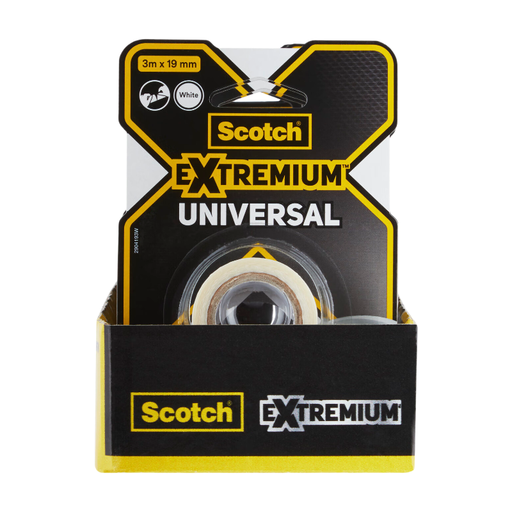
Why this choice suits this profile: Its 3 m × 19 mm format is ideal for small repairs, bundling and marking in the home or workshop.
Its limited length stops you buying a large roll when you only need it for a few one-off jobs. It should not be used as electrical insulation.
A versatile tape, tearable by hand, designed for repairing, protecting, bundling or holding.
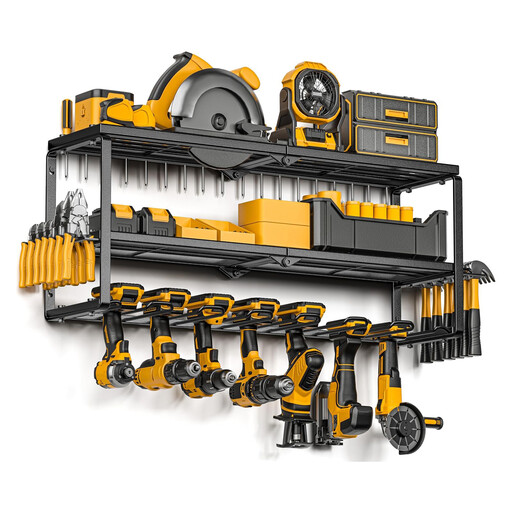
Why this choice suits this profile: Its multiple tiers are ideal for workshops that want to keep their power tools and drilling accessories together in one place.
The stated load capacity of up to 68 kg gives you a concrete benchmark. However, it must be paired with fixings suitable for your wall and a sensible weight distribution.
A seven-tier metal structure with space for drill bits, designed to organise a garage or workshop.

Why this choice suits this profile: Painters, plasterers and DIY renovators get two head formats for working on large areas, edges and corners.
The 80, 120 and 240 grits let you tailor the sanding to each stage, rather than using the same abrasive for the whole preparation.
Two heads of 220 mm and 225 × 85 mm, a handle with a rubberised grip and the option to add a compatible pole.
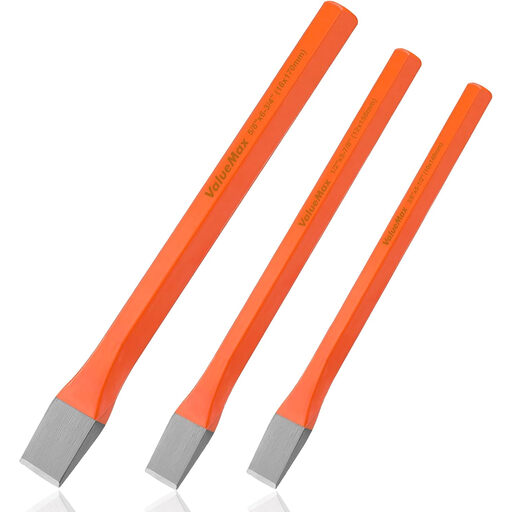
Why this choice suits this profile: Tradespeople and DIYers working with stone, cement or mortar can choose from three widths depending on the job.
The 10, 12 and 16 mm dimensions are clearly stated, so you won't pick a chisel that's unsuitable for precision work or material removal.
Three masonry chisels in chrome-vanadium steel, with a stated blade hardness of HRC 53–60 and protected handles.
We've put together a comprehensive, real-time updated list of products that meet these demanding criteria and European safety standards.
Some renovation accessories are particularly useful in specific situations:
Install a wall tool holder above your workbench or on a clear wall. Place heavy tools near the fixing points and leave enough space between each slot. Before loading the holder, check the wall's strength and the load rating of the wall plugs.
Start with a fairly coarse grit if the imperfections are pronounced, then move to a medium grit and finally a fine grit to prepare for finishing. Avoid pressing too hard so you don't gouge the filler.
It depends on the product, the surface, exposure to the elements and the tension applied. A tape designed to be removed without leaving residue should not be confused with a model intended for long-term fixing. Always check the instructions on the packaging before leaving it in place.