
Livraison le jour même ou le lendemain

Qualité garantie

Débloquez vos offres de bienvenue: Livraison GRATUITE | Jusqu'à -80 % | 30 jours d'essai gratuits à JoyPlus
Téléchargez l'application
Whether it's for a small repair at home or a more ambitious renovation project, finding the right DIY equipment can quickly become a headache. Faced with shelves overflowing with promises, it's easy to get lost and make purchases you immediately regret. As a Product Expert at Joybuy, my role is to help you see things more clearly and navigate the pitfalls of marketing to focus on what truly matters.
Before you pull out your credit card, let's review the common mistakes that cost you dearly in both money and patience.
To avoid these traps, simply focus on a few objective technical specifications. They are your best guide for judging a product's quality and suitability for your project.
A rotary tool is a valuable ally for precision work. Its performance isn't measured by the number of accessories, but by two essential criteria:
For your energy-saving projects or the maintenance of your wet areas, the composition of your seals is paramount.
For any electrical device intended for a bathroom, like a ceiling light, the IP rating is non-negotiable. An IP54 rating, for example, means the product is protected against dust and water splashes from all directions. This is a critical safety standard to ensure the longevity and proper functioning of your installation.
Enough theory, let's get practical. Here are a few products that check all the right boxes, designed for different needs and based on the criteria we've just discussed.
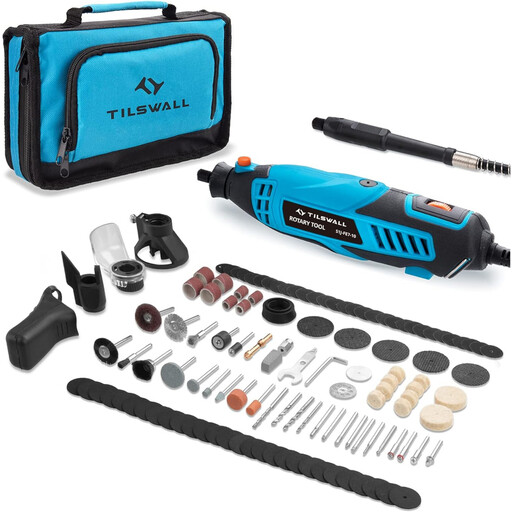
Our take: Perfect for the experienced DIYer or model maker looking for a versatile tool to engrave, polish, grind, or make fine cuts on various materials.
Unlike underpowered tools, it features a 160W copper motor and a variable speed from 8,000 to 33,000 RPM, ensuring real power and precise control for every task.
The auxiliary handle and integrated LED light are real assets for precision and user comfort, even in poorly lit areas.
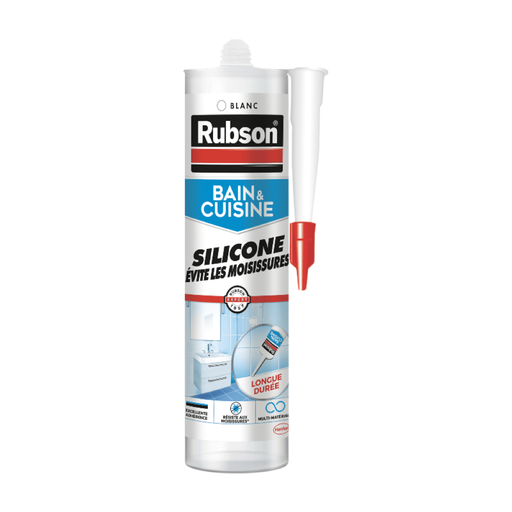
Our take: A must-have for anyone needing to reseal a bathroom or kitchen joint. A targeted solution for a common but essential repair.
Unlike a generic sealant, its formula is enhanced with fungicidal agents to actively prevent mould growth and stop joints from turning black prematurely.
The "No Cutter" system with its pre-cut nozzle simplifies application, making it cleaner and faster, even for a beginner.
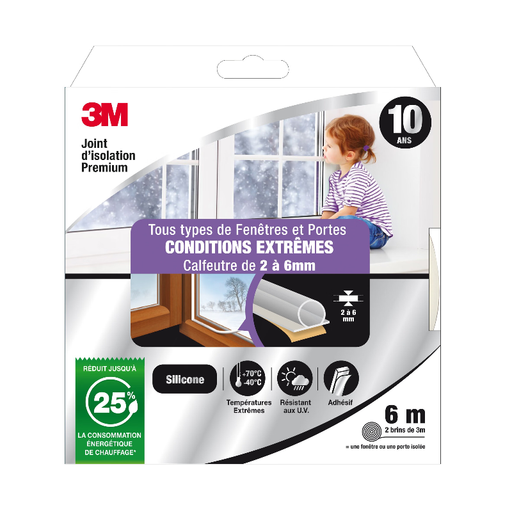
Our take: For any homeowner or renter who wants to reduce their heating bill by tackling drafts. A simple and high-impact energy-saving project.
Unlike foam tapes that compress and lose shape, this high-performance silicone seal is designed for gaps from 2 to 6 mm. It withstands extreme temperatures and UV rays, ensuring effective insulation over the long term.
According to 3M data, it can reduce heating energy consumption by up to 25% and has a lifespan of at least 10 years under normal conditions.
We have selected other products that meet our quality criteria and French standards.
What is the lifespan of an anti-mould silicone sealant? It all depends on the quality of the product and the application conditions. A high-quality sealant, applied to a clean, dry surface, can remain flawless for several years. Watch for cracks or the return of mould: these are signs that it's time to replace it.
Can a rotary tool replace a standard drill? No, not for heavy-duty jobs. A rotary tool excels at precision tasks: engraving, polishing, cutting small pieces, or drilling small-diameter holes in soft materials. For drilling into concrete or wooden beams, a dedicated drill/driver remains essential.
How do I choose the right weatherstripping for my windows? The first thing to do is measure the gap you need to fill. Products usually indicate the gap width they are designed for (e.g., 2 to 6 mm for the 3M seal). Silicone offers much better durability and weather resistance than foam, making it a wise choice for a long-term energy-saving project.