
Livraison le jour même ou le lendemain

Qualité garantie

Débloquez vos offres de bienvenue: Livraison GRATUITE | Jusqu'à -80 % | 30 jours d'essai gratuits à JoyPlus
Téléchargez l'application
All-purpose strong glue might seem ideal for repairing, joining or fixing all kinds of household items. However, no single glue is suitable for every material or situation. The type of surface, humidity, temperature and weight of the item are all factors to consider.
Before placing your order, it’s worth avoiding three common mistakes:
Start by identifying the two surfaces you need to join. Wood glue doesn’t have the same properties as plastic glue, metal glue or a formula designed for glass.
Testing on an inconspicuous area is still recommended, particularly with plastics, painted surfaces and porous materials.
For use in the bathroom, kitchen or outdoors, look for water-resistant glue. However, check what the claim covers: resistance to splashes, constant moisture or immersion are not the same thing.
Hybrid polymers are suitable for joints that may move slightly, as they remain somewhat flexible after drying. Epoxy resin, on the other hand, can fill small gaps and form a rigid joint once cured.
The operating temperature is also worth checking. Some glues are designed to work from -40 °C to +100 °C, while high-temperature contact adhesive may be intended for areas close to a heat source. Always check the information on the packaging.
For a small DIY repair, a tube of clear glue, liquid instant glue or a gel with a precision nozzle can help prevent spills. Gel generally stays in place better on a vertical surface.
For fixing a skirting board, panel or shelf, a cartridge of mounting adhesive lets you apply even beads. However, you’ll need a suitable dispensing gun and, in some cases, the parts will need to be held in place for longer.
A solvent-free formula may be preferable indoors when odour and ventilation are important considerations. You should still follow the instructions, wear gloves if necessary and keep the product out of children’s reach.
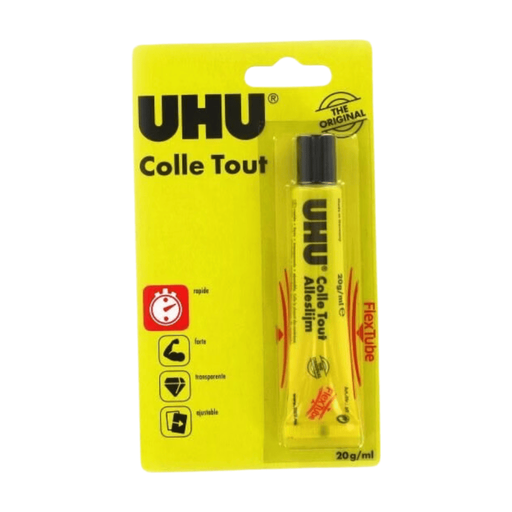
Why it’s a good fit for this type of user : Its flexible 20 g tube and anti-drip nozzle make it especially handy for everyday repairs, crafts and small household projects.
Precise dispensing minimises waste and reduces the risk of applying too much glue to a small area.
Solvent-free formula, transparent finish when dry and stated compatibility with wood, metal, glass, ceramic, leather, cardboard and some plastics.
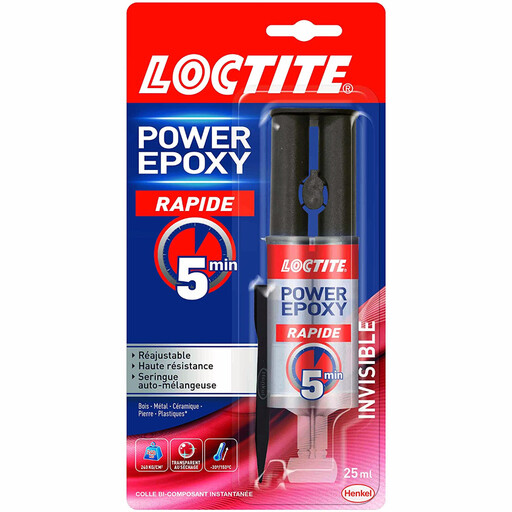
Why it’s a good fit for this type of user : Its self-mixing syringe and ability to fill small gaps make it a good choice for repairs where precision and a neat finish matter.
The epoxy formula isn’t limited to perfectly matched surfaces, so there’s no need to use instant glue to fill a gap.
Sets in 5 minutes, with a transparent finish and stated resistance to water, oil and common solvents once fully cured.
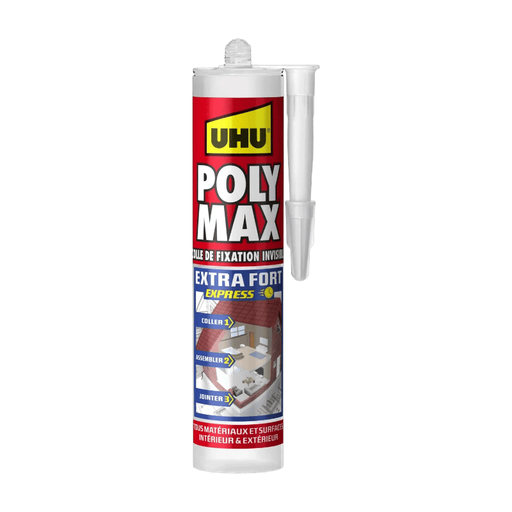
Why it’s a good fit for this type of user : With 300 g of adhesive, this cartridge is designed for renovation, installation and fixing projects that call for even application with a dispensing gun.
It’s designed for bonding, joining and sealing, rather than small repairs that only need a drop of glue.
Solvent-free hybrid polymer, with stated resistance to water, UV rays and the elements, and a stated temperature range of -40 °C to +100 °C.
We’ve put together a comprehensive selection, updated in real time, of products that meet these demanding criteria and European safety standards.
When using instant glue, protect your fingers and eyes: cyanoacrylate can bond to skin very quickly. Products intended for outdoor use should also be used within the temperature range shown on the packaging.
Start by identifying the type of plastic. PE, PP and PTFE often require a specialist formula or a system that combines glue with an activator. For common plastics, all-purpose or instant glue may be suitable, provided you test it first. Surfaces should be clean and dry, and may need light preparation if the instructions recommend it.
It depends on the formula. Some instant glues can withstand splashes or washing once cured, while hybrid polymers are designed for outdoor use and greater exposure to moisture. Check the water-resistance claim and curing time before applying the glue.
Shelf life varies depending on the product, closure system and storage conditions. Close the tube or cartridge immediately, remove any residue from the nozzle and store the product in a cool, dry place, protected from frost. If you only use glue occasionally, mini tubes of instant glue can also help reduce waste.