
Livraison le jour même ou le lendemain

Qualité garantie

Débloquez vos offres de bienvenue: Livraison GRATUITE | Jusqu'à -80 % | 30 jours d'essai gratuits à JoyPlus
Téléchargez l'application
A damp towel forgotten at the bottom of a bag, a bath towel that refuses to dry after a night of camping, or wipes that are too fragile for baby care: disposable towels can be useful in many situations. You still need to choose the right model. Size, material, intended use and disposal instructions are the main criteria to consider before placing your order.
The term “biodegradable” does not necessarily mean that a product can be flushed down the toilet or composted at home. Similarly, a towel described as absorbent may prove too small after a shower or lose all its strength once wet. Here are the key points to check when looking for a solution suited to everyday life in France.
A compressed towel takes up very little space before use, but its unfolded size must match your needs. For the shower or swimming pool, a disposable bath towel measuring 70 × 140 cm obviously does not cover the same area as a 60 × 100 cm model. Conversely, for hands or the face, a large size can become cumbersome and create more waste.
The feel depends on the fibre used, the weave and the thickness. Cotton may be suitable for everyday use, while plant-based viscose is often preferred for facial care. If you have reactive skin, focus on precise information about the composition: no added fragrance, alcohol or fluorescent whitening agents, where these details are stated on the product page.
These indications are not a medical guarantee. In the event of irritation, stop using the product immediately and seek advice from a healthcare professional.
A plant-based fibre or cotton may be described as biodegradable, but the product has still been packaged, transported and designed for short-term use. Wipes and towels must not be flushed down the toilet, even when they carry this label. Unless local instructions state otherwise, they should go in the general waste bin.
For travel, compare the number of pieces, individual packaging and dimensions once the product has been unfolded. Compressed travel towels are particularly practical if they rehydrate easily and their final size is clearly stated.
For the face, a size of 20 × 20 cm or 30 × 25 cm will be easier to handle than a large bath sheet. For babies, choose sheets that are large enough for nappy changes or washing, while checking that they remain sufficiently strong once damp.
Where stated, fabric weight gives you an idea of the textile’s density. However, it is not enough to predict comfort or absorbency. Also check the instructions for use: some compressed towels need to be immersed for 20 to 30 seconds and then gently wrung out.
Finally, take a bag with you to carry waste during a hike, sports activity or camping trip. A disposable towel must not be rinsed and then left in the countryside.
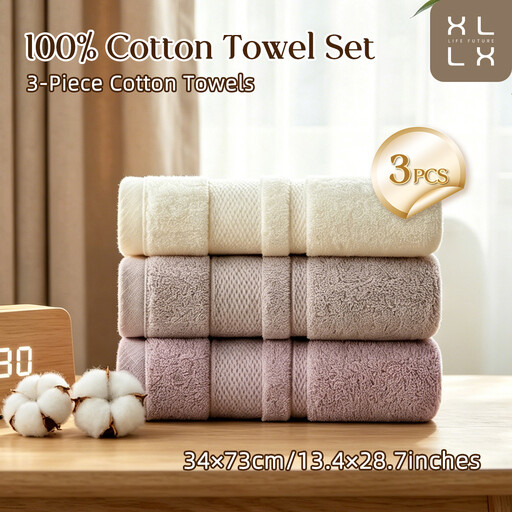
Why this choice suits this profile: this set of three 35 × 75 cm towels lets you equip several wash areas without having to make multiple purchases.
The size and 100% cotton composition are clearly stated, making it easier to compare with sets whose dimensions are unclear.
Three 35 × 75 cm cotton towels, available in several colours depending on the selected variation.

Why this choice suits this profile: its compact tube slips easily into a sports bag, suitcase or camping kit.
The unfolded size of 70 × 140 cm is specified, and each unit is individually packaged inside the tube.
Five compressed towels made from plant-based fibre, with plastic-free tube packaging according to the product page.
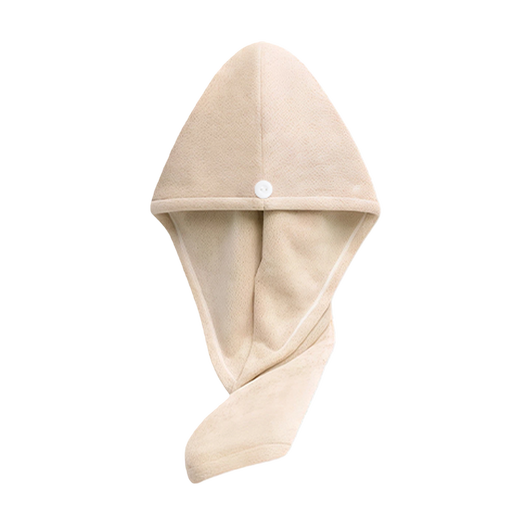
Why this choice suits this profile: its reusable design is suitable for long, curly or coloured hair, both at home and when travelling.
This is not a disposable towel: the care instructions specify machine washing and air drying.
Polyester-polyamide microfibre, measuring 65 × 40 cm, with button or loop fastening.
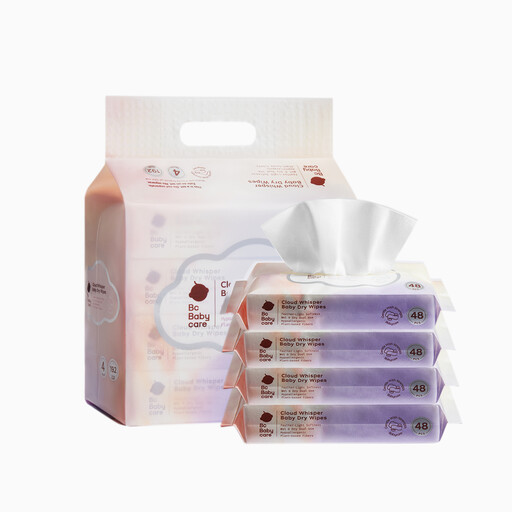
Why this choice suits this profile: these dry or damp sheets are designed for everyday care of the face and hands, as well as nappy changes.
The product page states that they are fragrance-free, alcohol-free and paraben-free. Always test the product on a small area and stop using it if a reaction occurs.
Set of 4 packs containing 48 sheets made from lyocell viscose plant-based fibres, for use dry or damp.
Discover an up-to-date selection of products suited to different hygiene, comfort and mobility needs in France.
Some compressed towels can be rinsed and dried for occasional use, but they are generally designed for one-time use. Their strength decreases after being dampened and handled. For repeated use, a washable microfibre hair towel will be far more suitable.
Look for a fragrance-free baby towel or a wipe whose product page specifies that it is free from alcohol and parabens. Avoid contact with the eyes, use it only on intact skin and follow the manufacturer’s instructions. Washable and disposable face wipes can be compared according to how you intend to use them: washable options reduce waste, while disposable ones make travelling easier.
Compare the price per piece, not just the price of the pack. Consider how many you will need for a week, your travel plans and waste management. For everyday use at home, a cotton hand towel or washable set will often make more sense. For camping, travelling or situations where you do not have access to a washing machine, biodegradable and compressed towels save space and time, provided you follow waste-sorting instructions and never flush them down the toilet.