
Livraison le jour même ou le lendemain

Qualité garantie

Débloquez vos offres de bienvenue: Livraison GRATUITE | Jusqu'à -80 % | 30 jours d'essai gratuits à JoyPlus
Téléchargez l'application
Business trips, camping weekends, gym sessions… lugging around a damp towel is a real hassle. It's heavy, bulky, and often ends up smelling musty at the bottom of your bag. The disposable towel presents itself as the ideal alternative. But be warned: the market is flooded with products making sometimes misleading claims, and making the right choice can feel like navigating a minefield.
As the Head of Product Recommendations at Joybuy, my mission is to help you gain some clarity. This guide breaks down the essential criteria for choosing the single-use towel that truly meets your needs and gives you the keys to sidestep the marketing traps that too often lead to disappointing purchases.
Before diving into the technical details, let's review the two classic disappointments that could make you regret your purchase.
The size trap: the "towel" that's actually just a wipe. Many products are labelled "travel towel" when their unfolded dimensions are barely larger than a washcloth. This is the number one customer complaint: buying a product to dry off after a shower and ending up with a completely inadequate square of fabric.
The material letdown: the fabric that lints or tears. A poor-quality towel, often made from low-grade synthetic fibres, can disintegrate on contact with the skin, leave lint behind, or tear on the very first use. This is not only an unpleasant experience but also downright unhygienic.
To make an informed decision, focus on these three key points. They determine the effectiveness, comfort, and practicality of your disposable towel.
The packaging has a direct impact on how much space the towel takes up and how easy it is to use.
The quality of a disposable towel primarily depends on its composition. The best ones are made from non-woven fabric based on plant-based fibres (viscose, cotton, etc.), which guarantees both softness and absorbency.
The key technical specification to look for is the weight, expressed in grams per square metre (GSM or g/m?). It indicates the density and thickness of the fabric:
To avoid falling into the size trap, always check the product's dimensions when unfolded.
Here are a few products that suit different user profiles, all selected based on the quality and practicality criteria we've just covered.
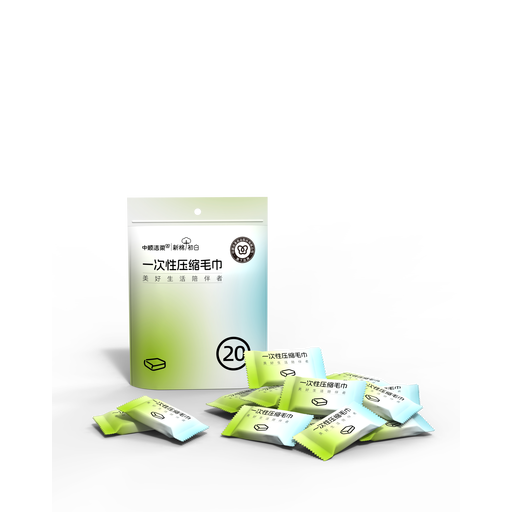
Why we chose it: For those who count every gram in their backpack. This towel tablet format is perfect for camping or backpacking trips, offering a hygienic solution for washing your face and hands while taking up virtually no space.
The dimensions (24 x 30 cm) are clearly stated for a specific use (face/hands), preventing any unpleasant surprises. It's not a bath towel, and it doesn't pretend to be.
Extreme portability thanks to the compressed format. The 20-piece pack covers your needs for several days of travel.
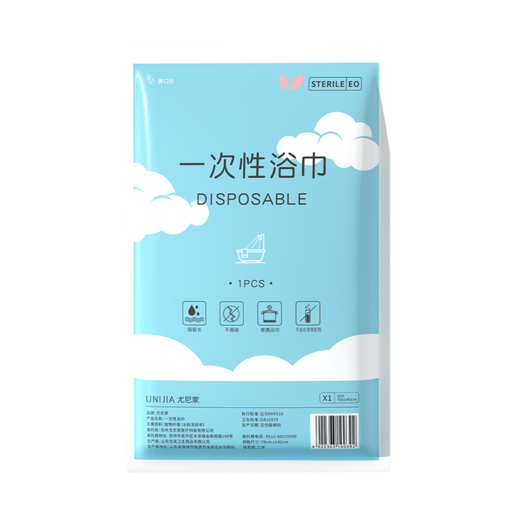
Why we chose it: For those who want the comfort of a real bath towel without the hassle of carrying it. Perfect for a gym bag, a night at a hotel, or for an overnight guest, it guarantees impeccable hygiene and a gentle drying experience.
With its generous 70 x 140 cm dimensions, this is a true disposable bath sheet. The plant-based fibre material is designed to be soft and absorbent, avoiding that "papery" feel.
Large size for a complete, full-body dry. The sealed, individual packaging ensures perfect hygiene until use.

Why we chose it: The best of both worlds: the generous size of a bath sheet and the compact nature of a compressed towel. The tube of 5 towels is perfect for a week-long trip or for outfitting the whole family for an outing.
It solves both the problem of bulk (thanks to compression) and size (unfolds to 70 x 140 cm). The description highlights its 100% plant-based fibre composition.
An economical, maximum space-saving format for large towels. The storage tube is practical and protects unused towels.
We have put together a complete selection of products that meet our quality and safety standards.
In principle, no. They are designed for single use to guarantee perfect hygiene. Although the most robust plant-fibre models can be air-dried for a second, very light use (like wiping a surface), it is not recommended. Especially in a humid environment, where bacteria could quickly multiply.
Yes, provided you choose the right one! Its absorbency depends directly on the material and weight. For effective full-body drying, opt for a biodegradable towel made of viscose or cotton fibres with a weight of at least 50 GSM. Its performance will be entirely convincing.
Even if it's labelled "biodegradable," a disposable towel must go into the general household waste bin. Never flush it down the toilet: it is not designed to break down in water and could clog your pipes. Its biodegradability applies to its decomposition in a waste treatment facility, not in your septic tank.