
Livraison le jour même ou le lendemain

Qualité garantie

Débloquez vos offres de bienvenue: Livraison GRATUITE | Jusqu'à -80 % | 30 jours d'essai gratuits à JoyPlus
Téléchargez l'application
Cleaning, DIY, gardening, or precision tasks: disposable latex gloves are everyday essentials for protecting your hands. Yet, behind this apparent simplicity lie numerous pitfalls. A poorly chosen glove can quickly become uncomfortable, or even completely unsuitable. A glove that tears mid-task, an unpleasant sticky feeling, skin irritation… these issues are common. Before you check out, let's review the criteria that separate a reliable product from a bad surprise.
As the Head of Product Selection at Joybuy, my mission is to help you see things more clearly. Let's break down the common mistakes to avoid so you can make the right choice.
The market is full of promises that aren't always kept. Here are the three most common traps to avoid so you don't waste your time and money.
To avoid these pitfalls, focus on three key criteria that will make all the difference depending on your needs.
The choice of material is crucial, as it determines comfort, durability, and allergy risks.
This detail has a direct impact on your experience.
An ill-fitting glove is a useless glove. If it's too large, it will slip and reduce precision. Too small, and it will tear and constrict your hand. Most brands, like MAPA, display clear sizes (S, M, L) with their centimetre equivalents. Also, consider the packaging: a box of 100 gloves will be more economical for regular use, while a pack of 10 will suffice for occasional needs.
To illustrate these criteria, here are a few products that meet specific needs while avoiding the pitfalls we've discussed.
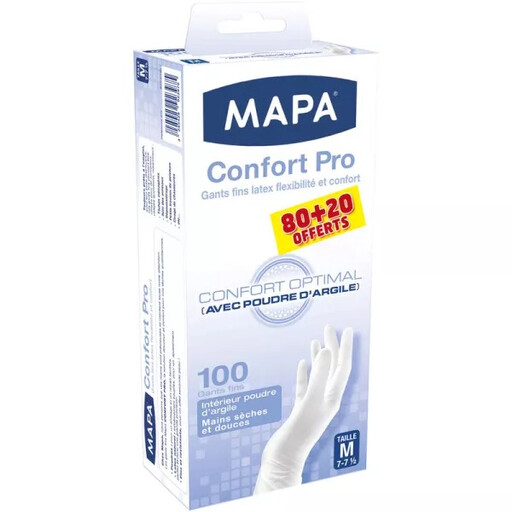
Why we recommend it: The perfect, cost-effective solution for daily cleaning. The 100-count box ensures you always have a pair on hand, and the flexibility of natural latex adapts to all tasks, from cleaning surfaces to washing dishes.
This model strikes the right balance between thinness and strength. It doesn't promise the impossible, but rather offers flexibility designed for everyday use, which prevents tears caused by excessive rigidity.
The "second skin" effect of the thin latex ensures excellent precision. The lightly powdered interior makes them easy to put on, a real plus for repeated use.
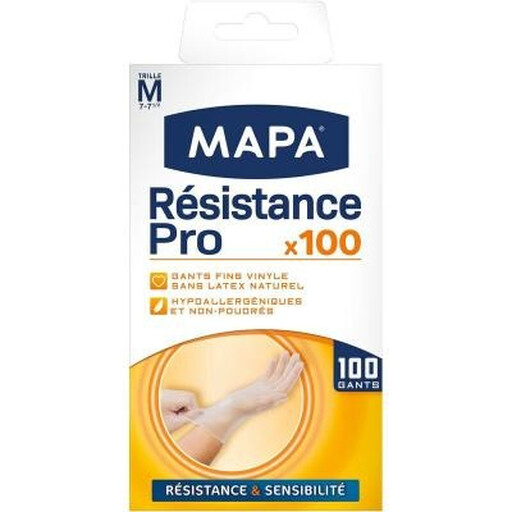
Why we recommend it: The solution for people with latex allergies or reactive skin. The absence of powder and latex makes them the go-to choice for handling food or for tasks requiring perfect hygiene.
It directly addresses the problems of latex allergies and powder-related irritation, two major drawbacks for many users.
Its hypoallergenic vinyl composition and the complete absence of powder guarantee neutral contact, both for your skin and for the surfaces you handle.
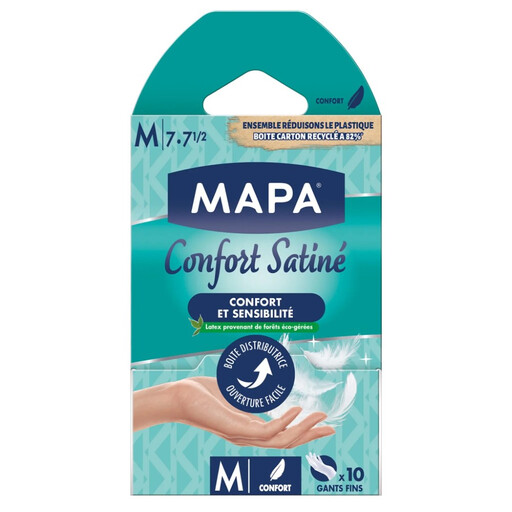
Why we recommend it: Perfect for occasional needs and delicate tasks: hair colouring, arts and crafts, potting small plants… The 10-pack size prevents waste and clutter.
Powder-free and featuring a satin finish, it eliminates the risk of residue and discomfort, two major hindrances during precision work.
The satin feel and silky lining provide unmatched comfort, while the 10-glove pack is as practical as it is economical for occasional use.
Discover our full selection of products that meet our selection criteria and current standards.
How long can disposable latex gloves be stored in their box? As a general rule, latex gloves can be stored for 3 to 5 years if kept properly: in a cool, dry place, away from sunlight and ozone (emitted by some electrical devices). However, always be sure to check the expiration date on the box.
Can you use latex gloves for cooking? Yes, but under certain conditions. Powder-free gloves can be used, provided you verify that they are certified as "food safe". To eliminate all risks, especially in case of allergies, vinyl or nitrile gloves remain the safest alternatives in the kitchen.
How do you choose the right glove size? For a perfect fit, measure the circumference of your palm at its widest point (not including the thumb). Most manufacturers provide a size guide (e.g., S for 19 cm, M for 20 cm, L for 23 cm). A correctly sized glove should fit snugly without constricting the hand and leave no excess material at the fingertips for a full range of motion.