
Livraison le jour même ou le lendemain

Qualité garantie

Débloquez vos offres de bienvenue: Livraison GRATUITE | Jusqu'à -80 % | 30 jours d'essai gratuits à JoyPlus
Téléchargez l'application
Choosing disposable gloves seems simple… until they tear mid-meal prep, slip while you’re cleaning, or become uncomfortable after just a few minutes. To avoid disappointing purchases, it’s worth looking beyond the colour, the number of gloves and a vague “resistant” label.
Here are the main pitfalls to avoid and the criteria to consider when finding disposable gloves suited to cooking, cleaning, light DIY or professional use.
Nitrile gloves, latex gloves and vinyl gloves don’t offer the same benefits and aren’t intended for the same uses.
A “resistant” label doesn’t mean the glove protects against concentrated chemicals, sharp objects or heat. Unless the manufacturer states otherwise, product descriptions usually recommend avoiding strong acids, solvents and sharp items.
An ill-fitting glove reduces precision and is more likely to tear. Too tight, and it tires your fingers; too loose, and it can slip during food preparation or cleaning.
Sizes S, M, L and XL aren’t perfectly standardised from one brand to another. Check the manufacturer’s size guide and, if provided, the palm width. For tasks that require precision, a well-fitting glove that sits close to the hand will generally be more comfortable and practical.
A pack of 10, 20, 50 or 100 gloves doesn’t suit the same rate of consumption. For a one-off dye job, a small repair or occasional food prep, a smaller box helps reduce waste. Conversely, gloves for cleaning, catering or professional use often justify a larger pack.
The price per glove is therefore more telling than the price on the box. Also bear in mind that a single-use glove should not be reused, particularly to avoid cross-contamination between different tasks.
For food-safe gloves and kitchen gloves, explicitly check that they are suitable for contact with food. The product page for the Spontex nitrile gloves shown below, for example, states compliance for contact with all types of food, according to the information provided for this product.
For everyday cleaning or light DIY, textured nitrile can offer a more secure grip. Latex remains a good option for tasks that require flexibility, provided you aren’t allergic to natural latex. Vinyl can work for simple handling and situations where gloves need to be changed frequently.
Powder-free gloves leave fewer residues on the skin and are often preferred in the kitchen, for beauty treatments or during clean handling. Powdered gloves can be easier to put on and take off, which can be handy for repeated use.
However, powder doesn’t make up for a poorly chosen size. If you have sensitive skin or experience irritation, stop using them immediately and check the information on the packaging.
For professional gloves, check the regulatory references on the packaging, such as EN 455, EN 374 or EN 420, where the intended use justifies it. These standards don’t mean all gloves offer the same level of protection: also look at the pictograms, the material, the claimed performance and the usage limitations.
Disposable gloves are not a substitute for protection designed for prolonged exposure to heat, aggressive chemicals or significant mechanical risks. For a barbecue, for example, use accessories intended for heat and follow the manufacturer’s warnings.
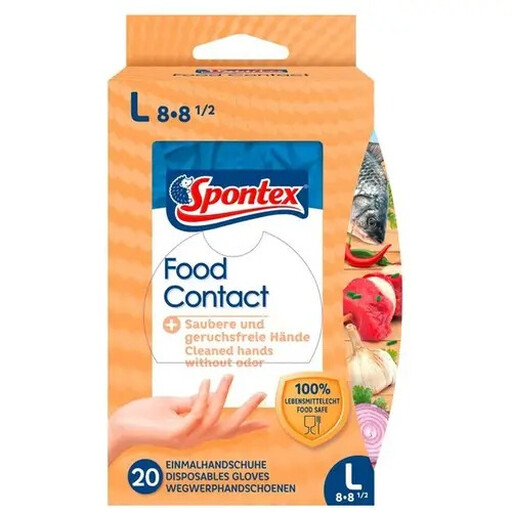
Why this choice suits this profile: This pack of 20 nitrile gloves is ideal for occasional food preparation: peeling, handling meat or fish. Just make sure size L matches your hand size before ordering.
The product page states it is suitable for contact with all types of food and is latex-free. It also specifies that these are single-use gloves and should not be reused.
Latex-free nitrile, pack of 20 gloves and indication of food-contact compatibility, according to the information provided with the product.
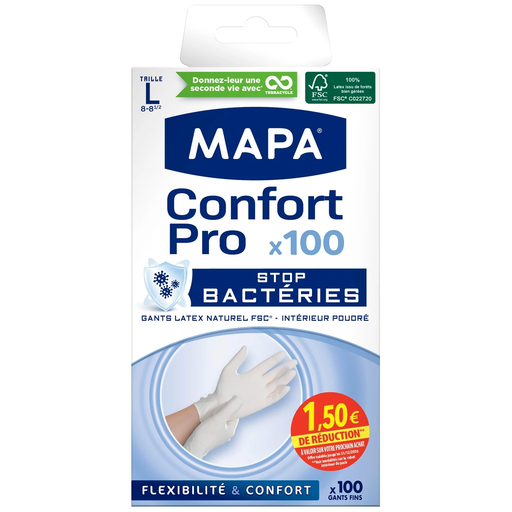
Why this choice suits this profile: This pack of 100 gloves is aimed at people who use them regularly for cleaning, light handling or tasks that require good precision.
The product page mentions a powdered interior to make them easier to put on. It also notes the presence of natural latex, so these gloves are not suitable for people allergic to its proteins.
Natural latex, size L, 100 pieces and a fine design described as suitable for tasks requiring good tactile sensitivity.
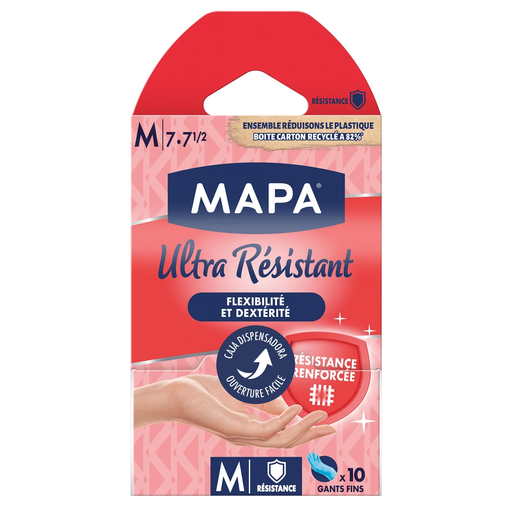
Why this choice suits this profile: This nitrile model, in size M, is suitable for cleaning, light DIY and precision tasks that require a more secure grip.
The textured fingertips reduce the risk of slipping. The latex-free composition is clearly stated, but these gloves should not be used with strong acids or sharp objects.
Latex-free nitrile, textured surface, size M and a box of 10 gloves: a handy format for checking the fit before moving to a larger pack.
We’ve put together a complete, real-time updated selection of products that meet these demanding criteria and European safety regulations.
It depends on the task, the material and the condition of the glove. Replace them as soon as they are torn or soiled, and whenever you change activity. In the kitchen, removing your gloves between different foods helps limit transfer and cross-contamination. Single-use models are not designed to be washed and reused.
Some models are intended for food contact, others are not. Check this indication on the packaging or in the product description. The presence of nitrile alone is not enough to guarantee compliance with all types of food.
Latex-free gloves should be considered for people allergic to natural latex proteins. Nitrile and some vinyl gloves can meet this need. However, always check the composition and usage precautions: “latex-free” does not mean the glove is suitable for all substances or all uses.