
Livraison le jour même ou le lendemain

Qualité garantie

Débloquez vos offres de bienvenue: Livraison GRATUITE | Jusqu'à -80 % | 30 jours d'essai gratuits à JoyPlus
Téléchargez l'application
Whether you’re cooking, cleaning, doing light DIY or working professionally, not all disposable gloves are the same, and they aren’t designed for the same tasks. A pair that’s too thin can tear quickly, while an ill-fitting pair makes precise movements difficult and can transfer dirt or products from one job to another.
Before comparing prices, there are three pitfalls worth paying attention to.
Nitrile gloves are made from a synthetic elastomer. They’re often the go-to for tasks that need more resistance than a very thin glove: cleaning, light DIY jobs or handling food, for example. Models with textured fingers can also improve your grip.
Vinyl gloves are generally suited to short, low-abrasion tasks: simple food preparation, light cleaning, handling objects or precision work. Their flexibility and price per box can be appealing for frequent use. However, they shouldn’t be used with strong acids, solvents or sharp objects if the product sheet says not to.
Latex gloves offer a soft feel and good dexterity. Natural latex does contain proteins that can cause reactions in some people. If you’re looking for latex-free gloves, go for nitrile or vinyl, and make sure the relevant mention is clearly stated.
To choose food-safe gloves, the food-contact statement must be clearly shown. You can’t assume it just because the word “kitchen” appears in the description.
The Spontex model shown below states, according to its product sheet, that it has been tested by an independent laboratory and declared compliant for contact with all types of food. It’s still essential to follow the usage instructions, change gloves between different tasks, and never reuse a single-use glove.
Common sizes range from S to XL. To find the right size:
Powdered models are easier to put on dry hands, while powder-free models leave fewer residues. The choice depends on your comfort and the demands of your activity. For professional use, also look at the number of gloves per box: 10, 20, 50 or 100 pieces don’t work out at the same cost per use.
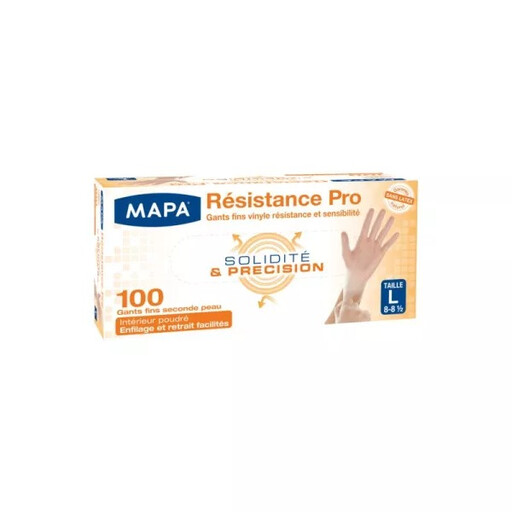
Why this choice suits this profile: Its box of 100 vinyl gloves is ideal for regular light cleaning, kitchen and precision tasks. Size L is suitable for larger hands.
The material and the absence of latex are clearly stated. This fine vinyl is intended for light tasks: it doesn’t promise protection against aggressive products or sharp objects.
Latex-free vinyl, described as a second-skin feel, and a pack of 100 gloves in size L.
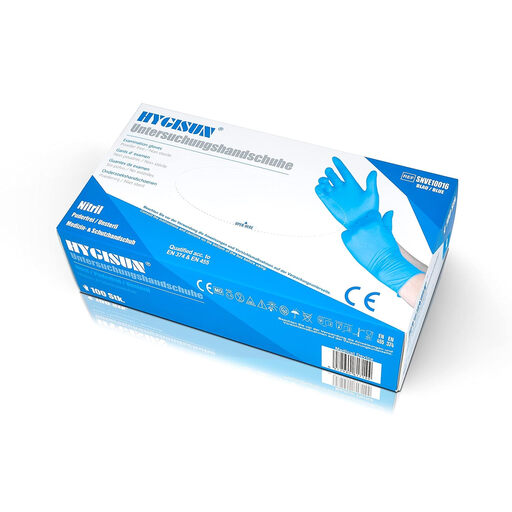
Why this choice suits this profile: This nitrile model is aimed at users who want a detailed technical specification for a variety of domestic, food and professional uses.
The manufacturer’s sheet mentions EN 455, EN 374 and EN 420 standards, as well as a latex-free and powder-free design. Still, check that the model is exactly right for your intended use before buying.
Textured nitrile, ambidextrous design, size S and a box of 100 gloves, according to the description provided.
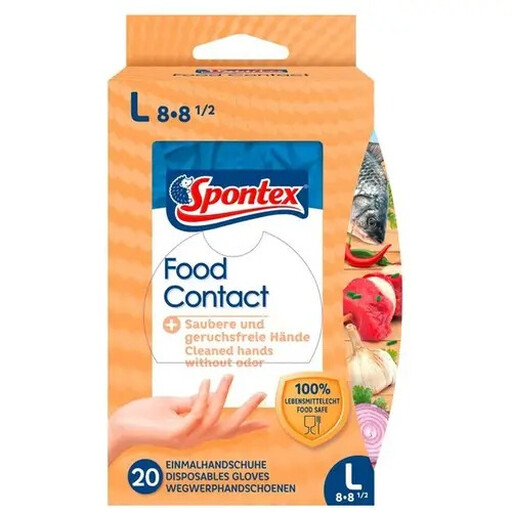
Why this choice suits this profile: Designed for food contact, this model is suitable for cooks, catering professionals and home users who regularly prepare meat, fish or vegetables.
The product sheet clearly distinguishes food contact from other uses and mentions an evaluation by an independent laboratory. These gloves remain single-use only.
Latex-free nitrile, size L, pack of 20 gloves and compatibility with all types of food, according to the product sheet.
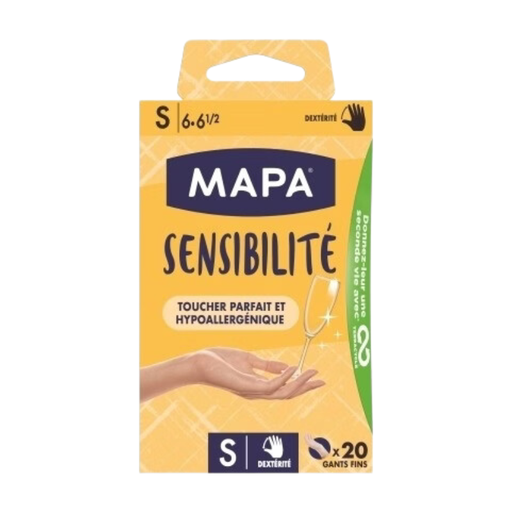
Why this choice suits this profile: This vinyl model, powder-free and latex-free and available in size S, is aimed at everyday tasks that require touch and flexibility.
The words “hypoallergenic” and “latex-free” appear on the sheet. That doesn’t mean the glove is suitable for all skin sensitivities, though.
Powder-free vinyl, size S, fine touch and a box of 20 gloves, according to the product information.
We’ve put together a full selection, updated in real time, of products that meet these demanding criteria and comply with European safety regulations.
Inspect each glove before putting it on: it must have no tears, holes or visible defects. Replace it immediately if it’s damaged. To avoid contaminating surfaces one after another, remove your gloves at the end of each task and wash your hands as recommended.
Disposable cleaning gloves and DIY gloves are not a substitute for reusable gloves designed to withstand heat, cuts or chemicals. Always follow the limits stated on the product sheet, especially any prohibitions regarding solvents, strong acids and sharp objects. Store boxes in a cool, dry place away from sunlight.
No. It’s better to change pairs between the two activities to avoid transferring dirt or products. For cooking, only use a model that explicitly states it’s food-compatible.
It depends on the task, perspiration, contact with liquids and the condition of the glove. Replace it as soon as it’s torn, soiled or damp inside, and at every change of activity. A disposable glove should never be reused.
The absence of latex reduces the risk of a reaction linked to natural latex proteins, but it doesn’t guarantee no skin reaction at all. People with sensitive skin should check the composition, choose hypoallergenic gloves labelled as such if necessary, and stop using them if irritation occurs.