
Livraison le jour même ou le lendemain

Qualité garantie

Débloquez vos offres de bienvenue: Livraison GRATUITE | Jusqu'à -80 % | 30 jours d'essai gratuits à JoyPlus
Téléchargez l'application
Disposable face towels can be a real help in daily life: drying your skin after cleansing, removing make-up, helping with baby changing, or providing a handy hygiene solution when you’re on the go. But from one product to the next, the differences are far from trivial.
Some sheets are too thin to use when wet, while others tear as soon as you wring them out. As for claims like ‘natural’, ‘gentle’ or ‘biodegradable’, they’re not enough to compare products. Before you place an order, look instead at the material, the size, the number of sheets and the usage instructions.
A very thin towel may feel pleasant to the touch, but it can become tricky to handle as soon as it comes into contact with water or a cleansing product. For cleansing face wipes, removing make-up or baby care, the sheet’s strength matters just as much as its softness.
Check whether the manufacturer allows both dry and wet use, and whether they mention a particular texture or reinforced material. A sheet that’s large and sturdy enough can also save you from using several for a single task.
Plant fibre face towels can be made from viscose, lyocell or other plant-derived fibres. This claim doesn’t necessarily tell you how the material was produced, whether it’s genuinely biodegradable in local waste systems, or whether the packaging follows the same logic.
If environmental impact is a factor for you, look for precise information: detailed composition, plastic-free packaging, disposal instructions and biodegradability claims from the manufacturer. In any case, a disposable towel should never be flushed down the toilet.
A pack of 60 sheets may be enough for occasional use, whereas a pack of 192 sheets will be more practical for a family or daily use. Compare the number of sheets, the price per unit and the dispensing system.
A resealable pack protects the towels better from moisture and dust. If you opt for a cardboard box, keep it in a dry place, away from a particularly humid bathroom.
Cotton face towels appeal with their soft feel and absorbency. However, pure cotton can take up more space in the pack and may have a different price depending on thickness and packaging.
Plant-based viscose and lyocell offer another option. The Babycare product shown below states a composition of viscose lyocell made from 100% plant fibres. YIJINCHAN also indicates a plant-based viscose with a pearlised texture. You should verify these details on the product page, as characteristics can vary noticeably from one product to another.
A 20 × 20 cm size is suitable for drying your face or hands, or for changing. At 30 × 25 cm, a larger model offers more surface area for removing make-up, applying a treatment or cleaning a larger area.
A pearlised texture can help lift residue, sebum or make-up. However, sensitive skin may sometimes prefer a smoother surface. For face wipes for sensitive skin, use a light touch without rubbing, and stop immediately if you feel any discomfort or irritation.
Dry and wet wipes allow you to add water depending on the situation. This versatility is handy when travelling, for cleaning your hands or for baby face towels. Use clean water and moisten the sheet enough to achieve the desired level of comfort.
For removing make-up, you can add a suitable cleanser if the instructions allow it. A dry towel can also be used to absorb excess water after washing. Do not reuse a sheet designed for single use, and do not dispose of it down the drain.
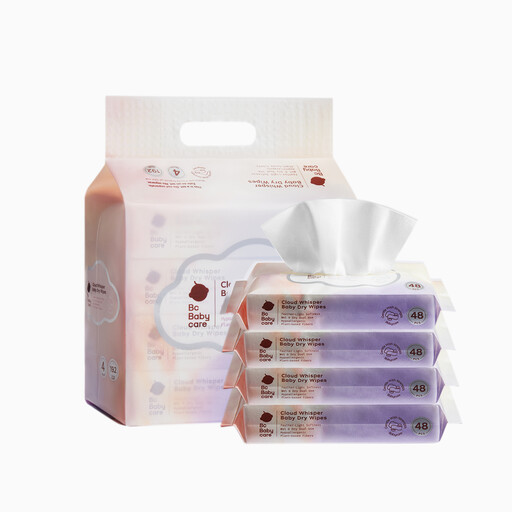
Why this choice suits this profile: With 192 sheets split into four packs and a 20 × 20 cm size, this product is suitable for families who want to stock up for the face, hands or changing. It is stated as usable dry or moistened.
The four-pack packaging prevents all the sheets from being exposed to air and moisture. The product page states an alcohol-free, paraben-free and fragrance-free composition: nevertheless, check the labelling on the product you receive before using it.
Viscose lyocell made from plant fibres, dry or wet use, 200 × 200 mm size and a quantity suited to family use.
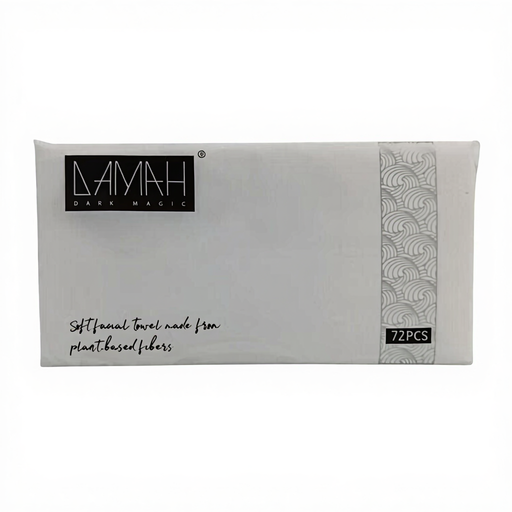
Why this choice suits this profile: This product is aimed at those who want the feel of pure cotton for their cleansing or make-up removal routine. Its dispenser lets you pull out sheets one by one, without unnecessary handling.
The stated 100% cotton composition and the indicated thickness provide more reliable benchmarks than a simple promise of softness.
Stated pure cotton, 20 × 20 cm size, dry or wet use and sheet-by-sheet dispensing.
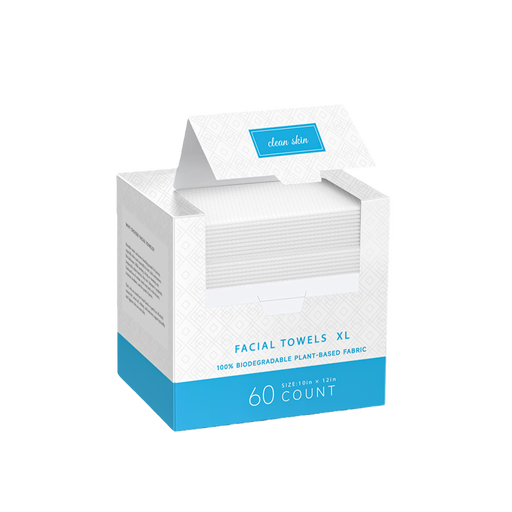
Why this choice suits this profile: Its 30 × 25 cm size lends itself to make-up removal, applying treatments, travelling and routines that need a more generous surface area.
The large surface area and stated pearlised texture can help avoid using multiple sheets during cleansing. However, the plastic-free cardboard box should be kept in a dry place.
Stated plant-based viscose, pearlised texture, 60 sheets and plastic-free box.
We’ve put together a comprehensive, up-to-date selection of products that meet these exacting criteria, in compliance with European safety regulations.
To preserve the quality of biodegradable face towels as well as other single-use products:
Some products are presented by their manufacturer as suitable for newborns or sensitive skin. This claim does not replace checking the composition, usage precautions and labelling. Use them only on intact skin, avoiding contact with the eyes, and stop if any unusual reaction occurs.
It depends on the date indicated on the packaging and the storage conditions. A dry pack should be kept away from moisture, heat and direct light. For moistened wipes or resealable packs, follow the manufacturer’s instructions and do not use a sheet that shows discolouration or an unusual odour.
The cost depends on the price per sheet, the frequency of use and the packaging. Disposable models save on laundry and can be practical for travel or baby care. Reusable cotton pads require maintenance, but may be more worthwhile as part of a regular routine. Compare the unit price with your actual consumption before deciding.