
Livraison le jour même ou le lendemain

Qualité garantie

Débloquez vos offres de bienvenue: Livraison GRATUITE | Jusqu'à -80 % | 30 jours d'essai gratuits à JoyPlus
Téléchargez l'application
By Joybuy, Your Product Expert – August 26, 2026
Did you know that your bath towel, even when clean, can become a breeding ground for bacteria? For those with sensitive or acne-prone skin, or for anyone committed to impeccable hygiene, the disposable face towel has become a must-have. But with an overwhelming number of options on the market, how do you avoid falling for marketing traps? Before you check out, let's review the common mistakes to avoid.
The first pitfall: believing all towels are created equal. Eye-catching packaging can sometimes hide a product that disintegrates on contact with water. The second trap is the false economy of bulk packs. A rock-bottom price for hundreds of sheets may seem appealing, but if the towels are too thin or small, you'll end up using two or three each time. The result: any expected savings vanish.
To cut through the noise, focus on these few technical details that make all the difference. Ignoring them means risking a product that doesn't meet your needs.
The composition of a dry face wipe is the number one criterion for judging its softness and durability.
The manufacturing process, such as hydroentanglement (spunlace), is also a mark of quality: it binds the fibres without chemical additives, resulting in a towel that is as strong as it is pure.
The surface of the towel is far from just an aesthetic detail. It plays a direct role in its effectiveness.
A 15x15 cm towel won't have the same utility as a 20x20 cm one. A generous size is much more versatile: it covers the entire face, can be used for baby care during a nappy change, or even for drying your hands. Thickness, meanwhile, is a guarantee of durability. A towel that is too thin is likely to fall apart if you use it wet with a cleanser, making it a poor alternative to a reusable towel.
Rather than an endless list, we've selected products for specific needs. The goal is to help you find the towel that will fit perfectly into your routine.
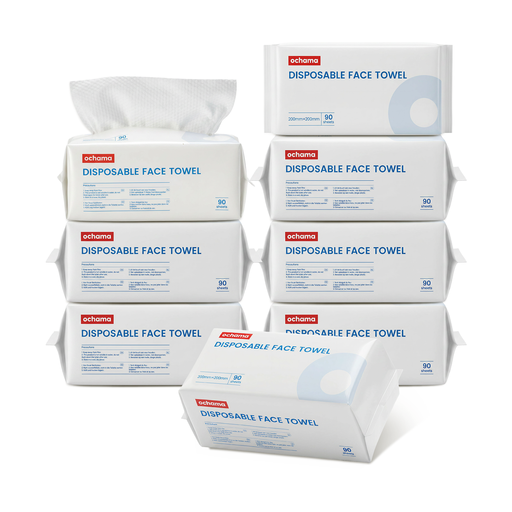
Why we recommend it: For twice-daily use, this 720-sheet family pack is unbeatable. It offers exceptional value for money and lasts for several months without compromising on quality.
The false economy of a bulk pack. Here, volume doesn't come at the expense of quality: each sheet is durable, and its pearled texture ensures optimal effectiveness, so you don't need to use several at once.
Material: Non-woven plant fibres.
Texture: Pearled, for more effective cleansing.
Use: Versatile (wet and dry).
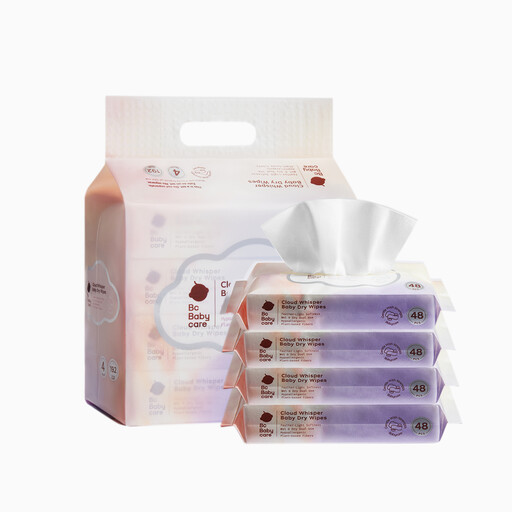
Why we recommend it: Specially formulated for the fragile skin of newborns and adults alike, this product focuses entirely on purity. Its composition is free of irritating additives for complete peace of mind.
Deceptively soft materials. Here, the plant fibres (Viscose Lyocell) were chosen for their incomparable softness, tested and approved for the most reactive skin types.
Material: 100% plant fibres (Viscose Lyocell).
Composition: Hypoallergenic, free of alcohol, fragrance, and parabens.
Size: 200 x 200 mm.
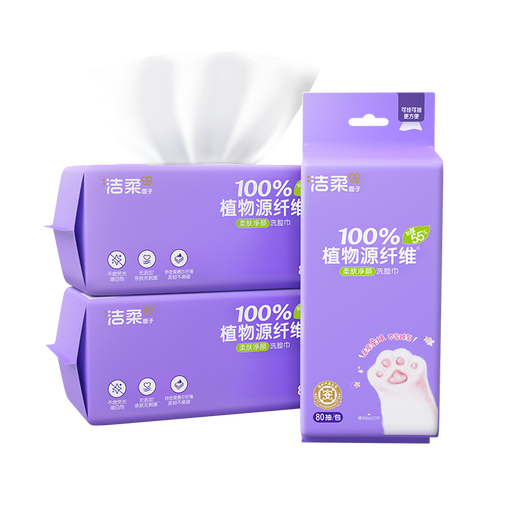
Why we recommend it: This 80-sheet pack is the perfect compromise. Compact enough to slip into a suitcase or gym bag, it ensures you have impeccable hygiene for several weeks of travel.
Buying a family pack for occasional use. This format is designed for travel without sacrificing size (200x200 mm) or quality, unlike many overly minimalist travel sizes.
Format: 80-sheet pack, perfect for travel.
Quality: Soft, lint-free, and moisture-resistant.
Versatility: Suitable for makeup removal and daily cleansing.
Discover more products that meet our quality criteria and the strictest safety standards.
Can you flush disposable face towels down the toilet? Absolutely not! Unlike toilet paper, they do not break down in water and can clog your pipes. They should only be disposed of in the bin.
What's the difference compared to a classic cotton makeup remover pad? The difference comes down to three things: size, durability, and the absence of lint. A disposable towel is much larger, allowing you to cleanse your entire face with a single sheet. It is also much stronger, especially when wet, and won't fall apart like a classic disposable cotton pad, which tends to leave fibres on the skin.
Are they a good alternative to a cloth towel for acne-prone skin? Absolutely. In fact, this is one of their main advantages. A cloth towel can accumulate bacteria, sebum, and skincare residue from the very first use. By switching to a single-use disposable towel, you eliminate the risk of re-contaminating your skin, which is a key step in managing breakouts.