
Livraison le jour même ou le lendemain

Qualité garantie

Débloquez vos offres de bienvenue: Livraison GRATUITE | Jusqu'à -80 % | 30 jours d'essai gratuits à JoyPlus
Téléchargez l'application
Picnics, backyard barbecues, weddings, or catered events: the question of tableware always comes up. As single-use plastic plates are phased out, finding an alternative that is practical, stylish, and more eco-friendly has become a real headache. In this landscape, disposable bamboo tableware stands out as one of the most compelling solutions.
This guide is designed to help you navigate the options. Our goal is to guide your choice based on concrete criteria like durability, resilience, and the actual composition of the products. Moving beyond marketing claims, we're focused on real-world performance.
Before you check out, here are the key points to verify to ensure you make the right choice.
The term "bamboo tableware" actually covers two very different types of products. The vast majority of disposable plates, bowls, and trays are made from bamboo fibre. This pulp is moulded under high pressure to create various shapes, offering excellent rigidity and a smooth surface. It's the top choice for eco-friendly disposable tableware because it comes from a rapidly renewable resource. The other category, which is often reusable, is made from glued bamboo strips. For single-use purposes, bamboo fibre is what we're focusing on here.
A good disposable bamboo plate must be able to hold all kinds of food without getting soggy, warping, or, worse, leaking. Check that the model you choose is compatible with hot, cold, and saucy dishes. Quality products maintain their rigidity and impermeability throughout a meal—an essential mark of reliability for caterer's tableware or a worry-free picnic.
Often confused, these two terms actually describe different processes.
We have selected products that stand out for their value, durability, and versatility, for both individuals and professionals.
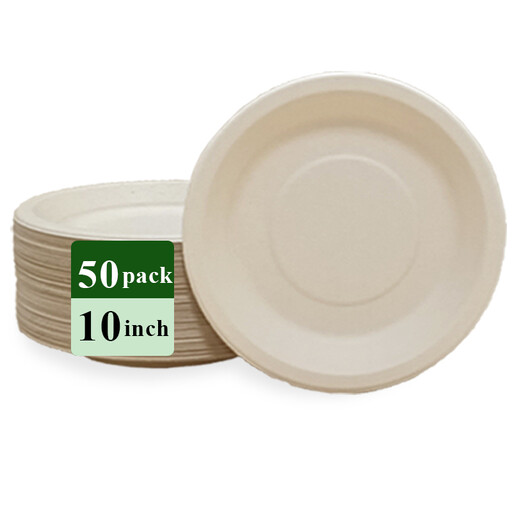
Editor's Verdict: With its standard 25 cm (10-inch) diameter, this is the ultimate all-rounder plate. It is ideal for main courses, whether for a backyard barbecue or a catered service.
Key Features:
Who is it for? Individuals hosting a party, birthday, or large outdoor meal, as well as event professionals looking for a simple yet reliable disposable bamboo plate.
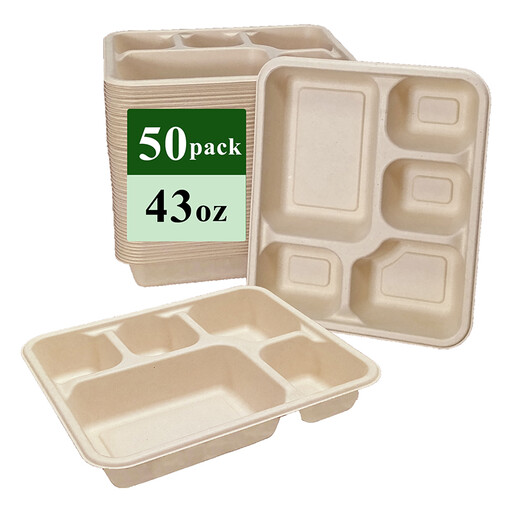
Editor's Verdict: This bamboo meal tray is the perfect solution for serving a full menu without flavours mixing. Its five compartments allow you to separate the main dish, sides, sauce, and dessert for a flawless dining experience.
Key Features:
Who is it for? Caterers, restaurants offering takeaway, event organisers, and anyone who needs to serve complete meals in a structured and hygienic way.
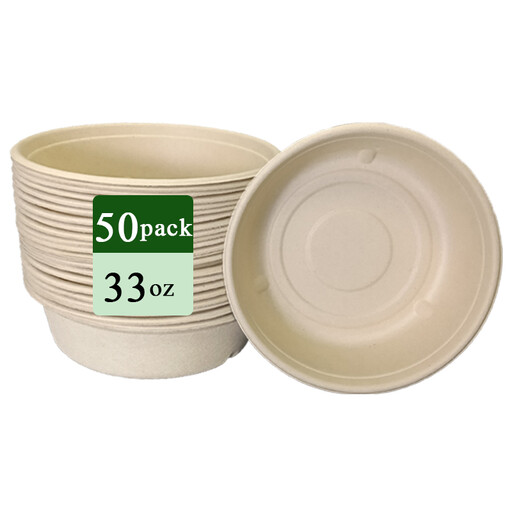
Editor's Verdict: With its extra-large capacity of nearly one litre, this disposable bamboo bowl is a champion for soups, large salads, poke bowls, and other saucy dishes. Deep and sturdy, it's a reliable container you can count on.
Key Features:
Who is it for? Essential for salad bars, food trucks, caterers specialising in world cuisine, or simply for serving generous portions at home.
Bamboo tableware is an excellent solution, but it's not the only one. Many innovations exist to make your life easier in the kitchen and during your events. If you're curious to discover other alternatives or clever kitchen accessories, feel free to browse our complete selection.
? Discover our full range of unique kitchen products
As a general rule, no. It is strongly advised not to put bamboo fibre tableware in the microwave. The intense heat can alter its structure and release the moisture trapped in the fibre, causing it to become soft instantly. Always refer to the manufacturer's instructions. For example, it is clearly stated that the Ruibamboo meal tray is not microwave-safe.
When stored in a dry place away from moisture and direct sunlight, disposable bamboo tableware can be kept for several years without losing its properties. It is designed to remain stable until use.
Yes, without a doubt. Bamboo is a fast-growing grass (up to 1 metre per day!) that requires no pesticides or fertilisers. It is an exceptionally renewable resource. Unlike plastic, which is derived from petroleum, its manufacturing process has a much lower environmental impact. At the end of its life, the product is biodegradable or compostable, which drastically reduces waste pollution.