
Livraison le jour même ou le lendemain

Qualité garantie

Débloquez vos offres de bienvenue: Livraison GRATUITE | Jusqu'à -80 % | 30 jours d'essai gratuits à JoyPlus
Téléchargez l'application
Hosting a party, picnic, or barbecue with friends often comes with a logistical headache: the dishes. With the war on single-use plastic in full swing, the disposable bamboo plate is emerging as a practical and environmentally friendly alternative. However, not all options are created equal. This guide is here to help you navigate the choices and select the right eco-friendly disposable dinnerware for your needs by breaking down key criteria like composition, size, and quantity.
Before you buy, here are the key points to check to ensure you make the right choice.
The term "bamboo plate" actually covers two different types of products. The most common is the bamboo fibre plate. It's made from bamboo pulp, which is pressed at high temperatures to create a structure that is both rigid and lightweight. These plates are often certified as compostable dinnerware, guaranteeing they will break down in an industrial composting facility.
A rarer and often more expensive option is the plate carved directly from laminated bamboo leaves. While its finish is more raw and authentic, the bamboo fibre plate remains the best compromise between durability, budget, and eco-friendliness for any event.
It may seem like a small detail, but plate size is crucial for a successful dining experience.
Buying a bulk pack of bamboo plates is almost always the smarter move, both for your wallet and for organisational ease, especially for larger events. Packs generally range from 25 to over 100 pieces. For a small picnic, a 25-pack will suffice. For a birthday party or a corporate event, aim for a 50 or 100-pack for peace of mind.
We've scoured the market to bring you only the most relevant options, based on their format and practicality.
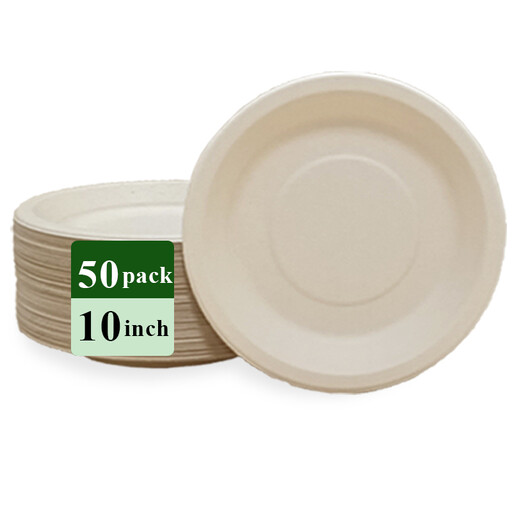
Why it stands out: This pack checks all the boxes: a large size perfect for the main course and a quantity of 50 units, making it a versatile solution for most events, whether private or professional. Its bamboo fibre construction gives it excellent rigidity.
Pros:
Who is it for?: Ideal for barbecue hosts, birthday buffets, or caterers looking for a reliable biodegradable plate for the main course.
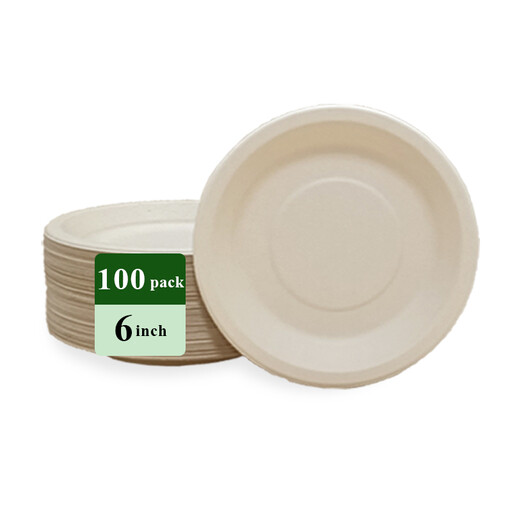
Why it stands out: With its 15 cm format, this plate is tailor-made for desserts, starters, or appetisers. Offered in a 100-pack, it becomes an ultra-economical solution for large gatherings where small portions are key.
Pros:
Who is it for?: A must-have for weddings, corporate cocktail parties, candy bars, or any occasion that calls for a large number of small plates.
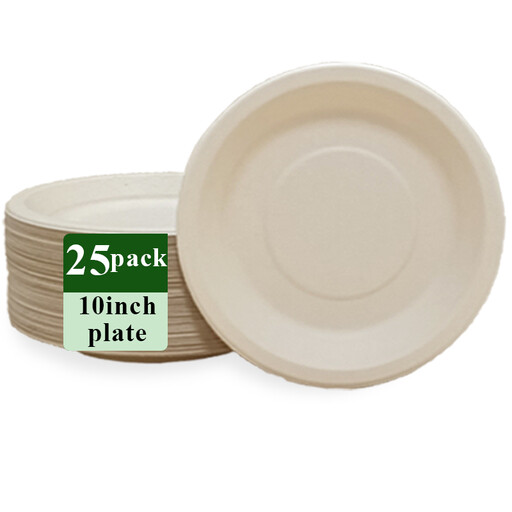
Why it stands out: This option offers the same quality and large 25 cm format as our top pick, but in a more compact pack. It's the perfect solution for those who don't need to plan for a large crowd.
Pros:
Who is it for?: Perfect for family meals, small parties with friends, or for a one-off need for eco-friendly disposable dinnerware.
Your dinnerware is sorted, but the planning doesn't stop there. To perfect the ambiance of your patio or poolside area, other accessories can make all the difference. Feel free to browse our selection of pool ledge lounger chairs to create an even more inviting space.
Bamboo fibre plates are a much more sustainable alternative to single-use plastic. Bamboo is a renewable resource that grows at an impressive speed. Most of these products are also certified biodegradable and compostable (under industrial conditions), meaning they return to the earth as organic matter, unlike plastic which pollutes for hundreds of years.
Yes, a quality bamboo fibre plate is designed to withstand heat and moisture. It won't warp when in contact with a hot dish and will resist a sauce without leaking immediately. However, it's best to avoid letting liquids sit on it for hours.
The disposable bamboo plate (most often made of fibre) comes from the plant's pulp, giving it a smooth, uniform appearance. The palm leaf plate, on the other hand, is moulded from naturally fallen leaves of the areca palm tree. Its appearance is more rustic, with each piece being unique in texture and colour. In both cases, we're talking about eco-friendly disposable dinnerware. The final choice is primarily a matter of style.