
Livraison le jour même ou le lendemain

Qualité garantie

Débloquez vos offres de bienvenue: Livraison GRATUITE | Jusqu'à -80 % | 30 jours d'essai gratuits à JoyPlus
Téléchargez l'application
Choosing the right disinfectants and household cleaners may seem straightforward… until you discover that a bleach-based cleaner is not necessarily a disinfectant, that toilet gel cannot be used on every surface, or that a no-rinse spray still requires a precise contact time.
Whether you are equipping a family home, an apartment, a professional kitchen or public toilets, the right product depends above all on its intended use, formulation and label instructions. Here are the key points to check before buying, along with a selection of products available on Joybuy.
A cleaner can remove stains, grease or limescale without claiming any biocidal action. This is the case with LA CROIX Multi-Purpose Bleach Cleaner Liquid 1.5 L, whose product information specifies use for cleaning and whitening, but not for disinfection.
Conversely, a surface disinfectant should specify its intended use, the microorganisms it targets and, where applicable, the conditions under which its effectiveness was assessed. The simple mention of “bleach” is therefore not enough to guarantee disinfecting action.
A disinfectant toilet gel often contains acidic agents or other substances formulated for the toilet bowl. It must not be applied to a worktop, delicate surface or equipment that comes into contact with food.
The same applies to a laundry disinfectant, which is generally added to the compartment intended for fabric softener. As for disinfectant alcohol for tools, it may be suitable for scissors, tweezers or thermometers, but not for use on skin when it is labelled for “technical use”.
Some products must remain active for several minutes before being wiped away. Removing a disinfectant spray immediately may therefore reduce or even cancel the contact time specified on the label.
Mixing products is also strictly prohibited. Bleach, acidic products and ammonia must never be mixed, as they can release dangerous gases. Wear gloves if recommended in the instructions, ventilate the room and keep every bottle out of children’s reach.
Before buying, start by identifying the area to be treated:
Always check compatibility with metal, marble, wood, painted surfaces and textiles.
A bleach-based cleaner can whiten surfaces and remove certain stains, but it is often corrosive or irritating. Products containing sodium hypochlorite should remain in their original packaging and be stored away from acidic products.
When choosing a bleach-free disinfectant, prioritise a formula whose label clearly states its biocidal use, dosage and contact time. Ethanol-based sprays, quaternary ammonium compounds and other active substances may meet different needs; rely on the label rather than the product name alone.
References such as EN 1276, EN 13697, EN 1650 and EN 14476 correspond to assessment methods conducted under specific conditions. They do not mean that the product is suitable for every situation or every surface.
Read the product information and label carefully to check:
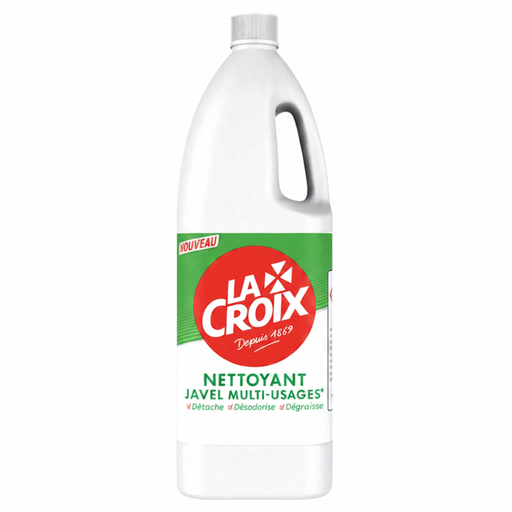
Why this choice suits this profile: A 1.5-litre format suited to everyday cleaning of compatible surfaces when the main goal is whitening and stain removal rather than disinfection.
The product information clearly states that this product is not intended for disinfection. There is therefore no risk of confusing whitening action with biocidal action.
1.5 L format, formula containing less than 5% chlorinated bleaching agents, diluted use according to the surface.
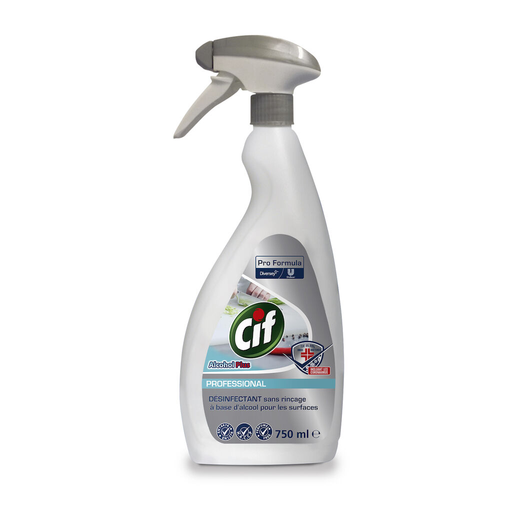
Why this choice suits this profile: A ready-to-use spray designed for small surfaces, particularly in kitchens and professional environments.
The product information specifies no-rinse use and clearly states the contact time to observe. For surfaces that come into indirect contact with food, always follow the label instructions.
750 ml, 80% denatured ethanol according to the product information, with bactericidal, fungicidal and virucidal claims associated with the stated standards.

Why this choice suits this profile: With its 5-litre capacity, this container is suitable both for households with high cleaning-product consumption and for professional environments, covering floors and washable surfaces.
Its bleach-free formula makes it easy to distinguish from a whitening cleaner. However, dilution requirements and rinsing of food-contact surfaces should still be checked on the label.
5 L format, lemon fragrance, EN 13697, EN 1650 and EN 14476 indications stated in the product information.
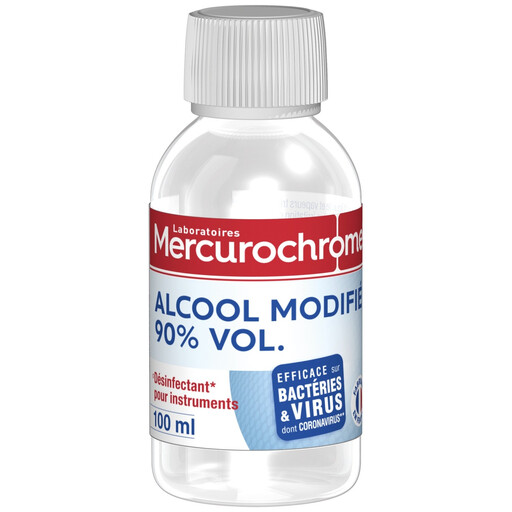
Why this choice suits this profile: A compact bottle designed for scissors, thermometers, tweezers and other compatible equipment, ideal for occasional use.
The product information reserves it for technical use on equipment and excludes any application to skin. This clarification helps prevent misuse.
90% denatured alcohol, 100 ml format, dries after application, flammable liquid to be kept away from sources of heat.
Choose a product explicitly intended for kitchen surfaces or indirect food contact. Observe the contact time and rinse with drinking water whenever required by the label. A bleach-based cleaner designed for another purpose must not automatically be used on a worktop.
No. The absence of bleach does not mean that a product is compatible with every material. Check the list of approved surfaces and test the product on a small, inconspicuous area first. Formulas intended for floors, sanitary areas, laundry or tools are not interchangeable.
Keep them in their original, tightly closed packaging, in a cool, well-ventilated place away from children, animals, food and sources of heat. Never transfer products to another container and never mix different cleaners. For biocidal products, always read the label and product information before use.