
Livraison le jour même ou le lendemain

Qualité garantie

Débloquez vos offres de bienvenue: Livraison GRATUITE | Jusqu'à -80 % | 30 jours d'essai gratuits à JoyPlus
Téléchargez l'application
Buying disinfectant products is not simply a matter of choosing the bottle with the highest claimed effectiveness percentage. A household surface disinfectant does not serve the same purpose as a skin antiseptic, a fabric spray or a baby bottle steriliser. Choosing the wrong product can lead to unnecessary expense, damage a material or create a risk if used incorrectly.
A surface disinfectant can only reduce certain micro-organisms if the surface is sufficiently clean and the contact time stated on the label is observed. Spraying the product and wiping it off immediately may therefore not be enough to achieve the advertised effectiveness.
A limescale cleaner, such as those designed for bathrooms, mainly removes mineral deposits and soap marks. It should not automatically be considered a biocidal product.
A disinfectant alcohol or skin antiseptic is formulated for external use on the body, while a household disinfectant spray is intended for surfaces. Never apply a household disinfectant to a wound, and do not spray a product intended for the skin onto a food-contact worktop.
The term ‘multi-surface’ does not mean that the product is suitable for every material. Untreated wood, marble, metals, leather and certain fabrics may require special precautions.
Claims such as ‘99.9%’ must be read alongside the conditions that apply: the target organism, test method, contact time, temperature and type of surface. The Cillit Bang product information, for example, states that testing complies with EN 14476 for the claimed action against certain bacteria and viruses. This does not mean that all infectious agents or every situation are covered.
Start by defining exactly what you need:
The product information should state the active substance, instructions for use and warnings. Hydrogen peroxide, ethanol, sodium hypochlorite and benzalkonium chloride do not have the same properties or usage precautions.
Never mix bleach with an acidic product, particularly a limescale remover. Dangerous gases could form. Ventilate the room, wear gloves when recommended on the label and keep bottles out of the reach of children.
A ready-to-use product does not necessarily work instantly. Observe the contact time stated on the packaging before wiping the surface. For a food-contact surface, also check whether rinsing is required. Some professional ethanol-based products are advertised as requiring no rinsing, but this indication always depends on their labelling and specific intended use.
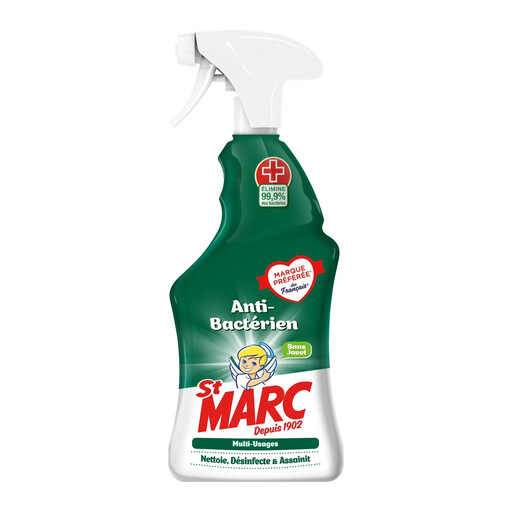
Why this choice suits this profile : its spray format and bleach-free formula are suitable for everyday cleaning tasks on washable household surfaces.
The product information presents it as a surface disinfectant, not as a skincare product. The distinction between the intended uses is therefore clear.
Bleach-free formula, 750 ml capacity, lemon fragrance and spray application.
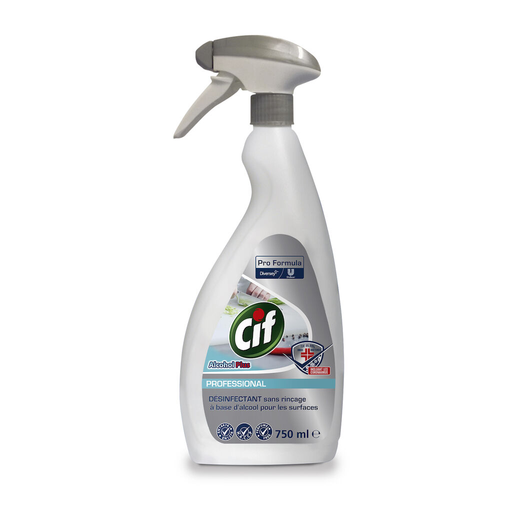
Why this choice suits this profile : it is suitable for kitchens, catering establishments and households looking for a ready-to-use product for small surfaces.
The product information distinguishes surface disinfection from use on the skin and specifies that the product can be used without rinsing, provided the stated contact time is observed.
Contains 80 % denatured ethanol, with bactericidal, fungicidal and virucidal claims stated in the product information.
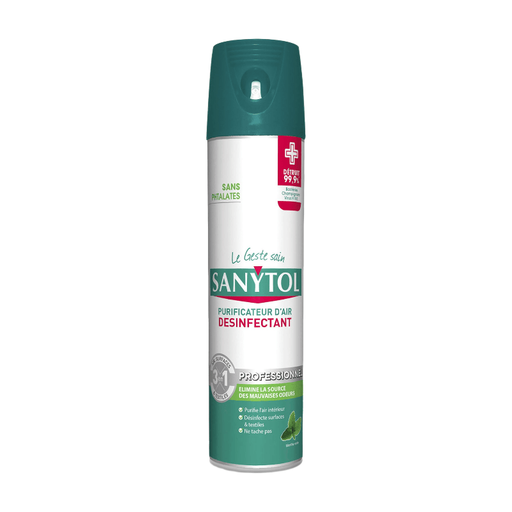
Why this choice suits this profile : its use on certain surfaces and fabrics meets the needs of households with upholstered furniture, curtains or carpets.
The product information recommends testing it first on delicate fabrics, followed by natural drying. This helps minimise unwanted surprises.
Bleach-free formula, 600 ml aerosol, suitable for use on surfaces and fabrics in accordance with the manufacturer’s instructions.
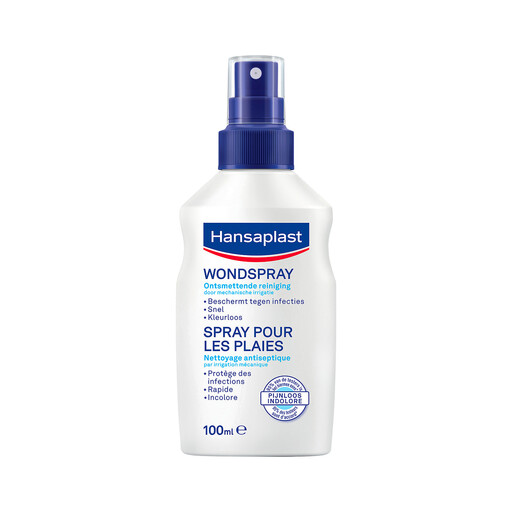
Why this choice suits this profile : this spray is designed to clean minor external wounds and can be easily stored in a family first-aid kit.
The product information specifies the usage limitations, including avoiding contact with the eyes and ingestion, as well as certain incompatibilities with other topical products.
Wound-cleaning solution containing, among other ingredients, 0,04 % PHMB and suitable, according to the product information, for minor wounds.
We have put together a complete, real-time updated list of products that fully meet these strict selection criteria and European safety regulations.
To make the most of your disinfectant products while minimising risks:
For use on the skin, a wound disinfectant is not a substitute for medical advice. A deep, extensive, very painful or contaminated wound, or one showing persistent redness, should be examined by a healthcare professional. The Hansaplast product information also recommends seeking medical advice in the event of signs of infection or no improvement.
No. A bleach-free formula may be suitable for certain surfaces, fabrics or specific uses, but its scope always depends on the label. Check the compatible materials, contact time and any rinsing instructions. A disinfectant deodoriser for fabrics should not be applied to the skin or to delicate fabric without testing it first.
The shelf life depends on the product, its expiry date and its storage conditions. Keep the bottle closed and protected from light and heat. For an aerosol, also observe the maximum temperature stated on the packaging. Any change in smell, colour or texture should prompt you to check the manufacturer’s instructions before use.
These products serve different purposes. A baby bottle steriliser using steam is designed to treat bottles and compatible accessories, while a disinfectant spray is intended for surfaces or, according to its product information, certain fabrics. For childcare items, always follow the manufacturer’s instructions and check material compatibility.