
当日/次日达

品质保障

开启新人专享福利: 全场免邮 | 低至 2 折 | 免费试用 30 天 JoyPlus 会员
下载 Joybuy
Disinfectant wipes have become an everyday essential for keeping our homes clean and hygienic. Convenient and fast, they promise an effective clean in a single wipe. However, faced with the overwhelming number of options on the shelves, it's easy to get lost in marketing claims and make an unsuitable choice. As a product expert at Joybuy, my mission is to help you cut through the noise and select genuinely effective products, without falling for the most common pitfalls.
Before you fill your basket, keep these few pitfalls in mind, as they can make your purchase less effective, or even counterproductive.
For an informed purchase, focus on a few key technical parameters rather than advertising slogans.
These terms indicate which types of microorganisms the product is effective against.
Always check the standards listed on the packaging to ensure the product provides the level of home disinfection you require.
The choice of formula is crucial for safe multi-surface cleaning.
Practicality also comes down to the quality of the wipe itself. A fabric that is too thin will tear easily, while a barely-moistened wipe will dry out before it can clean properly. To reduce your environmental impact, look for biodegradable or plant-based fibre options, which are becoming increasingly common.
To guide you, here are a few products that meet different needs, taking into account the criteria we've just covered.
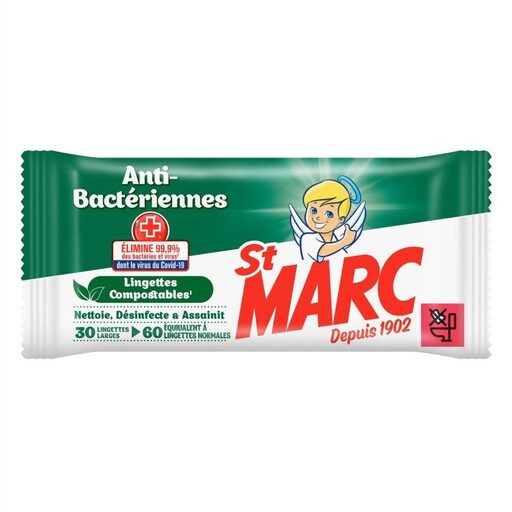
Why we chose it: Perfect for quick, everyday cleaning. St Marc is a trusted name that offers a reliable and affordable solution for washable surfaces like countertops or door handles.
This product clearly defines its action: it eliminates bacteria and viruses (including SARS-CoV-2, per the EN14476 standard), making it a true disinfectant, not just a cleaner.
Its 5-minute contact time is clearly stated, ensuring correct and effective use. The resealable pack helps keep the wipes moist.
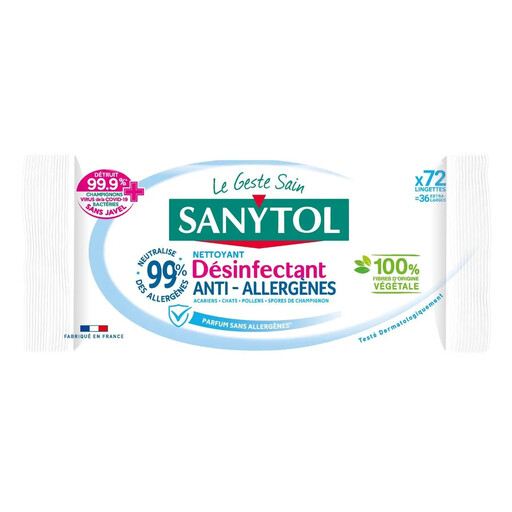
Why we chose it: Ideal for families with young children, pets, or allergy sufferers. In addition to eliminating germs, these bleach-free wipes tackle common allergens like dust mites and pollen.
Its formula is designed for a wide variety of surfaces, including those that come into contact with babies or pets (with rinsing), which avoids the risk of using a product that is too harsh.
Dual action: disinfects (bacteria, fungi, viruses per the EN14476 standard) and neutralises allergens. The added bonus? The wipes are biodegradable.
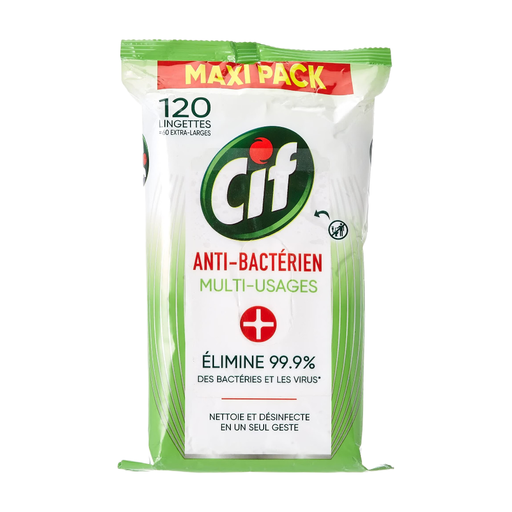
Why we chose it: For those looking for an all-in-one solution for the kitchen and bathroom. The large pack size is economical and perfect for frequent use on large surfaces.
This product combines cleaning and disinfecting in one step, eliminating 99.9% of bacteria. Its versatility for both kitchen and bathroom use means you don't need to buy multiple specific products.
The 120-wipe format offers excellent value for heavy users. The brand promises a streak-free finish, a real bonus for glossy surfaces.
An antibacterial wipe is tested for its effectiveness against bacteria, while a virucidal wipe is also tested against viruses. To ensure it has virucidal action, check for the EN 14476 standard on the packaging, which certifies its effectiveness, particularly against enveloped viruses.
No, this is strongly discouraged. The formulas in surface wipes are not designed for skin contact and can cause irritation. For hand hygiene, use products specifically formulated for that purpose, such as hand sanitising wipes or alcohol-based gel.
This depends on the quality of the packaging. Most packs have an adhesive tab or a rigid plastic lid. To preserve moisture, be sure to reseal the pack tightly after each use. A handy tip: storing the pack upside down can also help keep the top wipes well-saturated.