
当日/次日达

品质保障

开启新人专享福利: 全场免邮 | 低至 2 折 | 免费试用 30 天 JoyPlus 会员
下载 Joybuy
Disinfectant wipes have become a go-to for quick and effective cleaning, both at home and in the office. But with an overwhelming number of options, it's easy to make a mistake and end up with a less-than-savvy purchase. As the Head of Product Recommendations at Joybuy, my mission is to help you navigate the options and decode marketing claims.
Here are the 3 most common mistakes to avoid:
To ensure your wipes truly meet your needs, examine these three essential points before you buy.
The word "disinfectant" is a generic term. For truly controlled hygiene, you need to know exactly what you're trying to eliminate.
Checking for these standards ensures you choose a product with proven effectiveness for your intended use, whether for everyday maintenance or deeper disinfection.
Not all wipes are created equal, nor are they suitable for all surfaces. A bleach-free formula is often preferable for daily use on countertops, electronics, or children's toys.
For food-contact surfaces (countertops, tables, high chairs, etc.), read the instructions carefully. Most disinfectant products require you to let the product sit for a few minutes, then rinse the surface with clean water. This simple step guarantees perfect food safety.
The choice of material is doubly important: it affects both cleaning efficiency and ecological impact. Generally, thick, textured wipes are better at trapping dirt.
More and more brands are offering eco-friendly wipes made from plant-based, biodegradable, or even compostable fibres. If reducing your environmental footprint is a priority, these alternatives are a smart choice. Quality packaging with a rigid plastic lid, rather than a simple sticker, also ensures longevity. It guarantees you can use your pack down to the very last wipe for quick home cleaning.
To help you see how these criteria apply in practice, here are a few products suited for different user profiles.
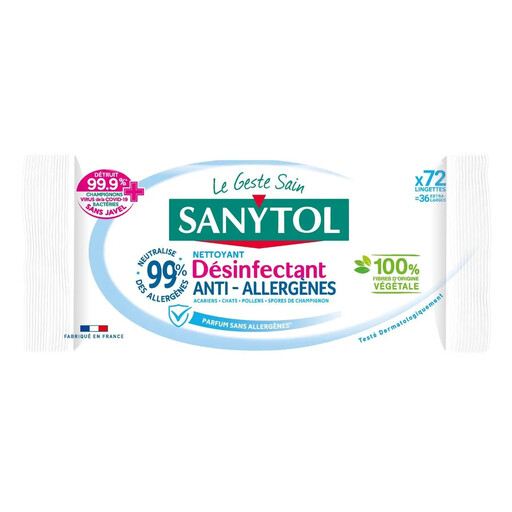
Why we chose it: Perfect for households with sensitive individuals, children, or pets. Its formula disinfects while neutralizing the most common allergens (cat hair, dust mites, pollen).
This product goes beyond simple disinfection by specifically targeting allergens. It avoids the trap of a "one-size-fits-all" but potentially irritating formula.
Its dual disinfectant and anti-allergen action. The wipes are biodegradable, which is a plus for the environment.
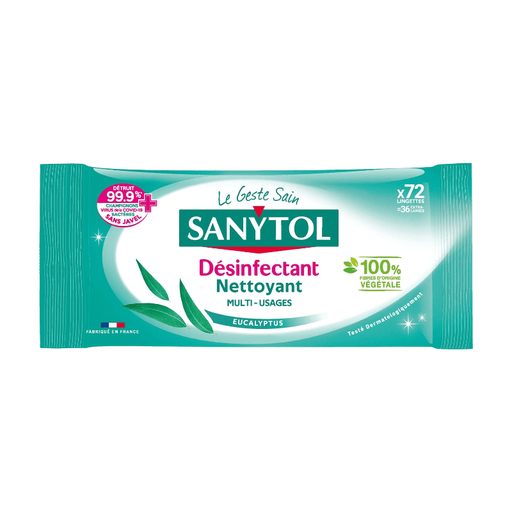
Why we chose it: For those looking for the ultimate all-in-one solution. These multi-surface wipes clean, disinfect, and deodorize in a single pass, from the kitchen to the bathroom, including door handles.
Its bleach-free formula avoids the pitfall of an overly aggressive product that damages surfaces. It guarantees broad-spectrum efficacy (bacteria, fungi, viruses) with complete safety.
Its triple action (cleans, disinfects, freshens) and compatibility with a multitude of surfaces make it the Swiss Army knife of cleaning.
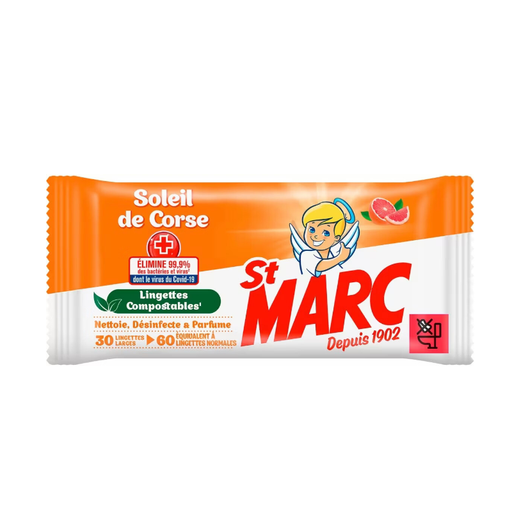
Why we chose it: For those who don't want to choose between hygiene and respect for the environment. These wipes are compostable, which drastically reduces waste compared to a conventional product.
It directly addresses the issue of environmental impact, an aspect too often overlooked when purchasing single-use products.
Compostable wipes made from biodegradable fibres. Bonus: their extra-large size offers an excellent coverage-to-cost ratio.
We have compiled a complete and up-to-date selection of products that meet our strict selection criteria and current safety standards.
A "cleaning" wipe is used to remove visible dirt: dust, fingerprints, stains, etc. A disinfectant wipe, on the other hand, contains biocidal agents (like benzalkonium chloride or ethanol) whose role is to kill microorganisms (bacteria, viruses, fungi). To earn the "disinfectant" label, it must meet European (EN) standards that prove its efficacy.
Yes, but with certain conditions. It is imperative to read the instructions on the packaging. Most disinfectant wipes are compatible with countertops, tables, or high chairs, but it is almost always recommended to let the surface air-dry for a few minutes, then rinse it with clean water before any contact with food.
It all depends on the quality of the packaging. Packs with a rigid plastic lid preserve moisture much better than those with a simple self-adhesive tab. To extend their life, the secret is simple: close the package tightly after each use and store it in a cool place, away from direct sunlight.