
Livraison le jour même ou le lendemain

Qualité garantie

Débloquez vos offres de bienvenue: Livraison GRATUITE | Jusqu'à -80 % | 30 jours d'essai gratuits à JoyPlus
Téléchargez l'application
A spotless toilet bowl isn’t just about a pleasant fragrance or a pretty promise on the label. To choose a disinfectant toilet gel, you really need to look at the formula, the contact time and the type of soiling it targets. Expectations differ depending on whether it’s for a rarely used flat, a family home or a heavily used toilet.
A fresh scent boosts the feeling of cleanliness, but it doesn’t replace the mechanical action of the brush or a genuine disinfectant action stated on the label. A rim block or a scented gel can help maintain the bowl between cleans, but it won’t tackle old limescale deposits or ingrained stains.
Toilet gels based on bleach are generally associated with whitening and disinfecting, according to the manufacturer’s instructions. Acid-based formulas, such as certain descaling toilet gels, are designed more to dissolve limescale, mineral traces and deposits below the waterline. These two product families must never be mixed.
A bleach toilet gel is therefore not necessarily the best choice for a heavily scaled bowl. Conversely, an acidic descaler won’t necessarily meet a need for whitening.
When a gel clings under the rim, it stays in contact with the surfaces for longer. That doesn’t mean you can skip carefully following the action time stated on the packaging. Corrosive products require specific precautions: wearing gloves, ventilating the room, protecting your eyes if recommended, and storing out of reach of children.
Never mix a product containing bleach with an acidic cleaner, ammonia or any other cleaning product. Dangerous gases can be released.
Before you buy, start by identifying your primary need:
The ingredient percentages and hazard pictograms should be checked on the packaging of the product you actually receive. Formulations can change over time.
A nozzle angled towards the underside of the rim makes for even application. A thick enough texture stays on the surfaces better, including above or near the waterline. If the bowl is very dirty, the gel’s action will usually need to be followed up with scrubbing, unless the label says otherwise.
For disinfectant wipes intended for the toilet, check they are compatible with sanitary surfaces. A used wipe must go in the bin, never down the toilet, even if it seems thin enough to flush.
The bottle volume alone isn’t enough to compare prices. Also consider the amount used per clean, the cleaning frequency, the number of blocks per pack and their stated lifespan. A rim block designed to last several weeks can complement regular cleaning, while a 750 ml gel is better suited for targeted bowl treatment.
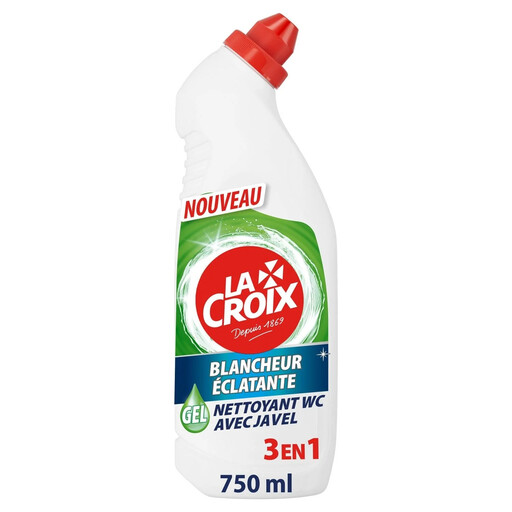
Why this choice suits this profile: This gel combines cleaning, whitening and deodorising in a 750 ml bottle – a simple solution for everyday maintenance.
Its triple action is clearly stated – so you avoid choosing a simple scented product when the bowl already has stains.
A gel that clings under the rim, a fresh fragrance and a formula containing chlorinated whitening agents.
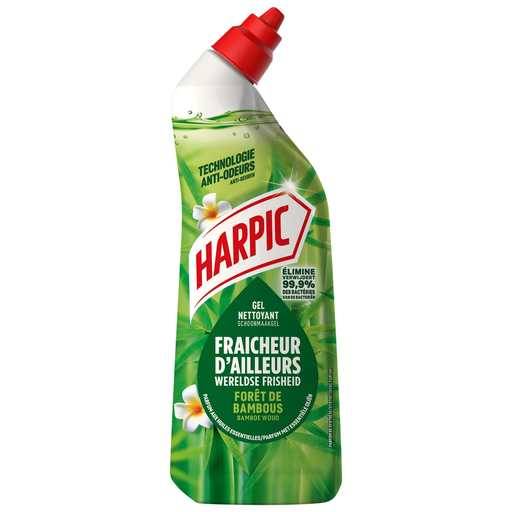
Why this choice suits this profile: It combines a disinfectant action stated on the product page, an advertised anti-limescale protection and a Bamboo Forest fragrance.
It doesn’t just scent the bowl – its use also targets odour and limescale maintenance, with application under the rim.
A 750 ml bottle, an advertised anti-odour technology and a fragrance with essential oils, according to the manufacturer’s description.
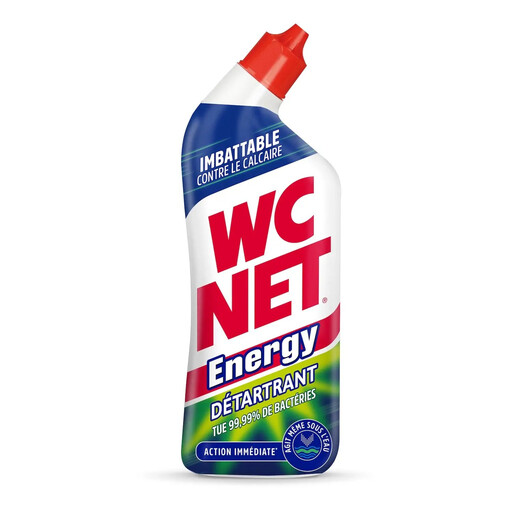
Why this choice suits this profile: Its primary mission is to tackle limescale, especially in bowls exposed to very hard water or persistent deposits.
It targets a specific problem: limescale. Maintenance therefore doesn’t rely on a simple scented product that’s ineffective against mineral deposits.
A formula advertised as adhesive and active underwater, containing hydrochloric acid – gloves and strict adherence to the label are essential.
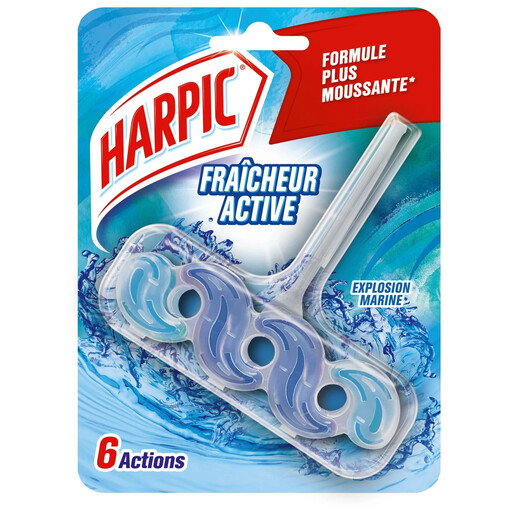
Why this choice suits this profile: This block clips under the rim and releases its fragrance with every flush, helping to space out full cleans.
It is presented as a maintenance supplement, not a substitute for disinfectant toilet gel applied directly to the bowl.
A 35 g format, rim-clip fitting and an advertised lifespan of up to around four weeks, depending on usage.
A bleach toilet gel may be intended for cleaning, whitening or disinfecting, depending on what its label says. For heavy mineral deposits, choose an anti-limescale toilet gel explicitly designed to tackle scale. Never mix the two products.
It all depends on the formula. Some products need a few minutes to work, while others require a shorter or longer contact time for stubborn marks. The time stated on the label should always take priority over general recommendations.
No. A rim block releases cleaning agents and fragrance with every flush, but it doesn’t replace regular application of a toilet cleaner, a descaling toilet gel or a disinfectant suited to the bowl’s needs.