
Livraison le jour même ou le lendemain

Qualité garantie

Débloquez vos offres de bienvenue: Livraison GRATUITE | Jusqu'à -80 % | 30 jours d'essai gratuits à JoyPlus
Téléchargez l'application
Buying a disinfectant seems straightforward… until you realise that a hand gel isn’t suitable for surfaces, a spray requires a specific contact time, or a product marketed as multi-purpose should never be applied to skin. At home, while travelling, in the office or in a catering establishment, the right choice depends first and foremost on the intended use.
Certain mistakes crop up time and again:
Start by identifying exactly where the product will be used:
An alcohol-based hand rub should not be sprayed onto a worktop. Likewise, a surface spray has no place on skin.
The label must state the active substance and the precautions to take. The most common formulas include:
Never mix several cleaning products. Wear gloves or protective goggles when the instructions recommend it, ventilate the room and store bottles out of reach of children.
For a bactericidal, fungicidal or virucidal disinfectant, check the standards and conditions of use stated on the packaging. The references EN 1276, EN 13697, EN 1650 and EN 14476 correspond to tests for specific actions under defined conditions. They do not guarantee that the product is suitable for all uses.
Contact time also plays a crucial role: the surface must remain sufficiently wet for the entire stated duration. If you wipe the product away immediately, its effectiveness may be reduced. For food-contact surfaces, also check whether rinsing with drinking water is mandatory. In all cases, the manufacturer’s instructions and label take precedence.
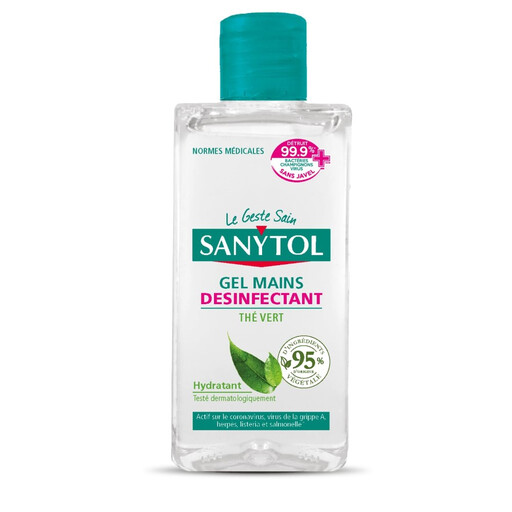
Why this choice suits this profile: At 75 ml, this gel slips easily into a bag or wash bag. Its ethanol-based formula at 72.2% is used without rinsing, by rubbing the hands until completely dry.
Its small size avoids cluttering your space with a large container for occasional use. The label states it is for hands only and advises against applying it to irritated or broken skin.
A pocket-sized 75 ml format, no rinsing required and a friction time of around 30 seconds.
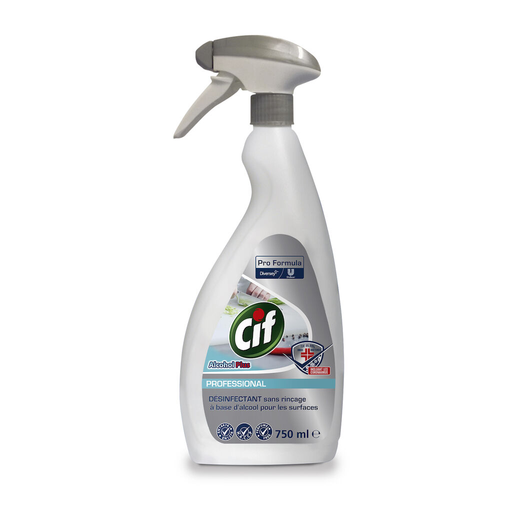
Why this choice suits this profile: Ready to use, this spray is suitable for small, frequently touched surfaces, particularly in a professional kitchen or workspace.
The ready-to-use formula avoids dilution errors. The product contains 80% denatured ethanol and does not require rinsing according to the instructions provided, subject to the restrictions stated on the label.
A 750 ml format, direct application and claimed bactericidal, fungicidal and virucidal actions with EN references on the product page.
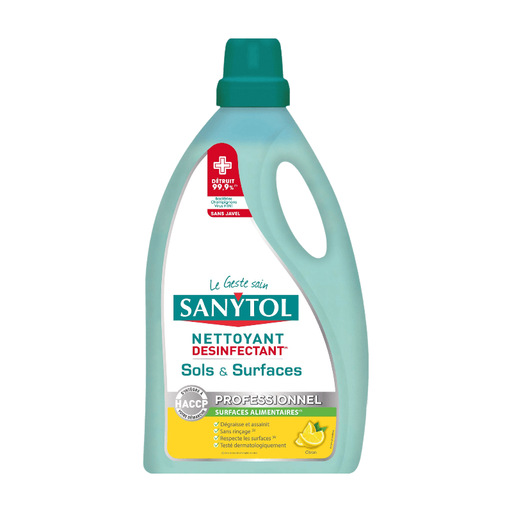
Why this choice suits this profile: With its 5 litres, this container meets the needs of a shop, office, professional kitchen or household that regularly cleans large areas.
Its bleach-free formula and professional packaging avoid the need for multiple small bottles. However, you must follow the dilution, contact time and any rinsing instructions for food-contact surfaces.
A 5-litre container for floors and surfaces, with EN 13697, EN 1650 and EN 14476 references stated on the product page.
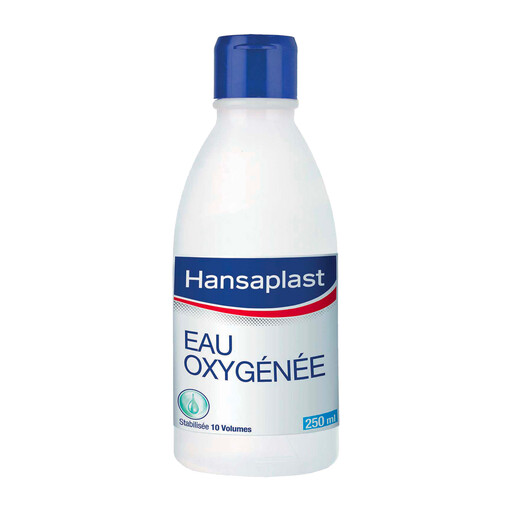
Why this choice suits this profile: This 250 ml solution is intended for cleaning and skin hygiene, particularly for minor superficial wounds, in accordance with the instructions provided.
This is neither a surface disinfectant nor a hand gel. This distinction limits the risk of choosing the wrong product, while the instructions remind you to avoid contact with the eyes.
A 250 ml capacity, a clearly stated composition on the page and a dedicated use for skin hygiene.
We have compiled a comprehensive, real-time selection of products that meet these demanding criteria, in compliance with European safety regulations.
No. A product intended for surfaces may contain irritating substances and is not formulated for skin. Use only a hand disinfectant gel or an antiseptic that clearly states it is for cutaneous use.
It depends on the formula, the container and the date stated on the packaging. Close the bottle after each use, store it away from heat and refer to the expiry date and the manufacturer’s recommendations.
Not always. If a surface is visibly dirty, start by removing the dirt with a suitable product, unless the manufacturer clearly states a dual cleaning and disinfecting action. Then follow the dosage, contact time and any rinsing instructions.