
Livraison le jour même ou le lendemain

Qualité garantie

Débloquez vos offres de bienvenue: Livraison GRATUITE | Jusqu'à -80 % | 30 jours d'essai gratuits à JoyPlus
Téléchargez l'application
Disinfectant cleaning products should not be chosen solely for their fragrance or the promise highlighted on the label. Disinfectant toilet gel, limescale remover spray, laundry disinfectant and multi-purpose bleach do not serve the same purpose. Choosing the wrong product can lead to unnecessary expense, damage a surface or cause a dangerous reaction if it is mixed with another cleaner.
Whether you are a private household, a family or a professional user in France, here are the key criteria to check before buying, along with a selection of products worth considering in 2026.
A product may remove marks, dissolve limescale or leave behind a pleasant fragrance without being designed to disinfect. The product page for LA CROIX Multi-Purpose Bleach Cleaner Liquid 1,5 L states, for example, that it cleans, whitens and removes stains, but that it is not intended for disinfection.
Conversely, a fragranced toilet block releases its formula with every flush but does not necessarily replace thorough cleaning of the bowl. Always check the function actually claimed: cleaning, biocidal action, descaling, continuous care or deodorising.
Claims such as “99.9%” must always be considered in context: the type of microorganism targeted, the surface concerned, the contact time and the conditions of use. When a product page claims to eliminate 99.9% of bacteria or viruses, this is a manufacturer’s claim, not a guarantee that applies in every situation.
Contact time is also crucial. A product that is sprayed on and wiped away immediately may not have had enough time to work, contrary to the instructions on the label.
An acidic limescale-removing toilet cleaner is not suitable for every bathroom surface. Similarly, chlorine-based formulas can damage certain materials, textiles or finishes. Before each use, check the “compatible surfaces”, test the product on a discreet area and follow the recommended dilution instructions precisely.
Start by choosing the product according to the task at hand:
The presence of a biocidal active substance does not mean that a product can be used everywhere. Read the label, hazard pictograms and instructions concerning approved applications.
Products containing sodium hypochlorite, hydrochloric acid or caustic soda may be corrosive or irritating. Wear gloves whenever recommended on the label, ventilate the room and keep the product in its original packaging, out of the reach of children and animals.
Never mix bleach with an acidic product, ammonia or another cleaner. Dangerous gases may be released. This warning applies in particular to toilet gels, limescale-removing sprays and drain unblockers.
A larger bottle is not necessarily more economical. Instead, compare the amount actually used for each wash or application. For laundry disinfectant, check the dosage per load as well as the minimum effective temperature stated. For a toilet block, consider the stated duration of use, generally expressed in weeks and dependent on the number of flushes.
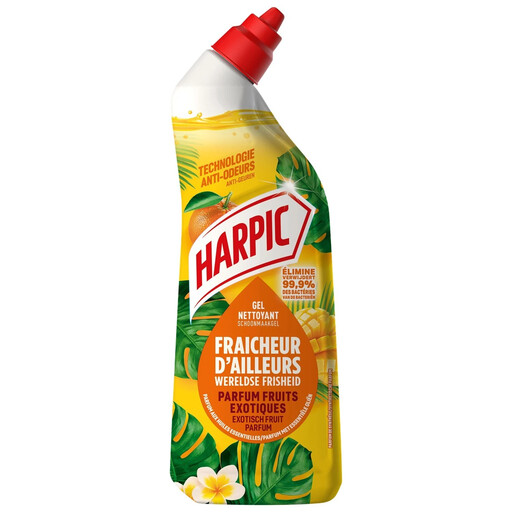
Why this choice suits this profile: its 750 ml bottle is well suited to regular toilet-bowl maintenance, particularly for households looking for a single product to clean, fragrance and care for the toilet.
The product information specifies applying it beneath the rim, leaving it to work for a few minutes, then brushing and flushing. This protocol is clearer than that of a product presented as multipurpose without precise instructions.
Toilet gel containing benzalkonium chloride, listed at 0.29 g per 100 g, with claimed odour-control action and an exotic-fruit fragrance. For toilet use only.
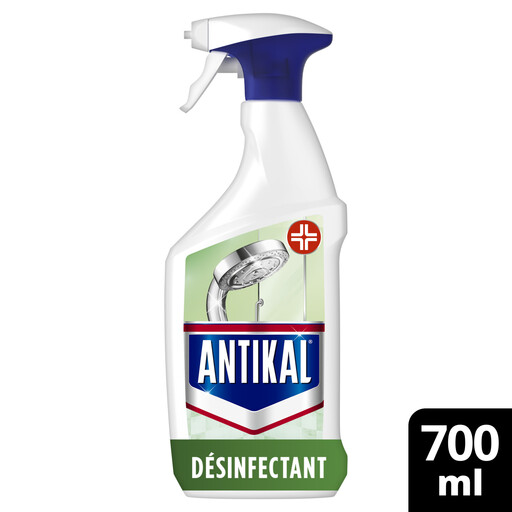
Why this choice suits this profile: this spray is designed for everyday bathroom surfaces, including sinks, tiles, bathtubs, shower screens and taps.
The product information distinguishes between the contact time required for disinfection and the wiping needed to remove limescale and soap residue. This is a useful distinction, as not all types of dirt should be treated in the same way.
700 ml spray format, limescale-removing function and claimed action against water marks and soap residue. Use with gloves in a properly ventilated room.
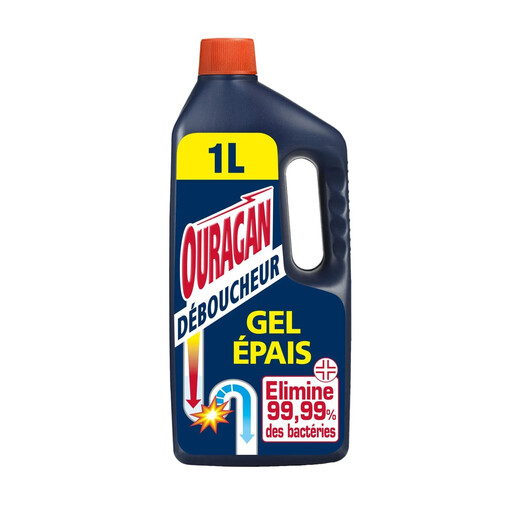
Why this choice suits this profile: this drain unblocker is intended for blocked waste pipes, whether in a family home or a premises where blockages require targeted treatment.
It is not presented as an all-purpose cleaner: its use is limited to unblocking drains. The product information recommends a 15-minute contact time and prohibits combining it with other products.
Thick gel supplied in a 1-litre container, formulated with caustic soda and chlorinated agents according to the product information. Corrosive product: gloves, protective goggles and ventilation are essential.
For toilets, disinfectant toilet gel should be used alongside regular cleaning. A fragranced toilet block, such as HARPIC ActiveFresh, can help maintain a fresh sensation between cleanings. Its product information recommends replacing it approximately every four weeks.
For laundry washed at low temperatures, laundry disinfectant can be poured into the fabric-softener compartment, following the stated dosage. SANYTOL Stop Odors 1 L is advertised as suitable for cycles from 20°C. However, always check the care instructions for delicate fabrics, wool and silk.
Those with a septic tank may prefer a dedicated formula such as HARPIC Fresh Mint Toilet Gel for Septic Tank. The product information recommends it for maintaining toilets connected to a septic tank and mentions a formula containing alcohol vinegar. Even so, it is best to follow the installation manufacturer’s recommendations.
Explore a regularly updated selection of cleaning products for toilets, bathrooms, laundry, windows and everyday surfaces, with usage information available for each product.
No. Never mix bleach with acidic toilet gel, limescale-removing spray, ammonia or drain unblocker. Dangerous fumes may form. Use only one product at a time, rinse if necessary and ventilate the room.
Shelf life depends on the product and the manufacturer’s recommendations. Check the date shown on the packaging as well as the batch number. Reseal the bottle after each use and store it away from heat, sunlight and frost.
No. It complements the wash but does not replace detergent or the need to select a temperature and programme suitable for the fabric. Follow the dosage specified for the machine compartment and do not pour the product directly onto dry clothing.