
Livraison le jour même ou le lendemain

Qualité garantie

Débloquez vos offres de bienvenue: Livraison GRATUITE | Jusqu'à -80 % | 30 jours d'essai gratuits à JoyPlus
Téléchargez l'application
Between the promises of “99.9%”, lingering fragrances and products marketed as all-purpose, choosing the right disinfectant and household cleaning products can quickly become a headache. A toilet gel has no place on a kitchen table, just as a skin antiseptic shouldn’t be used on a floor or in a sink.
To avoid unnecessary purchases, start by checking the intended use, contact time, surface compatibility and any precautions listed on the label.
A multi-surface cleaner removes visible dirt. A disinfectant, on the other hand, contains an active substance designed to reduce certain micro-organisms under specific conditions. Bleach can whiten and clean, but not all products are necessarily intended for disinfection. The product sheet for LA CROIX multi-purpose bleach cleaning liquid 1.5 l states that this product is not designed to disinfect.
The “99.9%” claim alone isn’t enough to compare two products. You also need to look at the target micro-organisms, contact time, dilution and the type of surface involved. A bactericidal, fungicidal or virucidal disinfectant may meet different protocols. The EN standards listed on the packaging provide a useful benchmark, but they must always be considered alongside the usage conditions provided by the manufacturer.
Acidic, chlorinated or high-alcohol products can damage certain metals, plastics, natural stone, textiles or coatings. A disinfectant toilet gel is formulated for the bowl and surrounding areas, not for a worktop. Similarly, a disinfectant alcohol intended for equipment should not be used as a skin antiseptic.
For toilets, a gel containing benzalkonium chloride can be marketed as a disinfectant and odour eliminator. Harpic gels state a content of 0.29 g of benzalkonium chloride per 100 g of product. Products based on hydrochloric acid, such as certain limescale-removing gels, require greater precautions due to the risk of burns and dangerous fumes if mixed.
For surfaces, a disinfectant spray may contain ethanol, sodium hypochlorite or another active substance. The CIF Pro Formula surface disinfectant spray contains 80% denatured ethanol, and offers bactericidal, fungicidal and virucidal action according to the product information provided.
A disinfectant product isn’t just a quick spray. You must follow the stated action time, then rinse if the label requires it. This step is particularly important in the kitchen and on surfaces that may come into contact, even indirectly, with food.
The CIF spray is presented as a no-rinse formula. In contrast, the SANYTOL disinfectant cleaner for floors and surfaces, sold in a 5-litre container, requires dilution and rinsing with drinking water on surfaces that come into contact with food. These differences have a real impact on cleaning time and the actual cost of use.
A 700 ml or 750 ml bottle is usually sufficient for a bathroom and occasional use. For a restaurant, shared building or cleaning company, a 5-litre container can reduce the number of refills, provided you follow the storage and dilution rules.
Also remember to distinguish between:
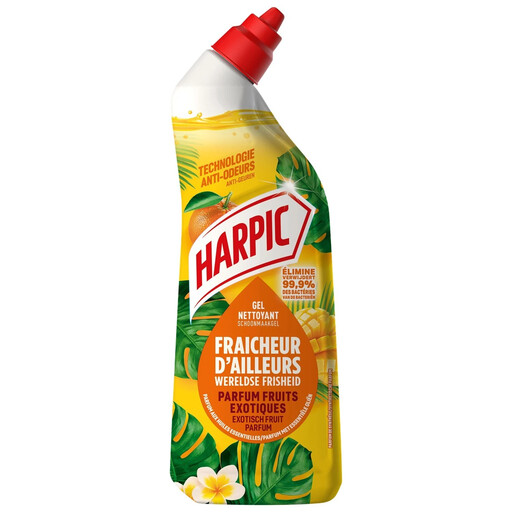
Why this choice suits this profile: Its 750 ml bottle and specially designed nozzle for application under the rim make it ideal for regular household maintenance, without requiring the purchase of a large professional container.
It is clearly intended for toilets and details the precautions regarding eye contact, ventilation and mixing with other products.
Bowl gel, claimed anti-odour technology, exotic fruit fragrance and benzalkonium chloride in the formulation.
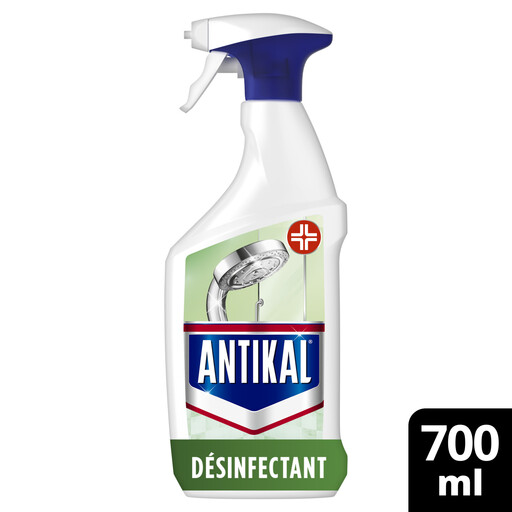
Why this choice suits this profile: This 2-in-1 spray is designed for bathrooms where you want to tackle limescale marks, soap residue and disinfection with a single product.
Its use is restricted to the specified bathroom surfaces, preventing you from applying the product indiscriminately to sensitive materials.
700 ml format, claimed limescale-removing and disinfectant action, plus a protective barrier against water marks according to the product description.

Why this choice suits this profile: The 5-litre container is ideal for frequent floor and surface cleaning, particularly in professional premises or large homes.
The instructions specify dilution and a precise contact time, rather than suggesting a concentrated product can be used neat on all surfaces.
Bleach-free formula, lemon fragrance, suitable for floors and surfaces, with references to EN 13697, EN 1650 and EN 14476 standards in the description.
We have put together a comprehensive, real-time selection of products that meet these strict selection criteria and the requirements of European safety regulations.
No. Check the list of authorised surfaces on the label and, if necessary, test on a small, inconspicuous area. Grout, metals, natural stone and surfaces that come into contact with food may require special precautions.
It depends entirely on the formula and the desired outcome. The action time may be stated in minutes or linked to a specific dilution. Wiping it off immediately risks not meeting the conditions intended by the manufacturer.
This depends on the product and the surface. CIF Pro Formula states it can be used without rinsing, whereas surfaces that come into contact with food may require rinsing with drinking water. In all cases, the label of the product you are using remains the reference to follow.