
Livraison le jour même ou le lendemain

Qualité garantie

Débloquez vos offres de bienvenue: Livraison GRATUITE | Jusqu'à -80 % | 30 jours d'essai gratuits à JoyPlus
Téléchargez l'application
With toilet gels, disinfectant sprays, limescale removers and bleach-free products to choose from, it’s not always easy to know where to start. A product labelled “4-in-1” won’t necessarily replace a specialist cleaner. And larger packs aren’t always better value if the formula isn’t suitable for your surfaces.
To choose a disinfectant cleaner for your home and bathroom that meets your needs, first check what it’s intended for, its contact time, which surfaces it can be used on and the precautions listed on the label.
A cleaner removes visible dirt such as soap, grease or limescale. A disinfectant contains a biocidal active ingredient and generally needs to remain on the surface for a set time. Wiping a spray away straight after applying it can therefore reduce the contact time specified by the manufacturer.
In the bathroom, an anti-limescale cleaner is enough to remove water and soap marks, but it won’t necessarily disinfect. Conversely, a toilet disinfectant isn’t always suitable for a screen, fabric or a food-contact surface.
Bleach can clean and brighten some hard-wearing surfaces, but it can also cause discolouration, corrosion and irritation. Never mix it with an acidic product, a descaler or another cleaner: this can release dangerous gases.
For fabrics, delicate surfaces or homes where the smell of chlorine is a concern, a bleach-free disinfectant may be more suitable, provided you follow the instructions carefully.
Claims such as “99.9%” should be treated with caution. Check the conditions under which the result was achieved, including the target organism, contact time, temperature, level of soiling and any dilution required. European standards such as EN 1276, EN 13697 or EN 14476 refer to specific testing protocols. They don’t necessarily mean the product is suitable for every everyday situation.
A toilet disinfectant or toilet bleach gel is designed for the toilet bowl, enamel and hard-to-reach areas beneath the rim. A bathroom spray is generally intended for sinks, tiles, shower screens and taps. For a worktop, look for an explicit statement that it’s suitable for surfaces that may come into indirect contact with food, and check whether rinsing is required.
Never assume a product is suitable for marble, aluminium, wood, varnished surfaces, electronic devices or fabrics. If recommended on the label, test it on an inconspicuous area first.
Contact time is crucial for a disinfectant. Some toilet cleaners need to be left for only a few minutes, while a hypochlorite-based gel may need longer before you brush and rinse.
Always follow the time stated on the packaging. Leaving a product on for longer won’t necessarily improve the results and could damage the surface.
A 500 to 750 ml spray is handy for everyday cleaning and easy to use. A 1.5 to 2 litre bottle may be a good choice for a large family, holiday let, hotel or cleaning team. However, it needs to be stored safely and appropriately.
Toilet blocks help keep the bowl fresh between flushes, particularly by tackling deposits and unpleasant odours. They don’t replace manual cleaning of the bowl. Also check the stated lifespan of each block, how it attaches and any environmental warnings.
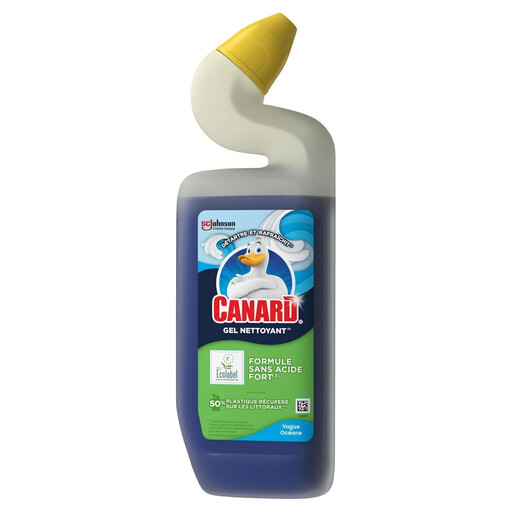
Why it suits this shopper: This ready-to-use gel makes regular toilet cleaning easy, with a nozzle designed to reach beneath the rim and a handy 750 ml size.
The product details specify an acid-free formula and a 5-minute action time: two useful details that help you avoid improvised mixing and wiping it away too soon.
A toilet-bowl gel with claimed action against limescale and stains, plus a bottle made from 50% plastic recovered from coastal areas, according to the product details.
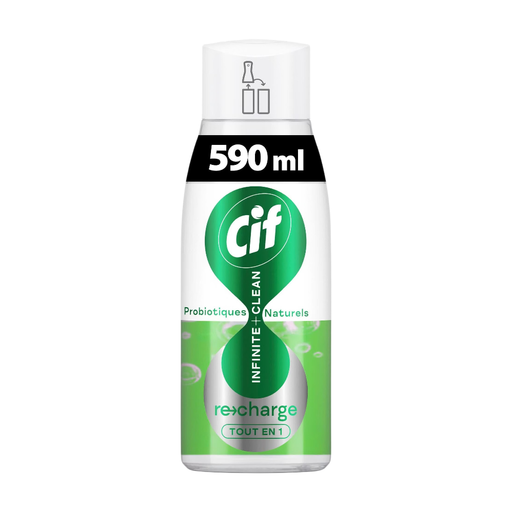
Why it suits this shopper: The refill format is ideal for households looking to streamline cleaning across a range of surfaces, without having to buy a complete spray bottle each time.
The refill must be used with the compatible spray bottle: something to bear in mind before choosing a format marketed as economical.
Suitable for multiple surfaces, a 590 ml refill, no-rinse application according to the instructions, and the option to freshen up some fabrics.
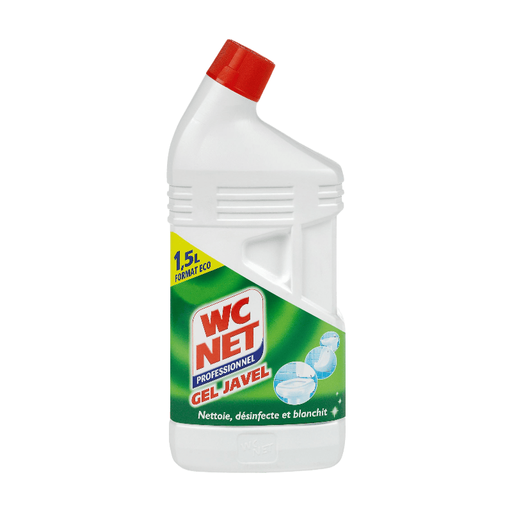
Why it suits this shopper: This 1.5-litre professional-size bottle is suitable for toilets and urinals that need frequent cleaning in a home, accommodation or shared space.
The product details specify a gel formula, a 15-minute action time and bactericidal efficacy in accordance with standard EN 1276 under the stated conditions. Never mix it with another product.
An angled nozzle to reach beneath the rim, an active chlorine formula and stated manufacture in France.
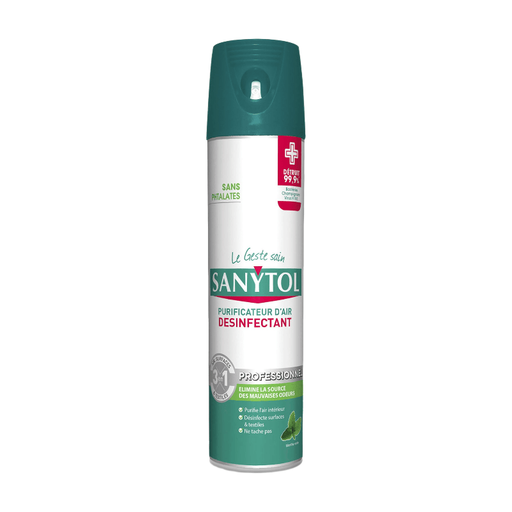
Why it suits this shopper: This spray is suitable for surfaces and some fabrics if you want to avoid a bleach-based formula while benefiting from its odour-neutralising action.
The product details recommend testing delicate fabrics on a hidden area and spraying from a distance of around 30 cm: two useful precautions to help prevent marks and avoid soaking the fabric.
A formula advertised as bleach-free, a 600 ml aerosol and the option to use it on compatible surfaces and fabrics, allowing them to dry naturally.
We’ve put together a comprehensive selection, updated in real time, of products that meet these demanding criteria and comply with European safety regulations.
No. Compatibility depends on the formula and the material. Check the list of approved surfaces and never mix products. For a delicate surface, test the product on an inconspicuous area and follow the manufacturer’s recommendations.
An anti-limescale toilet block gradually works with every flush to help maintain the bowl, reduce some deposits and add fragrance. A toilet disinfectant is applied directly and needs to be left for a specified contact time. The two products are designed for different purposes, but can be used together.
Keep the product in its original packaging, tightly closed, out of the reach of children and away from heat. Wear gloves and, if recommended on the label, eye protection. Ventilate the room and never transfer the product into a food container.