
Same-day & Next-day Delivery

Quality Guaranteed

Unlock Your Welcome Offers: FREE Delivery | Up to 80% OFF | Free 30-day JoyPlus trial
Download the APP
When you're standing in the cleaning products aisle, choosing a disinfectant cleaner can quickly become overwhelming. Between marketing promises, different formats, and complex ingredients, it's easy to feel lost. The result? A product that's ineffective, unsuitable for your surfaces, or simply impractical for daily use.
As a product specialist at Joybuy, my mission is to help you cut through the noise. Let's break down the common pitfalls and objective criteria to find the product that truly meets your needs, without being swayed by purely promotional claims.
The 2 Pitfalls to Avoid When Buying a Disinfectant:
To make an informed choice, you need to know how to read between the lines on the packaging. Here are the three essential points to check before any purchase.
A product that claims to be a disinfectant must prove it. European Standards (EN) are your most reliable benchmark. They certify the product's effectiveness against specific microorganisms under standardised test conditions.
A product displaying these standards offers a guarantee of efficacy that mere marketing claims cannot match.
The choice of the main disinfecting agent depends on the surfaces to be treated and your safety preferences.
A product's effectiveness also depends on its ease of use.
Rather than looking for a one-size-fits-all product, it's wiser to choose one that matches your lifestyle. Here are our recommendations for specific needs.
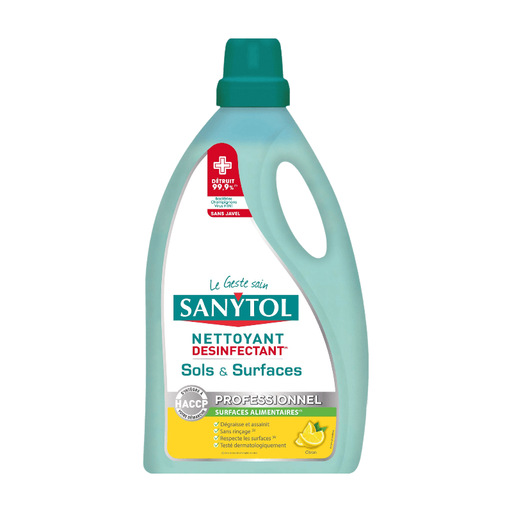
Why we chose it: For households with young children or pets, safety is paramount. This bleach-free formula is suitable for floors where little ones play and can be used on food-contact surfaces (with rinsing), giving you peace of mind. The large 5 L format is economical for regular use.
It does more than just clean. Its bactericidal, fungicidal, and virucidal efficacy is validated by EN 13697, EN 1650, and EN 14476 standards, proving its true disinfecting action.
Eliminates 99.9% of germs without the odours and risks associated with bleach. Dermatologically tested.
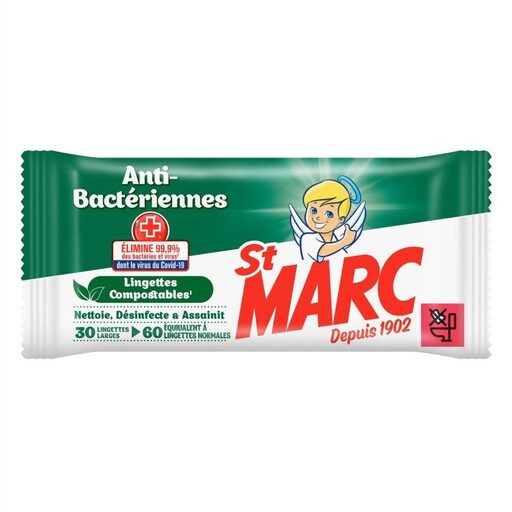
Why we chose it: For those with a busy schedule, speed is essential. These wipes allow you to disinfect critical touchpoints (handles, phones, desks) in a single step, with no prep required. They are ideal for maintaining a high level of hygiene between deep cleans.
Its packaging features an anti-drying seal that preserves the wipes' moisture, preventing waste. Its effectiveness against viruses (according to the EN14476 standard) is clearly stated, so these are not just simple cleaning wipes.
Maximum convenience for rapid disinfection. Eliminates 99.9% of bacteria and viruses, including the COVID-19 virus.
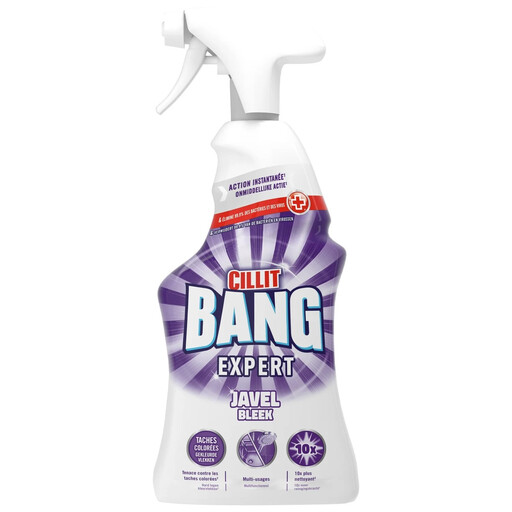
Why we chose it: The bathroom is a prime environment for the growth of mould and stubborn bacteria. This spray combines the power of bleach with cleaning agents for targeted action on grout, tiles, and fixtures, where a standard cleaner isn't enough.
This product doesn't pretend to be a gentle, all-purpose solution. It clearly states its bleach-based composition and its specific use for the bathroom, thus avoiding any unpleasant surprises on unsuitable surfaces.
Combines powerful disinfecting action (eliminates 99.9% of bacteria and viruses) with effective cleaning against tough stains and mould.
We have compiled a complete list of products that meet our rigorous selection criteria and current safety standards.
What is the difference between cleaning and disinfecting? Cleaning involves removing visible dirt, dust, and debris from a surface, often with soap and water. Disinfecting, on the other hand, aims to eliminate invisible microorganisms (bacteria, viruses, fungi) using a chemical agent. For complete hygiene, it is often recommended to clean a surface before disinfecting it.
Is a bleach-free disinfectant product truly effective? Yes, provided it complies with the European (EN) standards mentioned earlier. Bleach-free formulas use other active ingredients (like benzalkonium chloride or ethanol) whose effectiveness has been tested and validated in a laboratory. They are an excellent alternative for sensitive surfaces or for people who prefer to avoid the strong smell of bleach.
How long should you leave a disinfectant spray on a surface? The contact time (or dwell time) is crucial for effective disinfection and varies depending on the product and the target microorganisms. It is imperative to read the label. Generally, it can range from 1 to 15 minutes. Letting the product sit for the recommended duration before wiping (or air-drying if indicated) is the only way to ensure the disinfecting action is complete.