
Livraison le jour même ou le lendemain

Qualité garantie

Débloquez vos offres de bienvenue: Livraison GRATUITE | Jusqu'à -80 % | 30 jours d'essai gratuits à JoyPlus
Téléchargez l'application
Standing in the cleaning aisle, choosing the right disinfectant can often be a real puzzle. Between the marketing jargon and technical standards, it's hard to know where to start. Your goal is simple:?to ensure a healthy environment for you and your family. But beware of the pitfalls that could lead you to buy an unsuitable product, or one that's less effective than advertised.
As a product expert at Joybuy, my mission is to help you see things more clearly. Let's review the mistakes to avoid so you can make a truly informed choice.
The 2 classic pitfalls when buying a disinfectant cleaner:?
To make the right choice, focus on objective information. Here are the two points you should always check on the label.
A disinfectant's effectiveness is certified by specific standards. Look for these codes on the label to know what it truly protects you against:?
The required contact time is also a decisive factor. For daily use, a disinfectant spray that works in 5 minutes will be far more practical than a product that needs 15.
Not all disinfectants are created equal, nor can they be used everywhere. Defining your needs is the first step to finding the right format:?
To illustrate how these criteria apply in practice, here are a few products we recommend, each tailored to a specific need.
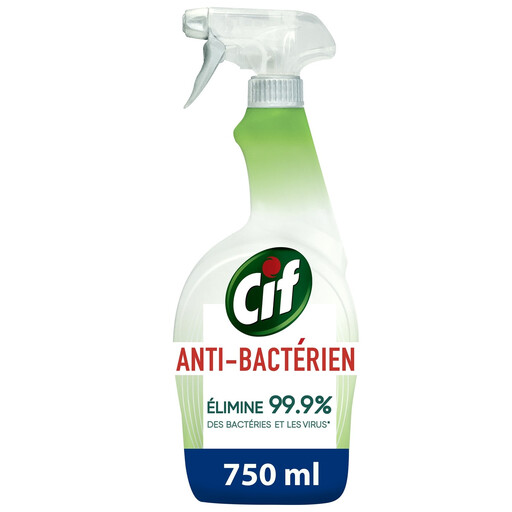
Why we recommend it: Perfect for families looking for a quick and safe solution for living and dining areas. Its formula is designed for daily use on numerous surfaces, including those where children place their hands or food.
This product goes beyond a simple "bleach-free" claim. It specifies its compatibility with food-contact surfaces, a key safety point for parents.
Versatility and Safety: Eliminates 99.9% of bacteria and viruses while being gentle on delicate surfaces. It leaves a fresh scent without the harsh smell of bleach.
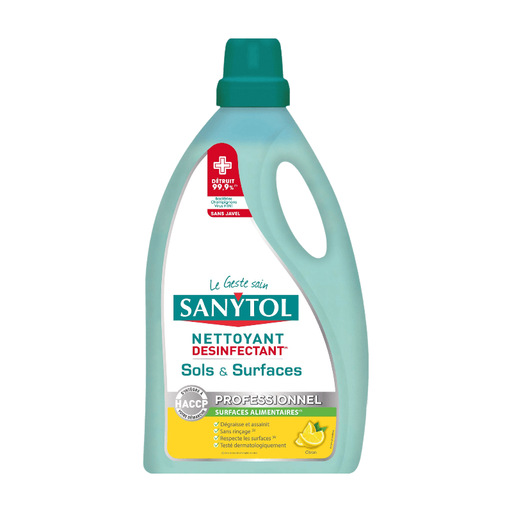
Why we recommend it: Ideal for small businesses, large families, or anyone who regularly cleans large areas. Its 5-litre format is very economical, and its powerful formula is suitable for near-professional use.
It goes far beyond the simple "99.9%" claim. The label details its compliance with European bactericidal (EN 13697), fungicidal (EN 13697, EN 1650), and virucidal (EN 14476) standards, offering full transparency on its spectrum of activity.
Professional-Grade Efficacy: It cleans and disinfects in a single step. Compatible with HACCP protocols (for food contact) and dermatologically tested, it's a comprehensive product.
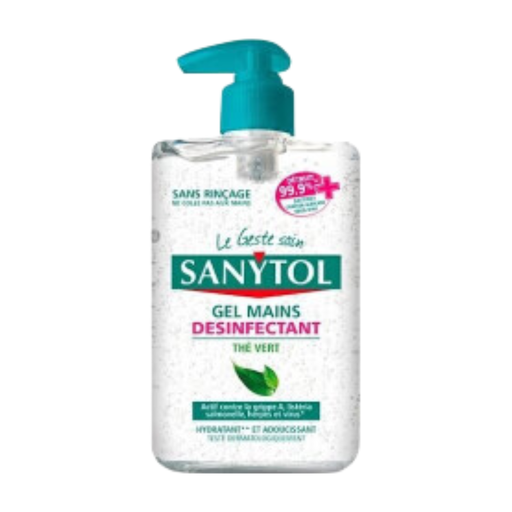
Why we recommend it: Essential for impeccable hand hygiene, whether at home, in the office, or on the go. The pump bottle is practical and hygienic, and its formula works quickly without drying out the skin.
This product doesn't mix categories: it's a skin antiseptic, not a surface cleaner. It meets a unique need with a formula designed specifically for this purpose (non-sticky, with a subtle scent).
Speed and Convenience: It disinfects hands in 30 seconds, without soap or water. The 250 ml pump format is perfect for a fixed location (like an entryway, desk, or counter).
Explore our full selection of products that meet our selection criteria and current safety standards.
Cleaning removes visible dirt (dust, debris) from a surface, usually with soap and water. Disinfecting, on the other hand, uses a chemical product to kill invisible microorganisms (bacteria, viruses, fungi). For maximum effectiveness, it is always recommended to clean a surface before disinfecting it.
Yes, absolutely. Bleach (sodium hypochlorite) is just one of many disinfecting agents. Many formulas use highly effective alternatives like ethanol, hydrogen peroxide, or benzalkonium chloride. They can be just as powerful and are often better suited for certain surfaces, as they are less corrosive and have less odour. The rule of thumb:?check the EN standards on the label to understand their true effectiveness.
The contact time varies enormously from one product to another, ranging from 30 seconds to over 15 minutes. This is crucial information that is always indicated on the label. For the disinfection to work, the surface must remain visibly wet for the entire recommended duration. Adhering to this contact time is non-negotiable to ensure all germs are eliminated.