
当日/次日达

品质保障

开启新人专享福利: 全场免邮 | 低至 2 折 | 免费试用 30 天 JoyPlus 会员
下载 Joybuy
Faced with the overwhelming array of disinfectant products on the shelves, it's easy to feel lost. Packaging promises the world—spotless cleanliness and total protection—but not all formulas are created equal. As editorial experts, our mission is to help you cut through the noise and make a truly informed choice that fits your actual needs, moving beyond advertising slogans.
Before you fill your cart, watch out for these two common pitfalls:
multi-surface disinfectant spray is certainly convenient, but its versatility has limits. An overly aggressive formula can damage delicate surfaces like untreated wood, marble, or certain plastics. Conversely, a formula that's too gentle may not be sufficient for a kitchen disinfectant, where grease and foodborne bacteria accumulate.To choose an effective and suitable disinfectant product, you need to read between the lines and focus on concrete technical information.
Behind this technical jargon lies crucial information: what type of microorganisms is the product effective against? A good product must prove its efficacy via European Standards (EN) clearly listed on the label.
virucidal product certified under this standard has proven efficacy against enveloped viruses (like the flu or SARS-CoV-2) and/or non-enveloped viruses.The choice will depend on the area to be treated and your tolerance for the characteristic smell of bleach.
Bleach-free cleaner products: These use other active ingredients like benzalkonium chloride or lactic acid. These formulas are often gentler on surfaces, have a more pleasant scent, and are frequently food-contact safe (always check the label). They are an excellent option for daily use in the kitchen or children's rooms.There's a format for every use. The right one depends on your habits and the surface you need to clean.
Disinfectant wipes: The ultimate on-the-go or touch-up solution for cleaning a small mess in a flash, the car steering wheel, or your desk.To guide you, here are a few options that meet distinct user profiles, taking into account the criteria we've just discussed.

Why it's a great choice: Perfect for households with children or pets, this value-size format allows you to clean and disinfect large surfaces without the drawbacks of bleach. Its food-contact safe formulation is a major advantage for the kitchen and baby's high chair.
It bypasses the "aggressive multi-surface" trap by offering a bleach-free formula, reducing the risk of discolouration or damage while being food-contact safe (after rinsing).
Triple action: bactericidal (EN 13697), fungicidal (EN 13697), and virucidal (EN 14476). Large 5 L format for extended use.
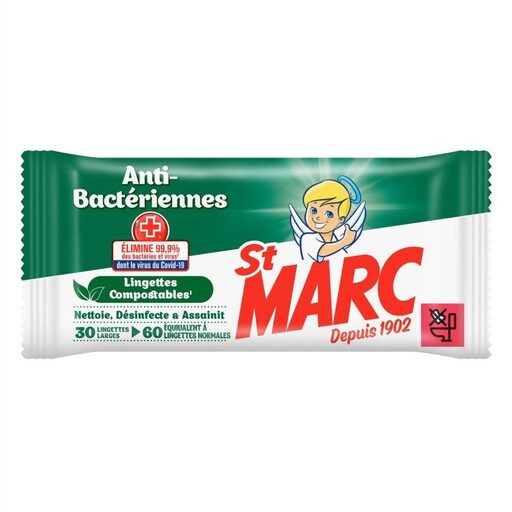
Why it's a great choice: For those who want to clean and disinfect in a single step, without pulling out all the cleaning supplies. Ideal for door handles, light switches, desks, or small everyday spills.
It doesn't claim to replace a deep clean but offers a targeted, rapid solution. Its efficacy is clearly defined, notably against the SARS-CoV-2 virus according to the EN 14476 standard.
Fast-acting in 5 minutes. Anti-drying pack that keeps wipes moist. Proven virucidal efficacy.
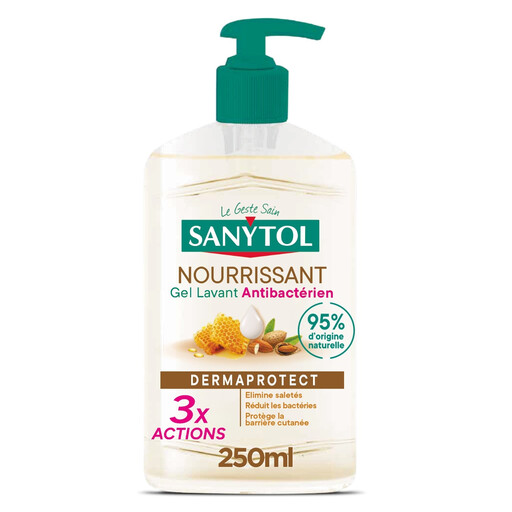
Why it's a great choice: Hygiene also (and especially) starts with your hands. This `antibacterial hand soap` combines a cleansing and protective action with a gentle formula that respects the skin, even with frequent washing.
It avoids the trap of harsh antibacterial soaps that strip the skin. Its hypoallergenic formula, enriched with natural extracts, nourishes the epidermis while protecting it.
Hypoallergenic formula, dermatologically tested. Contains natural extracts of royal jelly and organic almond milk.
We have compiled a complete, up-to-date list of products that meet these strict selection criteria and safety regulations.
It depends on its formulation. Many bleach-free cleaners are designed for use in the kitchen. To be certain, look for an explicit "food-contact safe" mention or a pictogram of a fork and glass. In most cases, it is recommended to rinse the surface with potable water after the disinfectant's contact time, especially if food will be placed directly on it.
Simply put: a cleaner removes visible dirt (dust, grease, crumbs). It acts mechanically. A disinfectant, on the other hand, is formulated to kill invisible microorganisms (bacteria, viruses, etc.) using chemical agents. Many products, like an antibacterial cleaner, combine these two actions: they clean away dirt while disinfecting the surface.
This is a crucial step, and the answer varies greatly from one product to another. The contact time required for effective disinfection can range from 1 to 15 minutes depending on the formula and the targeted microorganisms (viruses may require a longer contact time than bacteria). This information is always specified on the label. For guaranteed virucidal or bactericidal action, it is imperative to respect this contact time before wiping the surface.