First, choose a size and style that suits your kitchen: a built-in model needs a suitable housing space, while a freestanding one needs a compatible spot and connections. A compact model can work when space is limited, provided it has enough capacity for your loads. Then compare models using their energy label — capacity, kWh per 100 cycles, litres per cycle, eco programme duration and noise level — and check the repairability index that applies to dishwashers in France.
Which format is right for you?
Households replacing a standard dishwasher
If you run regular loads, start by thinking about how much washing-up builds up between cycles. Place-setting capacity matters, but also check that there’s room for your dishes and pans. Then compare the energy label figures and the repairability index.
Small kitchens and smaller households
A slimline or compact model can be a good solution when space is tight. Before choosing the smallest option, check its dimensions, capacity and basket layout against the dishes you use every day.
Open-plan kitchens or kitchens with a housing space
In an open-plan kitchen, it’s worth comparing noise levels model by model, as UFC-Que Choisir points out. For a built-in appliance, also check the housing dimensions, the intended door panel and the connections.
What should you compare before choosing?
The format determines what’s needed for installation. Capacity and the figures on the energy label then help you compare appliances that suit your loads.
Freestanding
Consider this if: your kitchen doesn’t have a dedicated housing space, but does have a suitable spot and compatible connections.
Bear in mind: the appliance will be on show and needs to be positioned so its door can open freely.
Built-in
Consider this if: you have a designated housing space and want the appliance to blend in with your kitchen units.
Bear in mind: the housing space and, depending on the model, the door panel must be compatible with your chosen appliance. Built-in installation doesn’t guarantee quieter operation.
Compact
Consider this if: space is limited and the format you’re considering can handle your loads.
Bear in mind: a smaller footprint doesn’t mean you can skip checking there’s room for your dishes, the connections and the model’s consumption figures.
| What to consider | What to check | Think about your needs |
|---|
| Installation |
Measure the space and the clearance needed for the door. For a built-in model, check the housing space and door panel; for every model, confirm the connections in its instructions. |
Does my kitchen have a suitable housing space, or will I need to position the appliance elsewhere without blocking the way? |
| Capacity |
Compare the stated number of place settings with the basket layout and the space you need for your dishes and pans. |
I want to fit the washing-up that builds up between cycles, rather than choosing based on the appliance’s width alone. |
| Energy and water |
On the label, ADEME gives energy use in kWh per 100 reference cycles and water use in litres per reference cycle. Read these figures alongside the energy rating. |
When comparing two models, I’d rather use the same units than rely on the rating letter alone. |
| Eco programme duration |
Check the eco programme duration on the model’s label; don’t assume it’s the shortest cycle. |
Some days, I need the washing-up to be ready by a particular time. |
| Noise |
Compare the noise level in dB and the noise emission class using the same label information. Don’t confuse these figures with the noise level of a particular programme. |
In an open-plan kitchen or one close to the living room, noise during a cycle is an important factor in my choice. |
| Repairability |
Check the model’s repairability score out of 10. In France, the Ministry for the Ecological Transition lists dishwashers among the products covered by this labelling scheme. |
I want to compare repairability before buying, while checking the seller’s warranty and service terms separately. |
What should you look out for before buying?
-
Choosing based on width or appearance alone
A built-in model must fit its housing space and the intended door panel. A freestanding one also needs a suitable spot and compatible connections.
Measure the space and check that the door can open fully. Then compare the water inlet, waste outlet and electrical supply with the model’s instructions.
-
Looking at the energy rating alone
The letter doesn’t tell you everything about water use, noise, capacity or eco programme duration.
For every model you’re considering, look at the rating alongside the kWh per 100 cycles, litres per cycle, place settings, eco duration and noise information on the label.
-
Assuming a compact model has enough capacity
A compact dishwasher might fit in your kitchen but still not have room for the dishes and loads you need to wash every day.
Check the number of place settings and the basket layout, keeping in mind how much washing-up you actually accumulate between cycles.
-
Assuming the repairability score guarantees reliability
France’s repairability score tells you how easy a product is to repair. It doesn’t promise that the appliance won’t break down, nor does it describe the seller’s service on its own.
Check what the model’s score measures, then read the warranty and after-sales service terms separately.
A few brands to know
These brands offer a range of formats, but you’ll still need to compare the specifications of the exact model you’re considering.
Bosch
Bosch’s buying guide features freestanding, built-in and compact dishwashers.
- Bosch says some freestanding models can hold up to 14 place settings. Treat this as a guide to the range and check it against your loads.
- Check the dimensions, energy label and repairability score for the model you’re considering rather than assuming all models have the same capacity.
Beko
Beko’s information distinguishes between freestanding, built-in and compact appliances, depending on how they’re installed.
- Beko’s guide notes that a freestanding model needs a plug socket, a water inlet and a waste outlet.
- For a built-in model, check the dimensions, door panel and connection requirements in the model’s documentation.
Miele
In France, Miele offers freestanding, built-in and fully integrated dishwashers.
- These installation options make it easier to find a model that suits your kitchen layout.
- Format alone won’t tell you how noisy or efficient a model is. Compare the figures for the specific models you’re considering.
Dishwashers to explore on Joybuy
These options include freestanding and built-in models, as well as several tabletop formats for smaller kitchens. First, check the installation type, then look at the capacity and the details for the model you’re interested in.
 Image unavailable
Hotpoint H4FD641A, freestanding, 14 place settings, 60 cm, white
If you need to wash larger loads and have room for a freestanding appliance, compare the stated 14 place settings with the dishes you usually wash. The model name indicates a C rating and 41 dB; check the dimensions, connections and other figures on its label.
View on Joybuy
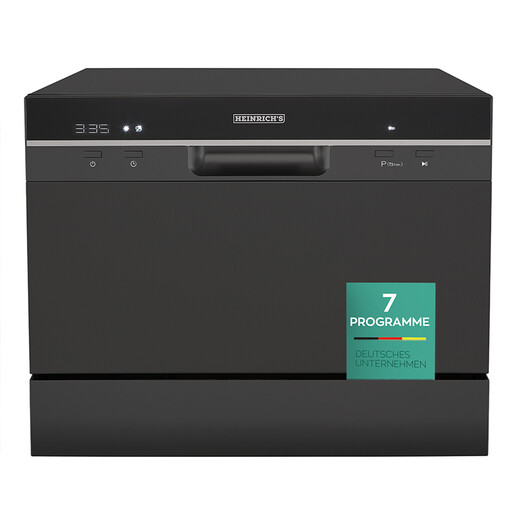 Image unavailable
Heinrich's HTG 8840 Schwarz, tabletop, 6 place settings
This tabletop model is listed as holding 6 place settings, but check that its baskets can also fit your dishes. The product name mentions 7 programmes, a D rating and 47 dB. Check the dimensions and installation requirements before placing it on a worktop.
View on Joybuy
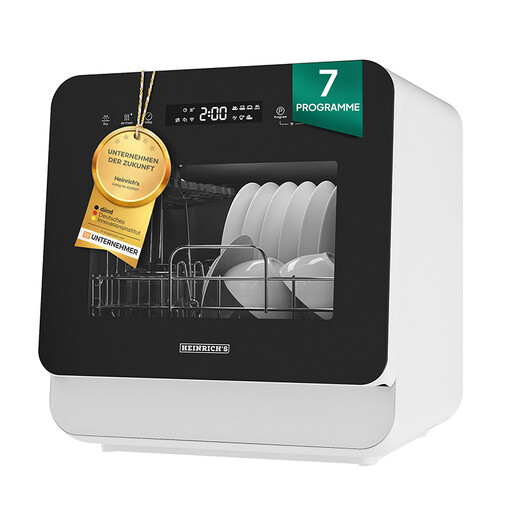 Image unavailable
Heinrich's HTG 8855, mini tabletop dishwasher, 3 place settings
With just 3 place settings, you’ll need to check carefully that there’s enough room for the dishes you use every day. The product name lists 7 programmes, a C rating and 56,3 dB; check the label to compare noise and consumption with other models.
View on Joybuy
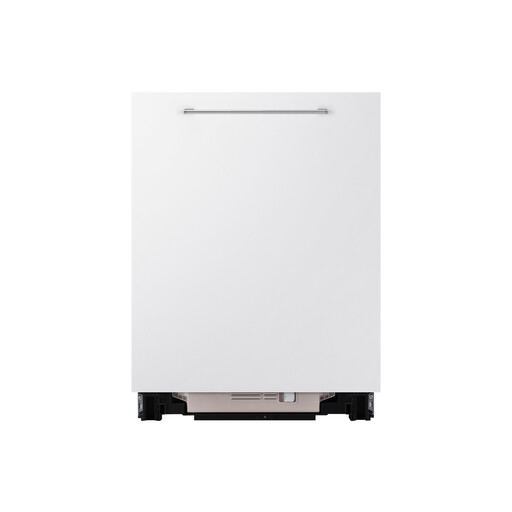 Image unavailable
Samsung DW80H72YBB0U1, built-in, 60 cm, 13 place settings
If your kitchen has a designated housing space, check its dimensions and intended door panel against the requirements for this built-in model. The model name indicates 13 place settings and a B rating. To assess noise and consumption, use the figures on the energy label rather than a figure for a particular programme.
View on Joybuy
 Image unavailable
Comfee' CDWMTO201D(W), tabletop, 5 L tank, white
If you have a small kitchen, check there’s enough room on your worktop and that the interior has sufficient capacity before choosing this model. The product name mentions a 5 L tank, programmes listed as « 6+3 » and a D rating. Check the instructions to confirm which water supply option suits your setup.
View on Joybuy
Frequently asked questions
What should I look for on a dishwasher’s energy label?
Compare the energy rating, kWh per 100 cycles, litres per reference cycle, capacity, eco programme duration and noise level. ADEME explains the consumption units; compare these figures with your loads and check installation requirements separately.
Do dishwashers have a repairability score in France?
Yes. The Ministry for the Ecological Transition includes dishwashers among the product categories covered by this score out of 10. Check the score for the exact model, and don’t mistake it for a guarantee against breakdowns.
What should I check before buying a built-in dishwasher?
Make sure the model fits the dimensions of the housing space and, depending on the version, the intended door panel. Then check the connections and installation requirements in the documentation before comparing its performance.
What does a freestanding dishwasher need for installation?
Beko’s guide says you’ll need a plug socket, a water inlet and a waste outlet. Also check the space available, that the door can open and the model’s instructions. This list alone doesn’t confirm that your installation is suitable.
Does the repairability score tell me about the warranty?
No. The score relates to how repairable the product is. Check the warranty and after-sales service terms for your purchase separately.


