What sets the different sizes apart?
In a very small kitchen, start by working out where an appliance could go, then consider whether its capacity suits the amount of washing-up that builds up between cycles. Connections and energy-label figures can then help you choose between appliances that genuinely fit the space.
Compact countertop model
Worth considering: if you need to keep the floor clear and have space for the appliance on your worktop.
Trade-off: its smaller capacity may mean running cycles more often; the water supply method varies by model.
45 cm freestanding model
Worth considering: if you have floor space and washing-up tends to build up between cycles.
Trade-off: its narrower width doesn’t mean you can overlook the height and depth needed for a full-height appliance.
Integrated model for an existing recess
Worth considering: if you have a compatible recess and want to keep your worktop clear.
Trade-off: the dimensions, clearances, any furniture door and connections must all suit the model you choose.
| Criteria |
What to check |
Who should consider this? |
| Actual space required |
Measure the model’s width, height and depth, and don’t forget to allow for the door to open and access to the connections. |
When every bit of food-preparation space matters, I want to know whether the appliance will take up worktop space or obstruct the walkway; around 33% of consumers prioritise size first. |
| Capacity and cycle frequency |
Compare the stated place settings and basket layout with the plates, dishes and pans you use regularly. |
If the washing-up builds up after several meals, I’d rather have enough room before starting a cycle; capacity would be the top priority for around 27% of consumers. |
| Water supply and waste |
Check the model’s instructions for the water inlet, waste outlet, electrical socket and any accessories you’ll need. |
If there isn’t a suitable fixed connection, I need to be sure how the appliance will take in and drain water; around 20% of consumers would put this practical consideration first. |
| Noise and consumption |
Check the decibel rating, kWh per 100 cycles and litres per cycle on the exact model’s label. |
In an open-plan living space, I want to take noise into account, along with how often I’ll run the machine; these usage considerations would come first for around 20% of consumers. |
ADEME states that the energy label shows energy use in kWh per 100 reference cycles and water use in litres per reference cycle. These figures make it easier to compare models, but the number of cycles you run will also depend on the usable capacity and the dishes you wash.
Brands to explore
There are no brand introductions to display.
Compact countertop dishwashers on Joybuy
These appliances fit the compact countertop option if you can set aside a surface for one and its capacity suits your washing-up. Before choosing, check each model’s dimensions, water supply and waste outlet against your kitchen. This selection doesn’t replace comparing the options with a 45 cm or integrated model if you have a suitable space for one.
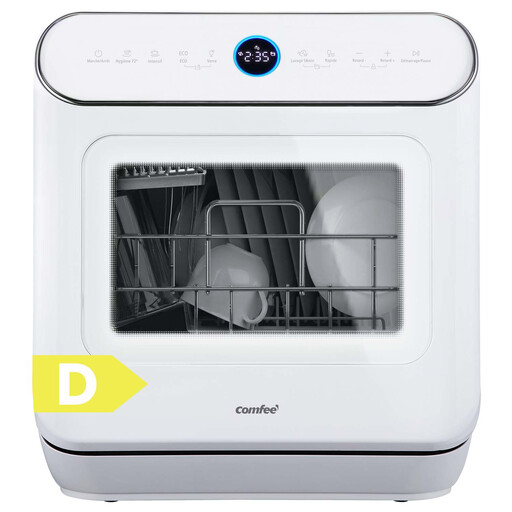 Image unavailable
COMFEE CDWMT305WD, compact countertop dishwasher, 3 place settings
Worth considering for a small amount of washing-up when your worktop is the available space.
The product name lists 3 place settings, 7 programmes and a D energy rating. Check that the capacity suits your utensils, and compare water, energy and noise figures on the exact model’s label.
View on Joybuy
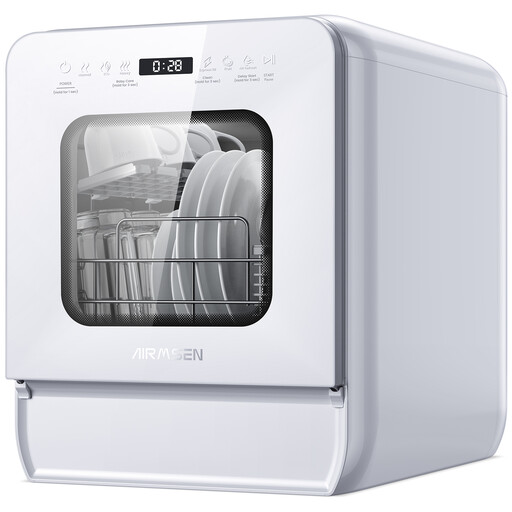 Image unavailable
AIRMSEN, compact countertop dishwasher with 5 L tank
Worth a look if worktop space is limited and you need a water supply option that suits your kitchen.
The product name lists a built-in 5 L tank and 9 programmes. Before choosing a spot for it, check the depth of the model being sold, the space needed to open it and the route for draining water.
View on Joybuy
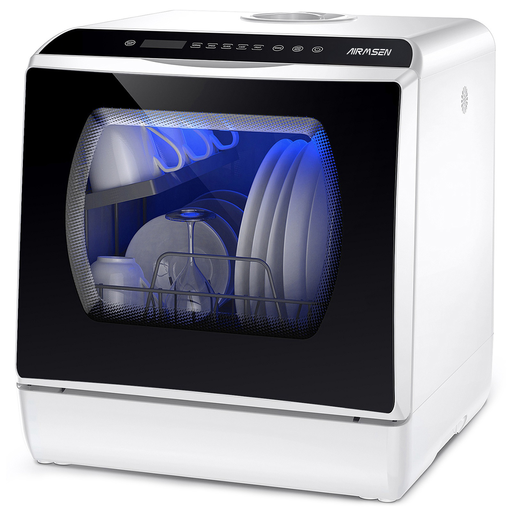 Image unavailable
AIRMSEN, compact countertop dishwasher with 5+1 cycles and 5 L tank
Worth considering if you’d like to compare a tank-fed appliance with the connection requirements in your home.
The product name lists 5+1 cycles, a built-in 5 L tank and a tempered glass door. Check the instructions to see how waste water should be drained; having a tank doesn’t remove this step.
View on Joybuy
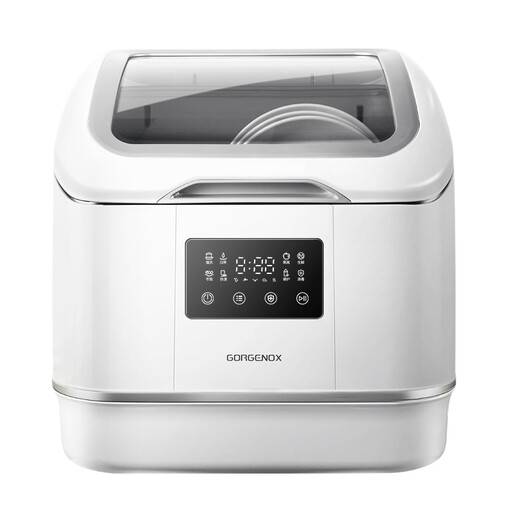 Image unavailable
GORGENOX DW4-D30A, tabletop dishwasher, 3 place settings
Worth considering if 3 place settings are enough for the amount of washing-up you do between cycles.
The product name lists a tabletop model with 3 place settings. Check its dimensions, tap connection and waste outlet before setting aside space for it.
View on Joybuy
 Image unavailable
Heinrich's HTG 8840 Schwarz, tabletop dishwasher, 6 place settings
Worth a look if you want a countertop appliance with 6 place settings and have enough surface space for it.
The product name lists 6 place settings and 7 programmes. Check the dimensions and connection requirements for the exact model, then compare its label figures with those of the other sizes you’re considering.
View on Joybuy
Frequently asked questions
Can a compact countertop dishwasher always work without a fixed water supply?
No: the water supply method depends on the model. The Bosch SKS51E36EU instructions specify a drinking water connection, while HAVA says its R01 can be supplied from a tank or tap. In both cases, check the instructions for the version you’re considering to confirm the waste outlet and electricity requirements too.
Compact or 45 cm: what capacity should one or two people choose?
Choose based on how much washing-up builds up between cycles, not just the number of people in your household. UFC-Que Choisir lists compact models with 6 place settings, while Electro Dépôt gives a range of 9 to 11 place settings for 45 cm appliances; some compact models have a lower capacity too. Check that your dishes and pans fit in the baskets, and that the appliance will fit in your kitchen.
How do you compare the consumption of a compact model with a 45 cm one?
Compare the figures on their energy labels on the same basis, then consider how often you’re likely to run each appliance. ADEME states that energy use is shown in kWh per 100 reference cycles and water use in litres per reference cycle. Each appliance’s capacity can affect how many cycles you’ll need to run at home.
Why check repairability before choosing?
Repairability can help you choose between two appliances that both suit your space and connections. ADEME includes dishwashers among the appliances covered by the repairability index. Check the information shown for the specific model, including details about spare parts, dismantling and documentation.


