Households short on kitchen space
The priority is to find a spot that fits the appliance, allows for the door to open and, where relevant, leaves enough room around nearby units.


First, choose an installation type and dimensions that suit your kitchen, then pick a capacity that matches the dishes you wash every day. A 60 cm model gives you more room to load up, if you have space for it; a 45 cm model is a good option when width is limited, while an integrated model also means checking the cabinet niche and door panel. Then compare energy and noise figures on the energy label.
The priority is to find a spot that fits the appliance, allows for the door to open and, where relevant, leaves enough room around nearby units.
Capacity matters, but the basket layout should also accommodate the dishes, pans and cutlery you use regularly, without making you run too many cycles.
If the dishwasher runs near your living space, noise levels matter more. Water and electricity use are still worth comparing on a like-for-like basis.
Start by measuring the space: a freestanding appliance, one built into a cabinet, a 45 cm-wide model and a worktop dishwasher all have different requirements. Next, work out how much capacity you need, then compare the energy and noise figures for models that can actually be installed in your kitchen.
| Criteria | What to check | Relevant consumer needs |
|---|---|---|
| Everyday capacity | Advertised place setting capacity and room for larger dishes in the baskets. | If my pans and plates fill the appliance quickly, I want to avoid running extra cycles. Around 27% of consumers put loading capacity first. |
| Installation | Available width, height and depth; for an integrated model, check the cabinet niche, door panel and clearance for the door to open. | In a fitted kitchen, the appliance needs to fit in its space and its door must be able to open. Installation compatibility comes first for around 27% of consumers. |
| Energy and water use | kWh per 100 cycles and litres per cycle on the energy label; duration of the Eco programme. | If I run cycles often, I want to compare water and electricity use on a like-for-like basis. For around 26% of consumers, keeping consumption under control is the main priority. |
| Noise | Noise level in dB(A) and noise class shown on the energy label. | If the machine runs near the living room or in the evening, I want to minimise disruption during the cycle. Quiet operation is a priority for around 20% of consumers. |
The ADEME notes that the energy label includes information such as electricity use per 100 cycles, water use per cycle, capacity, Eco cycle duration and noise figures. When comparing two appliances, weigh up these figures alongside a capacity that suits your dishes, rather than looking at width alone.
A narrower model leaves less room for bulky loads. Que Choisir explains that the 45 cm models in its comparison may suit a small family if used daily; the capacity of the model you choose and the size of your larger dishes are still key.
Look at the basket layout and compare the stated consumption for cycles suited to the amount of washing-up you have.
In an open-plan kitchen, you may still hear the cycle during meals or in the evening. A sales description is no substitute for the noise information for the specific appliance.
Compare the dB(A) level and noise class shown on the energy labels of your shortlisted models.
The niche height, door panel, plinth or door clearance could prevent installation. Bosch recommends checking the model dimensions; Electrolux notes that carpentry, plumbing or electrical work may not be included in an installation service.
Measure the space and check your existing connections, consult the installation diagram and ask which tasks are included in the installation.
Whirlpool describes AquaStop as a system that cuts off the water supply in the event of a leak. This does not mean that every dishwasher has this system or that they all protect against the same situations.
Check the product specifications and manual for the model you are considering to find out what protection it offers and what its limitations are.
Bosch offers freestanding and integrated dishwashers in 60 cm, 45 cm and compact sizes.
Siemens offers integrated models as well as slimline and compact appliances for kitchens where space is limited.
Miele offers freestanding and integrated dishwashers, including some slimline models.
Beko offers 45 cm and larger dishwashers, with capacity varying from model to model.
Whirlpool offers freestanding and integrated models, including 45 cm and 60 cm widths.
These appliances show three ways to fit a dishwasher into your home for everyday use: an integrated model, a freestanding model and worktop options. First choose one that suits your space and the amount of washing-up you have, then check the specifications for that particular model.
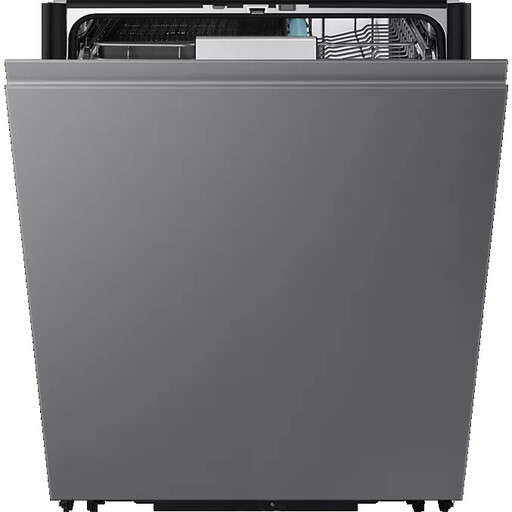 Image unavailable
Worth considering if you have a large everyday load and your kitchen can accommodate an integrated appliance. It has an advertised capacity of 14 place settings and an A energy rating. Check the cabinet niche, door panel and installation diagram for this model.
 Image unavailable
Its worktop size is suited to kitchens with limited space and smaller washing-up loads. The product title lists 6 place settings, 7 programmes, 47 dB and a D energy rating. Check the dimensions and connections required.
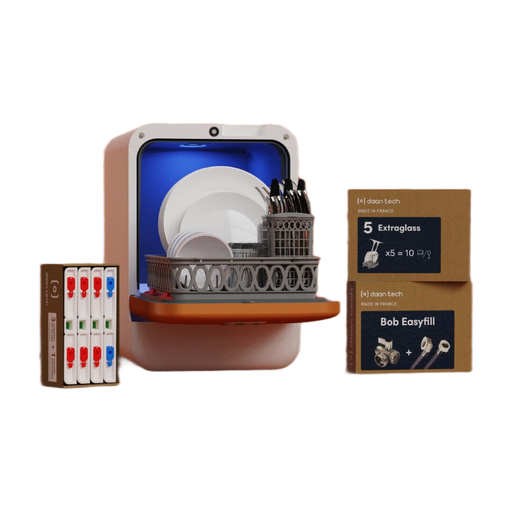 Image unavailable
This compact size is worth considering if your everyday washing-up fits in a small appliance. Before choosing this pack, check its dimensions, how much it can actually hold, and how it is supplied with water and drained.
 Image unavailable
This freestanding model could suit a large washing-up load if it fits your space. The product title lists 14 place settings, 41 dB and a C energy rating. Check the manual if you plan to install it under a worktop, and use the energy label to compare consumption.
 Image unavailable
Worth looking at if space is limited and the water supply method is an important factor. The product title mentions a 5 L built-in tank and a D energy rating. Check the capacity, drainage and any accessories needed for your installation.
Compare the capacity in place settings, kWh per 100 cycles, litres of water per cycle, Eco programme duration and noise figures, as well as the energy rating. The ADEME presents these as useful points of comparison. Choose appliances with a capacity that suits your washing-up to make the comparison relevant to you.
Measure the available width, height and depth before choosing an installation type. For an integrated model, also check the cabinet niche, door panel, plinth and door clearance using the model’s diagram. Confirm your existing connections and which tasks are included in the installation service.
No, you shouldn’t assume that AquaStop is included. Whirlpool describes it as a system that cuts off the water supply in the event of a leak. Check the specifications and manual for the appliance you are considering to confirm what protection it offers and what its limitations are.