If you often eat with other people, start by checking the available space, connections and how much washing-up you need to load. A 60 cm model is worth considering if you regularly have a large load, while a 45 cm or compact model is better suited to limited space, although you may need to run it more often. In an open-plan kitchen, compare the noise level and acoustic class too, then check whether the Eco programme’s duration fits your household’s routine.
Who are these criteria useful for?
Shared households that cook often
If several people regularly eat together, the number of place settings doesn’t tell the whole story. Check whether the racks can also take the dishes and pans you use every day: a narrower appliance may mean running more cycles.
People with an open-plan kitchen
When the kitchen and living room share one space, when you run a cycle matters just as much as where the appliance goes. UFC-Que Choisir highlights the importance of noise in this type of space. The dB level and acoustic class let you compare the figures on the energy label rather than relying on a general claim that a model is “quiet”.
Households with kitchen restrictions
An existing housing space, limited width or the position of the connections may determine which size you can choose. Check the appliance dimensions and the space available before deciding between freestanding, built-in, 45 cm and compact models.
What should you compare before choosing?
Start with the available space and the load from a typical meal, then compare noise and Eco programme figures on a like-for-like basis.
| Criterion |
What to check |
What I need |
| Usable capacity |
Compare the stated place settings, rack layout and space for larger dishes. UFC-Que Choisir features 45 cm models with 9 place settings that can be used every day in a small family, as well as 6-place-setting worktop models designed for smaller homes. |
After a meal with other people, I want to load plates, glasses and serving dishes without always having to leave the pans out. |
| Noise |
Check the dB level and acoustic class on the energy label, then think about when the appliance will be running. According to ADEME, an increase of 3 dB corresponds to a near-doubling of sound intensity; this alone doesn’t predict how disruptive the noise will feel in your room. |
If the cycle is running while we’re talking or relaxing in the living room, noise becomes an important factor in our choice. |
| Water and energy |
The EU energy label includes figures such as kWh per 100 Eco cycles, litres per Eco cycle, the duration of that programme and capacity. These figures don’t necessarily describe quick or intensive programmes. |
I want to compare equivalent standard cycles and see whether the Eco programme’s duration suits our mealtimes. |
| Installation |
Measure the space and check the water supply, power supply and drainage. For a built-in model, also check the housing dimensions and door compatibility. Electrolux notes that some building work and door furniture aren’t included in its installation service. |
In a fitted kitchen, I need an appliance that fits into the space and can be installed using the existing connections. |
What mistakes should you avoid?
-
Choosing a smaller model just because it fits
A narrower appliance won’t necessarily have room for all the dishes from a shared meal. UFC-Que Choisir presents 45 cm models with 9 place settings as an option that may need to run every day in a small family; the worktop compact models it features have 6 place settings.
List what you’d typically load, including dishes and pans, then compare it with the capacity and rack layout.
If everything won’t fit, you’ll need to run extra cycles or leave some of the washing-up until later.
-
Comparing only the energy class
According to the European Commission, the energy consumption and duration shown on the label relate to the Eco programme. They don’t automatically tell you what to expect from a quick or intensive cycle your household might use.
Compare kWh per 100 Eco cycles, litres per cycle, Eco programme duration and capacity, then check separately which programmes are likely to be useful in your home.
-
Assuming built-in installation includes all the work
Electrolux says its pre-installation service for built-in models doesn’t include some work, including carpentry or fitting the door panel. Check what the service covers before placing your order.
Measure the housing, locate the connections and ask what’s included in delivery and installation.
Preparing the housing or fitting a door panel may require a separate visit.
-
Taking “quiet” as a comparable measurement
In an open-plan kitchen, you’ll hear the wash cycle in your living space too. A marketing claim doesn’t replace the dB level and acoustic class shown on the energy label.
Compare both figures and consider when you’re likely to run the dishwasher.
Which brands should you consider for each size?
These ranges and models can help you identify features to compare; they aren’t representative of every model from each brand.
Bosch
Bosch’s French range includes freestanding, built-in and compact dishwashers.
- For its 60 cm SMS4ECI28F freestanding model, Bosch quotes 42 dB, acoustic class B, 9.0 L per Eco cycle and Flex baskets.
- These figures apply to the SMS4ECI28F. Check the product details and energy label for any other Bosch model you’re considering.
Miele
Miele’s French catalogue includes freestanding and integrated appliances, with quoted noise levels that vary by model.
- Miele lists its 45 cm G 5740 SC SL freestanding model with a quoted noise level of 44 dB, a cutlery tray and ExtraComfort baskets.
- Before choosing this 45 cm model for several people, compare its capacity and baskets with the washing-up from a typical meal.
Beko
Beko’s French range includes 45 cm freestanding and fully integrated models.
- Beko quotes 10 place settings for the freestanding BDFS26040X and 11 for the fully integrated KDIS28122. The latter’s product details specify a housing height of 82 to 87 cm.
- Capacity and dimensions differ between these two models. Check the details for the model you choose, as well as the space needed for your dishes.
Dishwashers available on Joybuy
These 60 cm freestanding and built-in models are worth considering if your kitchen can accommodate this size and shared meals tend to create a large load. For each one, compare the stated capacity with your dishes, then check the energy label, noise level and installation requirements for the model being sold.
 Image unavailable
Samsung DW60M6050FS, 60 cm freestanding, 14 place settings
For frequent meals with other people, compare the stated capacity of 14 place settings with the size of your dishes. The product title lists seven programmes; also check the dimensions, noise level and connections before deciding where to put it in your open-plan kitchen.
View on Joybuy
 Image unavailable
Indesit D2F HK26 S, 60 cm freestanding, 14 place settings, class E
Compare the stated capacity of 14 place settings with the load from a shared meal, especially if you use larger utensils. For an open-plan kitchen, check the noise level on the energy label. Also check the dimensions and Eco programme figures for the model being sold.
View on Joybuy
 Image unavailable
Samsung DW80H72YBB0U1, 60 cm built-in, 13 place settings, class B
This 13-place-setting built-in model may be worth considering if your household’s meals call for a 60 cm housing space. Check the housing dimensions, door compatibility and connections. For noise, compare the figure on the energy label rather than assuming it will be the same across different programmes.
View on Joybuy
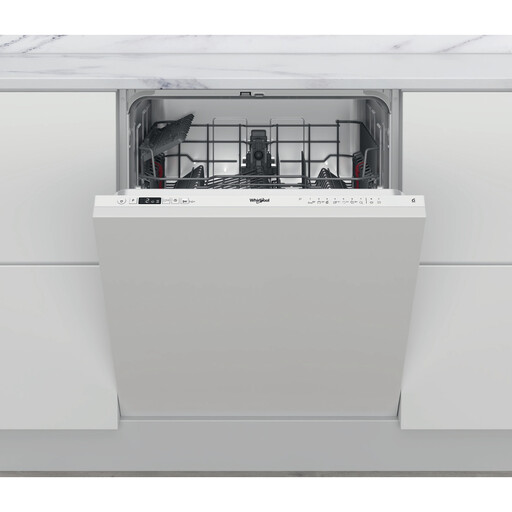 Image unavailable
Whirlpool W2I HD526 A, 60 cm built-in, 14 place settings, class E
The stated capacity of 14 place settings gives you a starting point for assessing the load after a meal with other people. Before choosing this built-in model, check that the housing, door panel and connections suit your kitchen, then consult the energy label for noise and Eco programme consumption.
View on Joybuy
 Image unavailable
Samsung DW70H72WCB0U1, 60 cm built-in, 13 place settings, class C
With 13 place settings stated, compare this model with the amount of washing-up generated by shared meals. Measure the housing and check the door panel and connections before ordering. The energy label for the model being sold will help you compare its noise level and Eco cycle.
View on Joybuy
Frequently asked questions
What should you compare on a dishwasher energy label?
For domestic dishwashers sold in the European Union, compare the A to G energy class, kWh per 100 Eco cycles, litres of water per Eco cycle, the programme duration, capacity and noise emissions. The European Commission explains that these consumption figures relate to the Eco programme, so they can’t tell you what to expect from a quick cycle.
Does a compact dishwasher avoid the need for connections?
Not necessarily. Water supply and drainage requirements depend on the model. Check the manual and the space you have in mind before buying rather than assuming a worktop appliance will operate without connections.
What should you check before ordering a built-in dishwasher?
Measure the housing and check the door, available space and connections for water, electricity and drainage. Also ask what installation includes: Electrolux notes that its service may not cover carpentry or fitting the door panel.
Does a good acoustic class mean the appliance is inaudible?
No. The acoustic class and dB level help you compare the figures for different appliances, but they can’t guarantee that a dishwasher won’t be disruptive in an open-plan kitchen. ADEME states that an increase of 3 dB corresponds to a near-doubling of sound intensity. Also consider when the cycle will run in your living space.


