For a shared kitchen, start by considering how much washing-up builds up between cycles and how much space you actually have. Que Choisir’s capacity figures show that 60 cm models offer more room than 45 cm or compact models, but a larger capacity is only useful if you can fit and load the appliance regularly. If there’s very little washing-up and everyone washes their own dishes straight away, washing by hand may still be a good option.
Who is this advice for?
Housemates who let the washing-up pile up
If several meals are prepared in the same kitchen, think about how much washing-up builds up between cycles rather than focusing only on the number of people living there. You’ll need room for plates as well as the utensils used to prepare and serve meals.
Shared households with a narrow kitchen
Limited width may point you towards a 45 cm or compact appliance, but these sizes aren’t interchangeable: Que Choisir gives a capacity of 9 to 10 place settings for 45 cm models, compared with fewer than 9 for compact models.
People using an open-plan kitchen
If cycles run close to a living area or at different times of day, noise can affect everyone in the household. Que Choisir recommends taking this into account in an open-plan kitchen; compare the noise level and noise class on the energy label.
Which criteria should you compare?
In a kitchen used every day by several people, start by estimating how much washing-up builds up before the next cycle. Then check whether the size you’re considering can be installed and used without getting in the way of everyone else.
| Criteria |
What to check |
Who it matters to |
| Capacity and cycle frequency |
Compare how much washing-up builds up between cycles with the place-setting capacity and basket layout. Que Choisir gives a capacity of 12 to 17 place settings for 60 cm models, 9 to 10 for 45 cm models and fewer than 9 for compact models. |
When several people’s meals leave pots and plates waiting to be washed, avoiding a pile-up matters more than saving space; around 36% of consumers put capacity first. |
| Space and installation |
Measure the space and check access to the water supply, electricity and drainage. For an integrated model, also check that the housing unit and door panel are compatible; Que Choisir notes that a purpose-built housing unit is required. |
In a small kitchen, you need to be able to open the appliance and access the connections without blocking the shared space; installation is the top priority for around 29% of consumers. |
| Noise and timing |
Compare the noise level in dB and the noise class on the energy label; also check the Eco programme duration if you have limited flexibility about when to run a cycle. |
If the kitchen opens onto the living room or everyone keeps different hours, you’ll want to minimise disruption during a cycle; around 21% of consumers put this first. |
| Running costs and practicality |
Compare kWh per 100 cycles and litres per cycle using the same reference programme. Also factor in detergent and any installation costs before deciding whether an appliance suits your routine. |
If there’s very little washing-up left after meals, you may want to check whether you’d use a machine often enough to make it worthwhile; around 14% of consumers put this first. |
Mistakes to avoid
-
Choosing a compact model just because it’s small
A compact model can solve a space problem without being able to handle the washing-up from several meals. Que Choisir puts its capacity at fewer than 9 place settings, compared with 9 to 10 for a 45 cm model.
Measure the space, then count how much washing-up usually waits between cycles. If both sizes will fit, compare their usable capacity before choosing the smaller one.
-
Forgetting what installation involves
An integrated appliance must fit into a suitable housing unit. Whatever the size, you’ll also need access to a water supply, electricity and drainage. According to Que Choisir, all three connections are required for installation.
Check these before choosing a model, and ask what’s included in the installation service you’re considering.
-
Leaving noise out of the conversation
A cycle running in an open-plan kitchen can disturb people in the adjoining room, even if the appliance has enough capacity for the household.
Compare the noise information on the energy label and agree together on suitable times to run a cycle.
-
Thinking only about the appliance, not how you’ll use it
Running a dishwasher uses water, electricity and detergent. These costs matter particularly if there’s so little washing-up that you could just as easily keep things simple and wash by hand.
Compare the consumption figures for the reference programme, then consider how often you could realistically run a well-loaded cycle.
Brands to consider
There are no brands to feature in this section.
Models to consider on Joybuy
These 60 cm dishwashers offer two options for a shared kitchen: freestanding or built into a suitable housing unit. If the available width points you towards a 45 cm model, a compact appliance or continuing to wash by hand, decide on the size first before comparing these models.
 Image unavailable
Whirlpool WFP5O41PLGX, freestanding, 60 cm, 14 place settings, stainless steel, class C
Worth considering if several people regularly fill a freestanding appliance. Check the exact external dimensions before setting aside space for it: the stated width alone doesn’t confirm that it will fit.
View on Joybuy
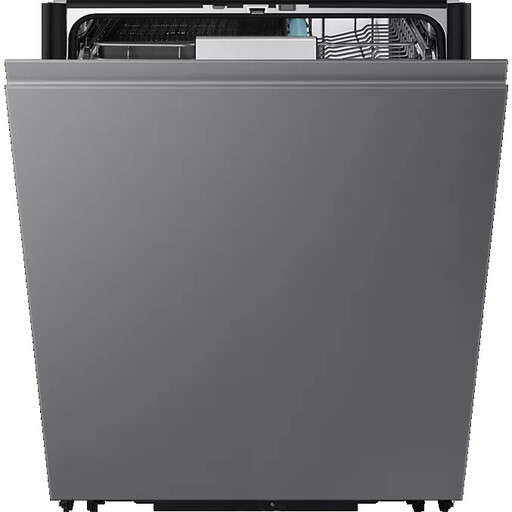 Image unavailable
Samsung DW90H79JAI0U1 Bespoke AI, integrated, 60 cm, 14 place settings, class A
Consider this if your shared kitchen already has a housing unit for an integrated dishwasher. Check the dimensions, compatible door panel and Eco programme duration if this will affect when you can run a cycle.
View on Joybuy
 Image unavailable
Samsung DW60M6050FS, freestanding, 14 place settings, 7 programmes, grey
Its freestanding design may suit you if several people’s washing-up calls for a capacity of 14 place settings. Measure the available space, particularly if you plan to put it under a worktop, and check the connections.
View on Joybuy
 Image unavailable
Hotpoint H4FD641A, freestanding, 60 cm, 14 place settings, 41 dB, class C, white
Worth a look if capacity matters in your shared kitchen and you also need to consider noise. Compare the noise and energy figures on the energy label, then check the space and connections required.
View on Joybuy
 Image unavailable
AEG FSB34707Z, fully integrated, 60 cm, 14 place settings, class C
Consider this if your fitted kitchen can accommodate an appliance of this capacity. Check the external dimensions and the housing unit before you decide, and make sure the door panel is compatible.
View on Joybuy
Frequently asked questions
What connections do you need to install a dishwasher?
You’ll need a water supply, an electricity supply and a waste-water outlet, as Que Choisir points out. Before choosing where to put the appliance, check that all three connections will remain accessible.
Can you install an integrated dishwasher like a freestanding model?
No. According to Que Choisir, an integrated model is designed to fit into a purpose-built housing unit. Check the housing unit’s dimensions and the required door panel rather than assuming you can simply place it anywhere in the kitchen.
What should you compare on the energy label for a shared kitchen?
Compare the energy consumption in kWh per 100 cycles, as well as the water and noise information for the models you’re considering. ADEME explains that the energy figure is given for 100 reference cycles: it helps you compare appliances on a like-for-like basis, but doesn’t on its own reflect how your household will use the appliance.


