In a shared house, choose a capacity that suits the dishes piling up between cycles, and a size that fits the available space and connections. A freestanding model may work if there’s a suitable spot in the kitchen; an integrated model needs a compatible housing unit, while a slimline or compact appliance may need to be run more often. ADEME notes that the energy label includes information such as capacity, water and energy use, eco-cycle duration and noise. If installation means making changes to the property or its fittings, ANIL says you’ll need the landlord’s written consent.
Which shared households need a dishwasher?
Households that cook and eat together often
When several people regularly cook at home, usable capacity and the way the racks are arranged matter for handling the pile of washing-up. ADEME says capacity is one of the details shown on the energy label.
Households with a narrow kitchen
If the available space or an existing housing unit determines where the appliance can go, check the dimensions and installation type first. For example, Whirlpool France and Electrolux France list models that are 45 cm and 60 cm wide.
Households with different schedules
When housemates use the kitchen at different times, noise levels and eco-cycle duration can help you choose a model and decide when to run it. ADEME includes these details on the energy label.
What should you compare before buying?
Freestanding
Consider this if: several housemates regularly produce a large amount of washing-up, and there’s space on the floor and suitable connections.
Bear in mind: a larger capacity also takes up more room in the kitchen.
Integrated
Consider this if: the kitchen already has a housing unit and connections that are compatible with the model.
Check: the dimensions, the required door panel and any changes to the property. ANIL says the landlord’s written consent is required to alter the property or its fittings.
Slimline or compact
Consider this if: space is limited and the model’s capacity suits the amount of washing-up produced between cycles.
Bear in mind: a smaller capacity may mean running more cycles. Also check the water supply, drainage and the model’s instruction manual.
When comparing appliances, ADEME says the energy label includes information such as capacity, water and energy consumption, eco-cycle duration and noise level.
| What matters |
What to check before buying |
Who cares most about it |
| Capacity and cycles |
Compare the stated place-setting capacity and check whether the racks can accommodate the dishes and pans you use together. |
When several of us often eat at home, I want everything to fit in one load rather than having to wait for the next cycle. Around 33% of consumers prioritise capacity and how often the appliance needs to run. |
| Space, installation and connections |
Measure the space and check the housing unit, any door panel, and the water supply, drainage and electrical connections. |
If space in our kitchen is limited, I need to know which installation type and dimensions will fit before I choose. Around 27% of consumers put space and installation first. |
| Noise and timing |
Compare the noise level shown on the energy label and the duration of the cycle you plan to use. |
When our schedules differ and the kitchen is close to the living room, I want to plan when to run the dishwasher without disturbing anyone else. Around 20% of consumers prioritise noise and when the appliance can be used. |
| Consumption and maintenance |
Compare water use per cycle and energy use per 100 cycles on the same basis. Also check the instruction manual for advice on cleaning the filter. |
If we use the appliance often, I want to compare its consumption and work out how to share routine maintenance. Around 20% of consumers prioritise running costs and maintenance. |
What mistakes should you avoid when choosing a shared dishwasher?
-
Choosing based on place settings alone
The stated capacity doesn’t tell you by itself whether the racks can fit the dishes and pans your housemates actually use.
Check the rack layout and the washing-up that builds up between cycles before settling on a capacity.
-
Assuming the energy label figures apply to every programme
The figures on the label relate to a reference cycle; they don’t necessarily reflect the consumption of other programmes.
Compare labels on the same basis first, then check the programmes you’ll actually use.
-
Installing an integrated model without checking the housing unit and door panel
A fully integrated model may need a door panel, and the housing unit must be the right size for the appliance. According to ANIL, you’ll need the landlord’s written consent to make changes to the property or its fittings.
Measure the space, check the instruction manual and discuss any planned changes with the landlord before buying.
Which brands can you compare for different sizes?
These examples show different installation types and features of specific models; they are not a general brand recommendation.
Bosch
Freestanding and compact models offer examples of different sizes to compare.
- For the SMS4ETI16E, Bosch Electroménager France lists a width of 60 cm, energy class B, 9.0 L on the eco cycle and noise class B.
- These details apply to this specific model, not the entire range. The listing for the compact SKS62E32EU says that it is no longer available.
Beko
The KBDIN165E2 is an example of a 60 cm integrated model for a fitted kitchen.
- Beko France lists a capacity of 14 place settings for this model.
- Check the housing unit dimensions and rack layout: the stated capacity won’t necessarily suit every shared household.
Whirlpool
The WSIO3O34PFEX integrated model is an option to consider if you have a narrower housing unit.
- Whirlpool France lists a width of 45 cm and a stated capacity of 10 place settings.
- Its stated capacity is lower than that of the 14-place-setting models featured here. Check that it can handle the washing-up that builds up between cycles.
Electrolux
The EES48400L is an example of a 60 cm fully integrated dishwasher for a fitted kitchen.
- Electrolux France lists 14 place settings and 75 kWh per 100 cycles for this model.
- The listing says that the appliance is supplied without a door panel. Check which panel you need and make sure it’s compatible before choosing.
Indesit
The freestanding I0F D633A is an example of a standard 60 cm configuration.
- Indesit France lists a capacity of 14 place settings and energy class D for this model.
- Check the full model code when comparing listings with similar-looking variations in the spelling.
Which Joybuy dishwashers can you compare for a shared house?
The models below have a stated capacity of 14 place settings and are available as freestanding or integrated appliances, so you can compare the space and installation requirements for a shared kitchen.
 No image available
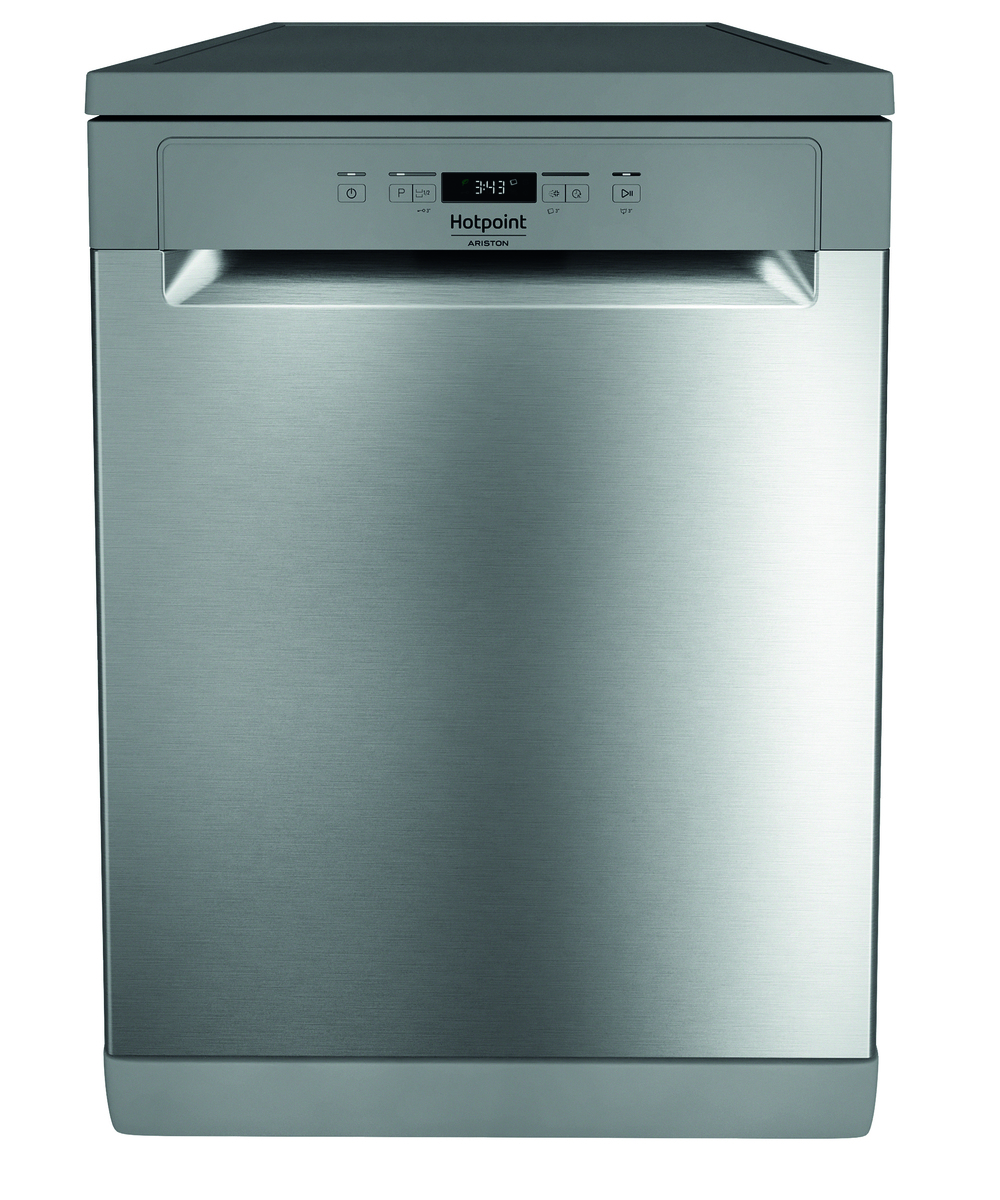
Hotpoint H3FFD636X, freestanding, 14 place settings
Worth considering if you’re looking for a freestanding model that can handle a large load in a shared kitchen.
The model name indicates a width of 60 cm, a stainless-steel finish, 14 place settings and class D. The description lists 11.5 L per eco cycle, 85 kWh per 100 cycles and 46 dB. A delay start of up to 24 h is also listed.
View on Joybuy
 No image available
AEG FSB34707Z, integrated, 14 place settings
Worth considering if your kitchen has a housing unit and layout suitable for a fully integrated appliance.
The model name indicates a width of 60 cm, 14 place settings and class C. The description lists 10.5 L per eco cycle and 44 dB. Check the housing unit dimensions and door panel requirements before installation.
View on Joybuy
 No image available
Whirlpool WFP5O41PLGX, freestanding, 14 place settings
Worth considering if you’re looking for a freestanding model and want to compare its consumption figures and noise level.
The model name indicates a width of 60 cm, a stainless-steel finish, 14 place settings and class C. The description lists 9.5 L per eco cycle, 75 kWh per 100 cycles and 41 dB. It also mentions a half-load programme and a delay start of up to 24 h.
View on Joybuy
 No image available
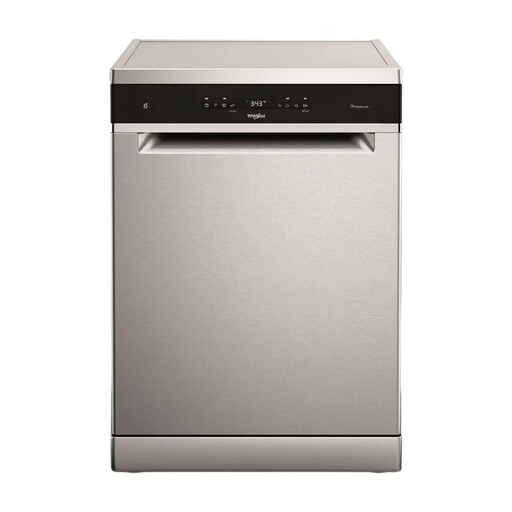
Whirlpool WH6FC14BN70X, freestanding, 14 place settings
Worth considering if you want to compare a 14-place-setting capacity and a multi-level loading layout.
The model name indicates a width of 60 cm, a stainless-steel finish, 14 place settings and class C. The description mentions a third cutlery drawer.
View on Joybuy
 No image available
Indesit D2F HK26 S, freestanding, 14 place settings
Worth considering if you’re looking for a freestanding model with a delay start, so you can run it around your housemates’ schedules.
The model name indicates 14 place settings, a width of 60 cm, a grey finish and class E. The description lists 9.5 L per eco cycle, 46 dB and six programmes. The Push&Go programme is listed as taking 85 minutes, with a delay start of 1 to 8 h.
View on Joybuy
Frequently asked questions about dishwashers in shared houses
Is a compact dishwasher suitable for several housemates?
It can be, if its capacity suits the washing-up produced between cycles and the space and connections are suitable. Compare the capacity and consumption figures for the specific model: a compact size doesn’t guarantee fewer cycles than a standard model.
What should you check before connecting an appliance in a rented kitchen?
Check the instruction manual for the water supply, drainage and electrical requirements, then check the existing connections. ANIL says you’ll need the landlord’s written consent if the project involves changes to the property or its fittings; simply installing the appliance doesn’t automatically count as making such a change.
Who should clean the filter when the appliance is shared?
Agree who’s responsible among your housemates and follow the model’s instruction manual. Bosch recommends checking and cleaning the filter in its dishwashers regularly, particularly if dishes come out dirty or smells develop. This manufacturer guidance isn’t a general legal requirement.
What protection is available if the appliance develops a fault after purchase?
In France, when a business sells an item to a private individual, the legal guarantee of conformity can be claimed from the seller under the conditions set out by law. You have two years from delivery to make a claim. This guarantee is separate from any optional commercial extended warranty.
Do you need insurance or the landlord’s consent to install the appliance?
ANIL says that each housemate with an individual tenancy agreement must take out comprehensive home insurance. For installation, you’ll need the landlord’s written consent if the project involves changes to the property or its fittings. Check your tenancy agreement and the requirements for the planned installation.


