If several housemates regularly generate a pile of washing-up, a standard-capacity freestanding dishwasher is worth considering if your kitchen has the space and suitable connections. A compact model takes up less room, but its capacity may mean running more frequent cycles; an integrated model requires a compatible kitchen. Before choosing, check that installation is possible, then compare capacity, Eco cycle duration, energy and water use, and noise levels on the model’s label.
Who is this choice for?
Housemates with lots of washing-up every day
If plates, dishes and pans pile up between meals, check the capacity and basket layout before settling on a compact model. The Eco cycle duration matters too when several people are waiting to fill the dishwasher again.
Housemates in a small kitchen or temporary rental
Start by measuring the space and the clearance needed to open the door. Then check how the model connects to the water supply and drains, as well as whether installation would require any changes to the property.
Housemates mindful of noise and running costs
In an open-plan kitchen or a home where people keep different hours, compare the noise level of the specific model. ADEME also recommends checking the label for litres per cycle and kWh per 100 reference cycles, rather than relying on the energy rating alone.
Which criteria should you check first?
In a shared kitchen, first check that an appliance can be positioned and connected without getting in the way. Then choose a capacity suited to the washing-up generated between meals, and compare compatible models using their labels.
Compact countertop
Choose this if : there’s no suitable floor space and your washing-up loads are modest.
Bear in mind : its more limited capacity may mean running more cycles when several people cook.
Standard freestanding
Choose this if : you generate lots of washing-up and have floor space with suitable connections.
Bear in mind : you’ll need to allow enough room for the appliance, its door to open and people to move around.
Integrated
Choose this if : your kitchen already has a compatible housing unit, cabinetry and connections.
Bear in mind : the housing unit and door panel must suit the model; discuss any changes to the property with your landlord before installation.
A washing-up routine without an appliance
Consider this if : there’s no suitable space or usable connection for an appropriate installation.
Bear in mind : you’ll still need a shared plan for washing and putting away the dishes to avoid a backlog.
| Criteria |
What to check |
What matters to shoppers |
| Space and installation |
Measure the space with the door open, then check the water supply and drainage against the instructions. For a slimline 45 cm freestanding model, also check the capacity of the model you’re considering. |
In a small kitchen, I need to be able to open the appliance and move around without making changes to the installation without careful thought; around 31% of shoppers put practicality and space first. |
| Capacity and waiting time |
Compare the stated place settings with the dishes you actually use, the basket layout and the Eco cycle duration. |
When several meals create washing-up before the next wash, I want to avoid loads piling up; capacity would be the top priority for around 31% of shoppers. |
| Noise and timing |
Check the dB(A) level and noise class on the exact model’s label, especially if it’s near a living room or bedroom. |
If someone starts a cycle while others are relaxing, I want a noise level that suits our routines; around 19% of shoppers prioritise a quieter appliance. |
| Water and energy |
For a suitable capacity, compare the litres per Eco cycle and kWh per 100 reference cycles shown on the label. |
For regular washing, I want to take water and electricity use into account rather than relying on the rating alone; this is the main priority for around 19% of shoppers. |
Mistakes to avoid
-
Assuming a compact model will be enough just because it takes up less space
A small appliance may need to run more cycles if several housemates use the kitchen. As an example from the models mentioned, Candy offers a countertop appliance with 6 place settings, while Beko offers 45 cm freestanding models with up to 10 place settings: capacity varies by model.
Think about how much washing-up you generate between meals, and check that larger dishes and pans fit in the baskets.
-
Buying before checking the installation
Having a water supply and drain in the property doesn’t necessarily mean the connections are suitable for the appliance you’ve chosen. You should also discuss any installation that would alter existing fittings with your landlord beforehand.
Check the instructions against the connections and measurements in your kitchen. If changes are needed, get your landlord’s written permission before carrying out any work.
-
Choosing based on the energy rating alone
The rating doesn’t replace the consumption figures or cycle duration. According to ADEME, the label includes details such as energy use per 100 reference cycles and water use per cycle.
Compare these figures and the capacity of models that genuinely suit the available space and your shared-house loads.
-
Treating “quiet” as a measurement
Noise comfort depends on the level stated for the specific model, particularly if the kitchen opens onto a shared living space.
Check the dB(A) level and noise class on the label, then choose with the times you’ll run cycles in mind.
Brands to consider by format
These ranges offer points of comparison for different types of installation; always check the specifications of the model you’re considering.
Bosch
Worth considering if your kitchen can accommodate a 60 cm freestanding dishwasher.
- Bosch Home Appliances France offers a freestanding range in this size.
- Width alone tells you nothing about noise or energy use: check the label for each model.
Beko
Worth considering if a 45 cm freestanding appliance could fit your space.
- Beko France offers models in this range with up to 10 place settings.
- Check capacity, noise level and energy rating together for the model you choose.
Candy
Worth considering for a countertop appliance when floor space is limited.
- Candy France offers the CP 6E51LS, a countertop model with 6 place settings.
- This model connects directly to the water supply: check its instructions and make sure its capacity suits your household.
Miele
Worth considering if you already have a 60 cm under-counter space for an integrated model.
- Miele France states that the G 7600 SCU AutoDos has an A energy rating, a noise level of 42 dB and uses 8,4 L per Eco cycle.
- These figures apply to this model, not to all Miele dishwashers; also check the housing unit and installation requirements.
Dishwashers for different spaces
These Joybuy models let you explore three possible setups for a shared kitchen: an integrated appliance in a kitchen designed for one, a freestanding model for regular loads, and a countertop option when space is tight.
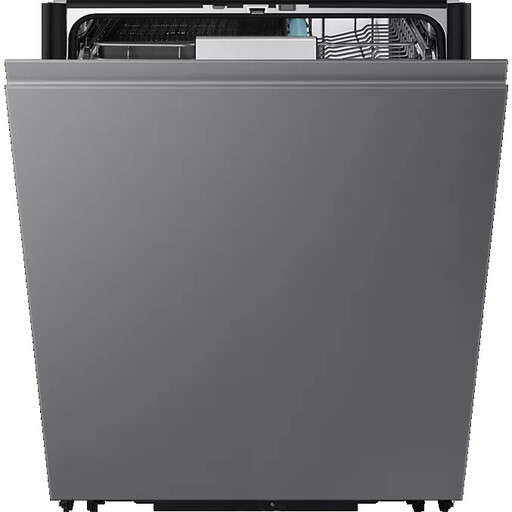 Image unavailable
Samsung DW90H79JAI0U1 Bespoke AI integrated dishwasher, 60 cm, 14 place settings
Worth considering for regular loads if your kitchen has a housing unit that’s compatible with an integrated appliance.
The model name indicates an A energy rating. Check the housing unit dimensions, door panel and connections; if installation would alter a rented property, get your landlord’s written permission beforehand.
View on Joybuy
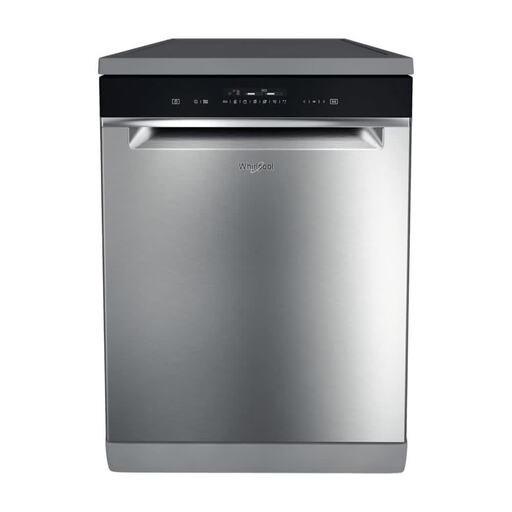 Image unavailable
Whirlpool WFP5O41PLGX freestanding dishwasher, 14 place settings, C energy rating
Worth considering if several housemates regularly fill the appliance and you have floor space available.
The title states that this is a 60 cm model, but dimensions listed elsewhere for this model don’t match that width: confirm the overall dimensions before planning where to put it. Also check door clearance and connections.
View on Joybuy
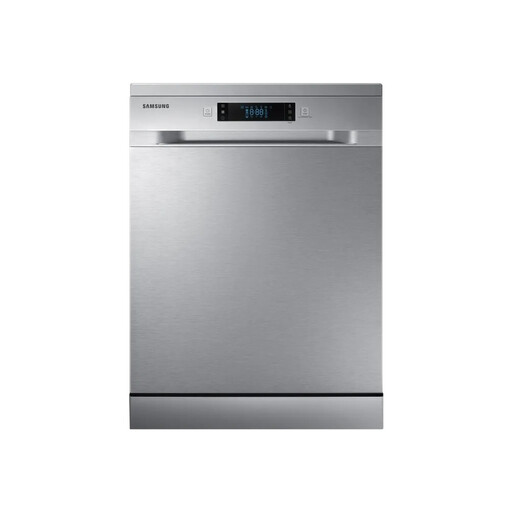 Image unavailable
Samsung DW60M6050FS freestanding dishwasher, 14 place settings, 7 programmes
Worth considering for a kitchen where washing-up loads are regular and there’s space for a freestanding model.
To plan your turn-taking, check the Eco programme duration on the model’s label. Also measure the space and check the water supply and drainage.
View on Joybuy
 Image unavailable
Hotpoint H4FD641A freestanding dishwasher, 60 cm, 14 place settings
Worth considering if your household needs 14 place settings and has a suitable space for a freestanding model.
The product name states a noise level of 41 dB and a C energy rating. To compare it with other models, also check the kWh per 100 cycles and Eco programme duration on its label.
View on Joybuy
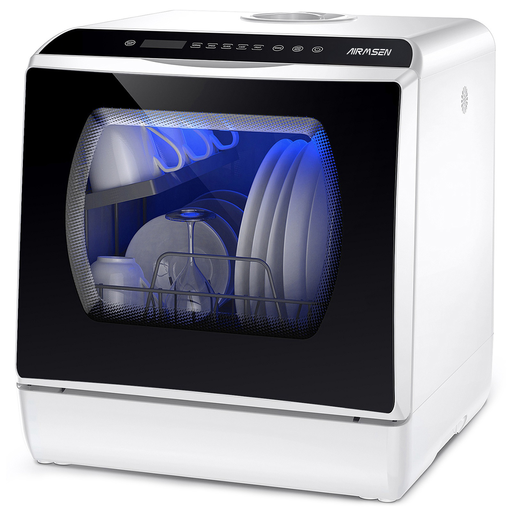 Image unavailable
AIRMSEN countertop dishwasher, 5 L tank, 5+1 programmes
Worth considering when floor space is limited and washing-up loads are modest.
The product name states that it has a 5 L tank. Check its usable capacity for your household’s dishes, how it takes in water, whether it can drain at your chosen location, and its noise level if the kitchen is next to a living space.
View on Joybuy
Frequently asked questions
What should you look for on a dishwasher energy label?
Compare the capacity in place settings, energy rating, kWh per 100 cycles, litres per cycle, Eco programme duration and noise details. According to ADEME, these figures provide a common basis for comparison; your actual use will depend in particular on which programmes you run and how often.
How should you choose if the kitchen is open-plan with the living room?
Give the noise level in dB(A) and the specific model’s noise class due consideration, while still choosing a capacity that suits the amount of washing-up you generate. Agree with your housemates on when cycles can run too: a “quiet” claim doesn’t replace these checks.
Can you install a dishwasher in a rented property?
Check the planned installation, existing connections and your tenancy agreement. Having a water supply and drain in the property doesn’t guarantee they’re suitable for your chosen model; if installation requires changes to the property or its fittings, discuss your plans with your landlord and get written permission before starting work.
Can a quick cycle help you compare models’ energy and water use?
No: to compare the consumption figures shown, use the values on the label for the Eco programme, including kWh per 100 cycles and litres per cycle. A quick programme may suit your household routine, but its performance shouldn’t be confused with that of the reference cycle.


