Housemates with piles of washing-up
If several people prepare their own meals, check the place-setting capacity as well as how much room the racks leave for saucepans and dishes. The aim is to choose a load size the household can fill regularly.


In a shared household, first check the available space and connections, then choose a capacity that suits the amount of washing-up produced between loads. A freestanding model avoids the need for a matching kitchen door, while an integrated model requires a compatible housing unit. A compact model is only suitable if you’re happy with its smaller capacity and potentially more frequent cycles. Also compare noise levels, energy and water use, and the Eco cycle duration on the energy label.
If several people prepare their own meals, check the place-setting capacity as well as how much room the racks leave for saucepans and dishes. The aim is to choose a load size the household can fill regularly.
In an open-plan kitchen or one close to living areas, a wash cycle could disturb work or rest. ADEME recommends checking the noise level and noise class shown on the energy label.
Before choosing a type, check the space, water supply, drainage and electrical connection. For an integrated model, also measure the housing unit and check that the kitchen door and plinth are compatible.
Whether the appliance can be installed determines which types are suitable. The amount of washing-up and your mealtime routine then help you choose between them.
Consider this if: you have the space and connections you need, but don’t want the appliance hidden behind a kitchen door.
Bear in mind: the appliance will be on show, and its door needs enough room to open.
Consider this if: your kitchen has a suitable housing unit and you want the appliance to blend in with the cabinets.
Bear in mind: the housing unit, kitchen door, hinges and plinth must all be compatible with the specific model.
Consider this if: there isn’t room for a standard-size model and you don’t produce much washing-up between loads.
Bear in mind: a smaller capacity could mean running more cycles when several people are eating together.
Consider this if: there’s no suitable space or connections for an appliance, or you wouldn’t regularly have enough washing-up to fill one.
Bear in mind: housemates will need to agree who washes and puts away the dishes after meals.
| Factor | What to check | Who it matters to |
|---|---|---|
| Capacity and loading | Compare the stated place-setting capacity and rack layout with the plates, dishes and utensils you produce between loads. | When several people cook on the same day, I want to fit everything in without having to start another cycle straight away. Capacity would be the top priority for around 36% of consumers. |
| Noise | Check the decibel rating and noise class on the energy label for the models you’re considering. | If housemates work or rest at different times, I don’t want a cycle to disturb the living area. Quiet operation would be the top priority for around 29% of consumers. |
| Installation | Measure the space and check the connections. For an integrated model, also check the housing unit, kitchen door and plinth. | In a kitchen I can’t easily alter, the appliance needs to be installable first and foremost. Compatibility would be the main requirement for around 21% of consumers. |
| Energy, water and cycles | Compare kWh per 100 cycles, litres per cycle and the Eco cycle duration, taking capacity into account. | If we run cycles often, I want to balance filling the appliance with how long we have to wait for the dishes. Cycle planning and energy and water use would be the main priorities for around 14% of consumers. |
The rating won’t tell you whether the racks will fit your larger dishes, how long the Eco cycle takes or how noisy the appliance is.
For models with a suitable capacity, also check the place settings, kWh per 100 cycles, litres per cycle, Eco cycle duration and noise information on the energy label, as ADEME recommends.
The stated width alone won’t tell you whether the appliance will fit in the housing unit or whether its door can open with the existing plinth and kitchen door in place.
Measure the housing unit’s width, height and depth, then check the model’s installation plan, including the details for the kitchen door and hinges.
Depending on the kitchen and model, you may need a compatible kitchen door or alterations to the cabinets.
Its smaller capacity could mean running more cycles to wash up after a meal with several people. Size alone doesn’t tell you how much energy and water it will use for your household’s needs.
Estimate your usual load, then compare the capacity with the litres per cycle and kWh per 100 cycles shown on the energy label.
The electrical connection, water supply, drainage and levelling are all part of the installation process described by Boulanger. Having a free space doesn’t necessarily mean the appliance can be installed and used there.
Check the existing connections and the model’s instructions before you buy. Ask a professional to assess any changes that may be needed.
Adapting the connections could mean extra work or a call-out charge.
Bosch offers a range of freestanding and fully integrated dishwashers.
The Siemens range includes freestanding and integrated models, with Home Connect available on selected models.
Miele offers freestanding and integrated dishwashers, with capacity varying by type and model.
These Joybuy models include freestanding and integrated options for shared-household meals. The stated capacity doesn’t replace the need to check the available space, connections and energy label for the model you choose.
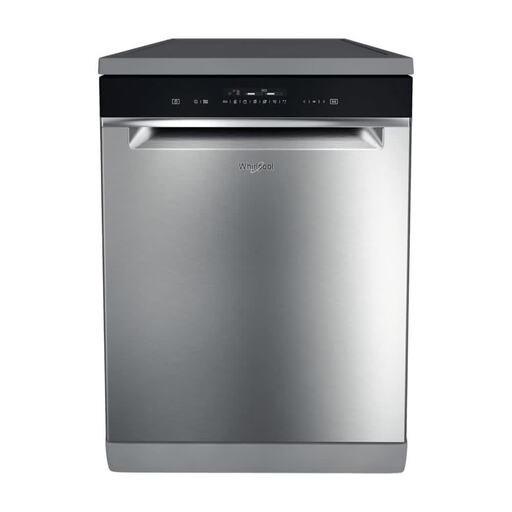 Image unavailable
Worth considering if you need to fit the washing-up from several meals into one load. It has a stated energy rating of C. Check the overall dimensions in the specifications before choosing where to put it, and check the Eco cycle duration to help plan your washing-up.
 Image unavailable
An option to consider if your kitchen has room for a 60 cm freestanding appliance. It has a stated energy rating of E. Compare its energy and water use and Eco cycle duration on the label before planning how often to run it.
 Image unavailable
Worth considering if several housemates share a living area close to the kitchen: its stated noise level is 41 dB. This 60 cm model has an energy rating of C. Also check the space needed for installation and the Eco cycle information.
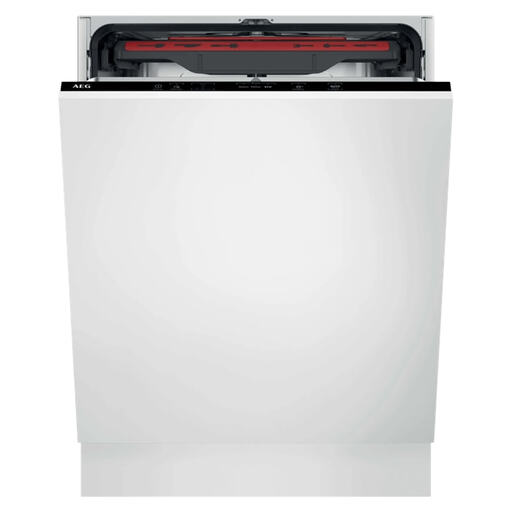 Image unavailable
Worth considering for a kitchen where the appliance needs to blend in with the cabinets. It has a stated energy rating of C. Check the model’s installation plan against the measurements of the housing unit, kitchen door and plinth before ordering.
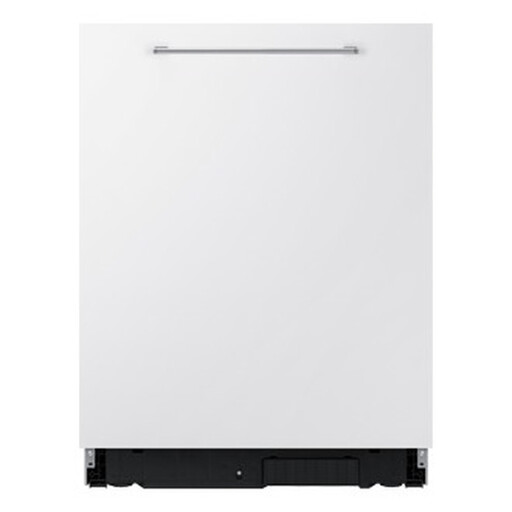 Image unavailable
An option if your household has a housing unit for a 60 cm integrated model. It has a stated energy rating of C. Check the installation plan for a compatible kitchen door and plinth, then consult the energy label for energy and water use and the Eco cycle duration.
Compare the place-setting capacity, kWh per 100 cycles, litres per cycle, Eco programme duration and noise level in dB, along with its noise class. ADEME lists these as useful points of comparison. Check them together when comparing appliances that can fit your usual load.
You need a suitable space, an electrical connection, a water supply and drainage, and room to level the appliance. Boulanger’s installation guide explains these steps. Check the model’s instructions and have the connections assessed if your kitchen needs adapting.
Agree on when to run the appliance so that you can fill it regularly. ADEME recommends scraping dishes rather than pre-rinsing them, and using the Eco programme when its duration fits in with your household’s routine.
According to the French ministry responsible for the economy, the statutory guarantee of conformity in France applies to new, second-hand and refurbished goods sold by a business to a consumer. If the appliance doesn’t match its description, contact the seller to make a claim under this guarantee. This is different from returning an item simply because you’ve changed your mind.