Housemates with lots of everyday washing-up
If meals for several people quickly fill the sink, look at the capacity and basket layout. The place-setting count alone won’t tell you whether there’s room for large dishes and pans.


If several housemates regularly fill the dishwasher, a 60 cm model may offer more room for everyone’s dishes. UFC-Que Choisir generally gives a capacity of 12 to 17 place settings for this size, compared with 9 to 10 for a 45 cm model. First, though, choose an appliance that will fit your kitchen: an integrated model needs a suitable housing unit, while a freestanding one also needs enough space and the right connections. Then compare capacity, noise and the Eco programme figures on the energy label, without treating these reference values as a measure of your household’s actual consumption.
If meals for several people quickly fill the sink, look at the capacity and basket layout. The place-setting count alone won’t tell you whether there’s room for large dishes and pans.
If a cycle might run while other people are working or resting, compare the noise level in dB and the noise class shown on the model’s energy label.
Check the space and connections before choosing an installation type. UFC-Que Choisir notes that an integrated model needs a purpose-built housing unit; a freestanding model still needs enough room.
First check what can actually be installed, then match the capacity to your mealtimes and the household’s daily routine.
| Feature | What to check | Who is it for? |
|---|---|---|
| Capacity and loading | Compare the place-setting count and the room in the baskets for large dishes. According to UFC-Que Choisir, 60 cm models generally hold 12 to 17 place settings, compared with 9 to 10 for 45 cm models. | When several people cook every day, I want to fit everyone’s dishes in without running multiple cycles. Around 27% of consumers rank shared capacity as their top priority. |
| Installation | Measure the space, door clearance and access to the water supply, drain and power. For an integrated model, check the housing unit and door panel too. | If the kitchen is difficult to adapt, I need to choose an appliance that fits without assuming modifications are possible. Installation compatibility is the top priority for around 33% of consumers. |
| Noise | Check the dB and noise class on the energy label, especially if the dishwasher will be near a workspace or bedroom. | In an open-plan kitchen, I want to be able to run a cycle at a time that works for the other people in the house. Around 20% of consumers say noise is their main concern. |
| Water, energy and Eco programme duration | For models with similar capacities, compare kWh per 100 cycles, litres per cycle and the Eco programme duration. ADEME and the European Commission list these as energy-label indicators. | When we share use of the dishwasher, I want to know the resources listed for the Eco cycle and how long the machine will be in use. Around 20% of consumers rank these indicators as their top priority. |
According to UFC-Que Choisir, this type of appliance must be fitted into a purpose-built housing unit; simply having a clear space on the floor isn’t enough. The door panel and installation can also bring extra requirements.
Before ordering, measure the housing unit and check the door panel, door clearance and connections required for the model you’ve chosen.
An open-plan kitchen or one close to bedrooms can limit the times when housemates want to run the dishwasher.
Compare the dB and noise class on the energy labels of the models you’re considering, then agree washing-up times with the other people in the house.
The energy class doesn’t tell you everything about capacity, water use per Eco cycle or programme duration. How often you run a cycle and which programme you choose also affect household use.
Compare the energy-label figures for appliances with similar capacities. For everyday use, ADEME recommends waiting until the dishwasher is full before starting a cycle.
Capacity, noise and functions all depend on the specific model; two appliances from the same brand may suit different needs.
Check the energy label, dimensions and instructions for the exact model, especially if a particular function or noise level is a deciding factor.
Worth considering for freestanding dishwashers. Compare the specifications of each model rather than assuming they apply to the whole brand.
Worth considering if you’re looking for a high-capacity freestanding model to compare with other options.
Worth considering for slimline or standard freestanding models, depending on the space available in your kitchen.
This Joybuy selection includes freestanding and integrated models for regular use by several people. If you’re considering an integrated model, make sure you have a compatible housing unit before comparing its features.
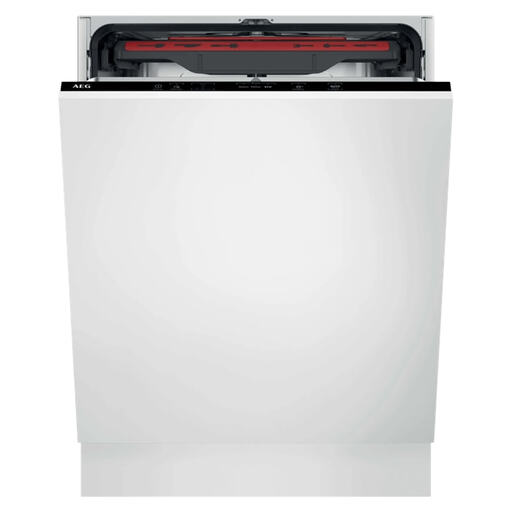 Image unavailable
Worth considering for shared loads if your kitchen has a suitable housing unit for a fully integrated appliance.
Energy class C. Check the installation dimensions and the parts required for integration before buying.
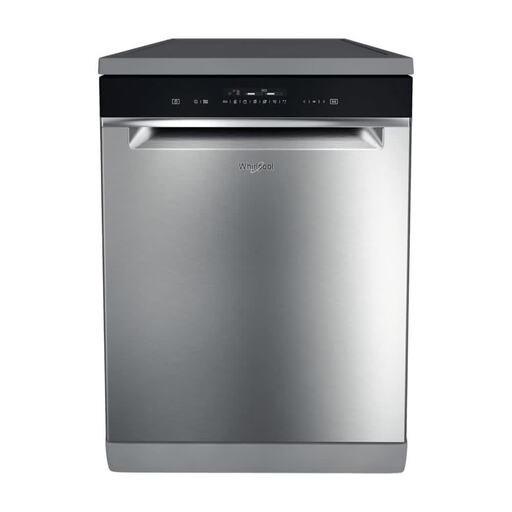 Image unavailable
A freestanding model to consider if several people regularly fill the dishwasher.
Listed as a 60 cm model with energy class C. Check its exact width and overall dimensions before deciding where to put it.
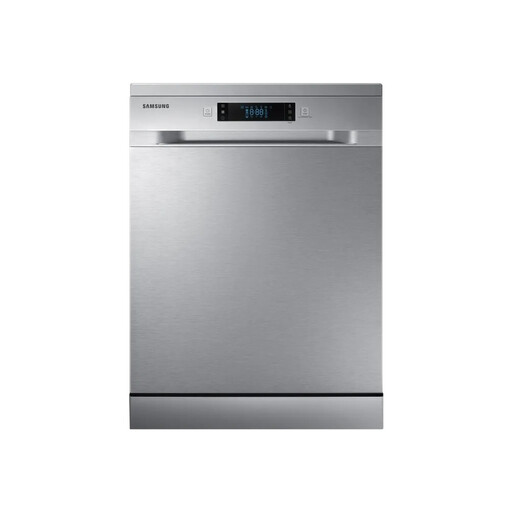 Image unavailable
Its stated capacity may suit shared household loads, but check that there’s enough room for the cookware you use at home.
The product name lists 7 programmes. Check the dimensions and Eco programme duration if these are important to you.
 Image unavailable
Worth considering for frequent shared meals if you have space for a 60 cm freestanding model.
Energy class E. To compare its consumption with other models, check the kWh per 100 cycles and Eco programme duration on its energy label.
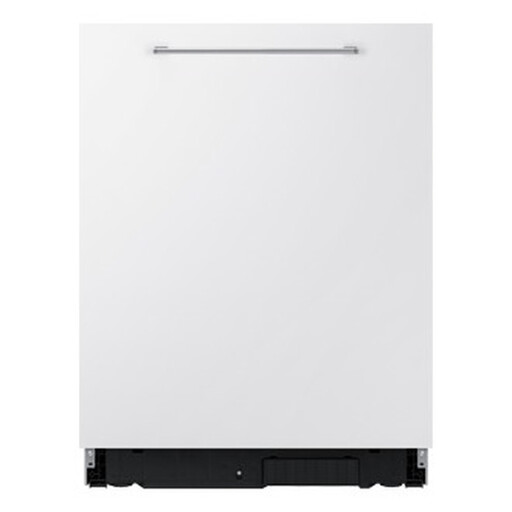 Image unavailable
Worth considering for a kitchen with a compatible housing unit and shared loads that suit its stated capacity.
Energy class C. Check the dimensions, connections and installation requirements for the exact model.
Start by comparing capacity and noise, then look at the energy class, kWh per 100 cycles, litres per cycle and Eco programme duration. ADEME and the European Commission explain that these figures relate to the reference Eco programme. They make it easier to compare models, but don’t predict how much your household will actually use.
Yes, if the amount of washing-up and the way you organise meals suit its capacity. UFC-Que Choisir generally gives a capacity of 9 to 10 place settings for a 45 cm model, compared with 12 to 17 for a 60 cm one. Before choosing the narrower size, check that there’s also room for your larger dishes.
No. According to UFC-Que Choisir, an integrated dishwasher must be fitted into a purpose-built housing unit. If you don’t have a compatible one, consider freestanding models instead, after checking their dimensions and the connections available.
It depends on the work needed in the French property in question. Article 6 of the law of 6 July 1989, as set out on Légifrance, says that a landlord cannot object to alterations that do not amount to a transformation of the rented property. If installation means modifying a cabinet or a fixture included in the tenancy, check your agreement and get written permission before work begins rather than assuming it counts as a minor alteration.
ADEME recommends not pre-rinsing dishes and waiting until the dishwasher is full before starting a cycle. In a shared home, agree on a simple rule for scraping off food and loading the machine, so everyone knows when it’s ready to run.