What should you check before choosing?
Start with the available space and how much washing-up you usually have. Then compare the specifications of specific models, rather than assuming that width alone tells you how noisy or energy-hungry a dishwasher will be.
60 cm freestanding
Worth considering: several people regularly use dishes, pans and plenty of cutlery, and your kitchen has room for this size.
Keep in mind: the space and connections must be suitable. A 60 cm width doesn’t determine a model’s noise level or energy use.
45 cm freestanding
Worth considering: there isn’t enough room for a 60 cm model, but you can fit a floor-standing appliance.
Keep in mind: the 45 cm models mentioned by Miele and Whirlpool offer 9 or 10 place settings. Check whether the baskets can hold everyone’s washing-up without making you run extra cycles.
Compact
Worth considering: there’s no suitable space for a standard floor-standing dishwasher.
Keep in mind: its smaller capacity calls for a bit of planning. Compact size alone doesn’t guarantee low water use per cycle.
| What to consider | What to check | My needs |
|---|
| Capacity and baskets |
Compare the stated number of place settings, then check the space for pans, dishes and containers. See whether the baskets are adjustable and how much room there is for cutlery. |
I want to fit everyone’s washing-up in without having to leave out larger items. |
| Noise and timing |
Check the model’s dB(A) noise level and noise class on its label. Look for a delay-start option if everyone needs to agree on a suitable time to run it. |
In an open-plan kitchen or near bedrooms, I need to be able to choose a time that works for everyone. |
| Water and energy |
On the UK energy label, compare kWh per 100 cycles and litres of water per reference cycle, as well as the Eco programme duration. ADEME and the European Commission explain these indicators for dishwashers. |
I’d rather compare like-for-like cycles and consider how many washes our household is actually likely to run. |
| Programmes and drying |
Check which programmes are available for the washing-up you usually have. Que Choisir assesses Eco, Auto or Normal, and Intensive programmes separately; their consumption figures aren’t directly comparable. |
If we often wash plastic containers or sometimes need a quick cycle, I’ll look at the model’s options without assuming they guarantee a particular drying result. |
| Installation |
Measure the space and the clearance needed for the door. Check that the water inlet, drain and electrical supply meet the requirements in the instructions for the exact model. |
Before delivery, I want to know whether the appliance will fit in the kitchen and whether it can be connected there. |
| Repairability |
Check the model’s repairability index. The French ministry responsible for the economy says this index is compulsory for dishwashers; it doesn’t measure their capacity or cleaning performance. |
I want to consider repairability separately from the features that matter for everyday use in our household. |
Which brands should you compare?
These brand references are here to help you compare specific models and sizes; they don’t necessarily feature in the Joybuy selection below.
Bosch
Bosch’s French product specifications let you compare a compact model with 45 cm and 60 cm freestanding options.
- Bosch states that the 45 cm SPS2HMI02E uses 8,9 L of water per Eco cycle, while the 60 cm SMS4ETI16E uses 9,0 L.
- Bosch lists the compact SKS6ITB00E as no longer available. Its product page is a useful guide to dimensions and water use, but shouldn’t be taken as an indication that it’s available to buy.
Beko
Beko’s 60 cm freestanding models mentioned here offer 13 or 14 place settings.
- The BDFN26460G product page lists 14 place settings, giving you a starting point for assessing how it might handle a shared load.
- The LVV1347S is listed at 47 dB(A) and 12,9 L of water. Check the specifications for the exact model rather than assuming its noise level or water use from its 60 cm size.
Miele
Miele offers 45 cm and 60 cm freestanding models, with basket layouts worth checking against the washing-up your household produces.
- The product page for the 45 cm G 5740 SC SL lists 9 place settings, 44 dB(A) and 7,9 L of water per Eco cycle.
- These figures apply to the G 5740 SC SL; they don’t describe every Miele dishwasher.
Whirlpool
Whirlpool offers a range of 45 cm freestanding models to consider against your space and loading needs.
- The WSFO3T223P product page lists 10 place settings, 43 dB and 9 L of water.
- Whirlpool’s range page notes that few parts are available for this model. Check the information for the model if repairability is an important factor in your decision.
Electrolux
Electrolux’s freestanding range includes 45 cm and 60 cm models.
- The brand’s French website features, among others, a 60 cm model with 14 place settings and a 42 dB(A) noise level, as well as a 45 cm model with 9 place settings and a 45 dB(A) noise level.
- These specifications apply to the models shown on the range page. Check the details for the model you’re considering.
60 cm dishwashers available on Joybuy
Consider these 60 cm freestanding models if your shared household has enough room. Their stated capacity doesn’t replace checking the baskets, energy label and dimensions before you order.
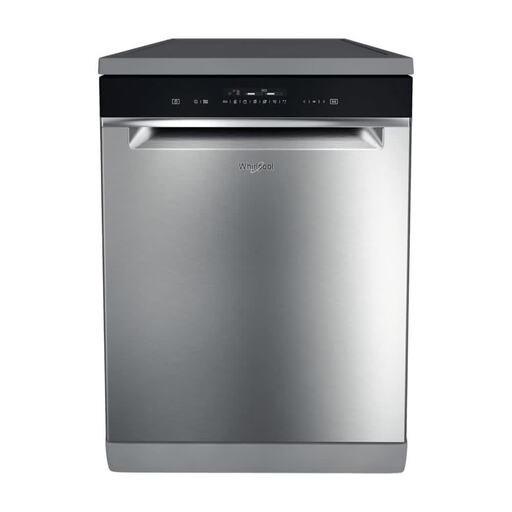 Image unavailable
Whirlpool WFP5O41PLGX, 60 cm freestanding, 14 place settings, C-rated
Its stated capacity of 14 place settings is worth considering if several people share a single cycle.
The stated width and detailed dimensions don’t appear to match clearly. Confirm the actual measurements and clearance needed before ordering. Also check the instructions for connection requirements.
View on Joybuy
 Image unavailable
Indesit D2F HK26 S, 60 cm freestanding, 14 place settings, E-rated
If your household often fills the dishwasher, check whether the stated 14 place settings leave enough room for your dishes and pans.
Check the model’s energy label for its noise level and Eco programme duration, then refer to the instructions for its dimensions and connections.
View on Joybuy
 Image unavailable
Hotpoint H4FD641A, 60 cm freestanding, 14 place settings, 41 dB, C-rated
If you’ll run cycles near living areas, compare the stated 41 dB with the noise class on the energy label and your household’s usual schedule.
It offers 14 place settings. Check the instructions for installation, and bear in mind the steam and whether there are children around if the door opens automatically after a hot cycle.
View on Joybuy
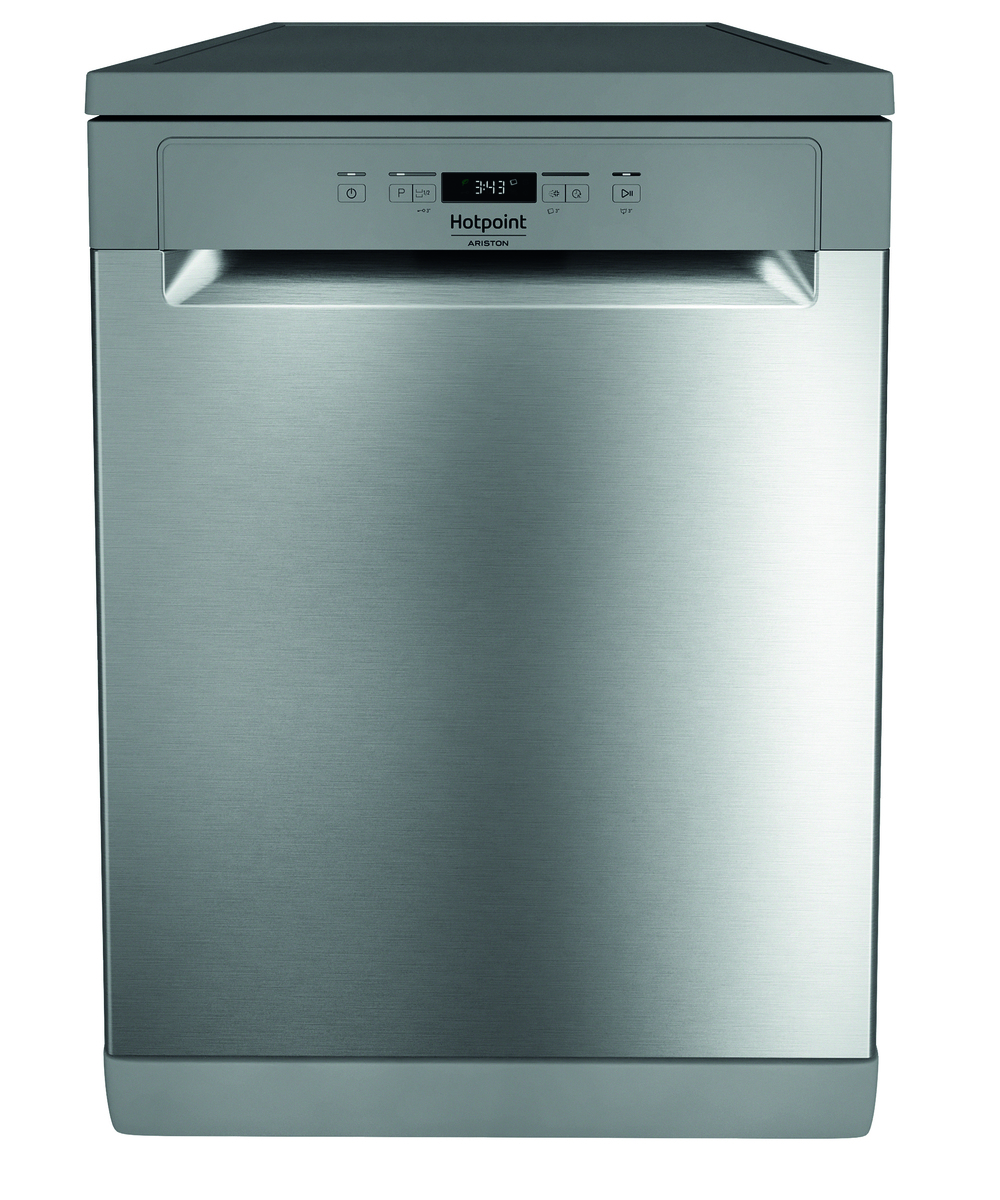 Image unavailable
Hotpoint H3FFD636X, 60 cm freestanding, 14 place settings, D-rated
Its stated 14 place settings make this model worth considering for shared loads, provided your larger items fit in the baskets.
Compare its energy label and noise level with those of other models you’re considering, then check the space and connections.
View on Joybuy
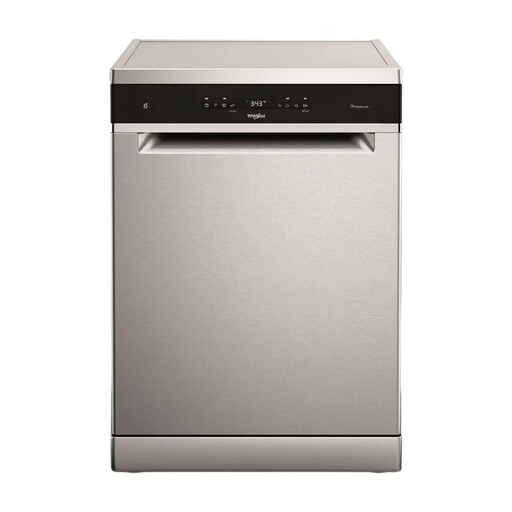 Image unavailable
Whirlpool WH6FC14BN70X, 60 cm freestanding, 14 place settings, C-rated
If several people will share the load, consider its stated capacity of 14 place settings and the layout inside.
The “60 cm” description and detailed dimensions need checking: measure the actual width before you buy. Also check the model’s energy label and the connection requirements in its instructions.
View on Joybuy
Frequently asked questions
What should you compare on a dishwasher energy label?
Compare the energy class, kWh per 100 cycles, litres of water per reference cycle, capacity, Eco programme duration and noise information. ADEME and the European Commission explain these as key details on dishwasher labels. Use the same cycle basis when comparing two models.
Will a compact dishwasher always use less water than a 45 or 60 cm model?
Not necessarily by an amount that reflects the difference in capacity. Bosch states that its compact SKS6ITB00E uses 8,0 L per Eco cycle, its 45 cm SPS2HMI02E uses 8,9 L and its 60 cm SMS4ETI16E uses 9,0 L. Also consider how much washing-up you have and how many cycles each size would mean for you.
Which connections should you check before delivery?
Check the water inlet, drain, electrical supply and space needed to open the door, then compare them with the model’s instructions. Boulanger’s first-installation guide recommends using a wall socket directly rather than an extension lead or multi-socket adaptor. Its advice doesn’t replace the manufacturer’s instructions or a professional’s guidance for your home.
How does the repairability index help you choose?
It gives you a separate factor to consider alongside capacity, noise and energy use. The French ministry responsible for the economy says the repairability index is compulsory for dishwashers sold in France. Check the index for the model you’re considering, but don’t treat it as a measure of how well the dishwasher will suit a shared household.


