What should you check before buying?
Start with the space available and whether the connections are practical, then check that the capacity suits your needs. Noise and total cost can help you choose between models that will fit.
| Consideration |
What to check |
Who should consider this? |
| Space and installation type |
Measure the space and door clearance; check the installation type and whether the top is removable for fitting under a worktop. |
If every centimetre counts and I don’t have a built-in space, I want to know whether the appliance will actually fit where I plan to put it. Around 28% of the consumers concerned prioritise the space an appliance takes up. |
| Connections |
Locate the water supply, waste outlet and socket; check the manual for the model’s requirements and how the hoses need to be routed. |
If the water supply is difficult to access, I also check whether the model can be filled from a tank and how to drain the water. This is a priority for around 28% of consumers who choose first and foremost based on whether the connections are practical. |
| Usable capacity |
Compare the place settings, basket layout and space available for your pans and dishes. |
If I regularly wash large utensils, I want to check that they fit in the baskets rather than relying on the place-setting capacity alone. Around 17% of consumers prioritise usable capacity. |
| Noise in your living space |
Compare the stated noise levels of models that can be installed, and consider where the appliance will go and when you’ll use it. |
In an open-plan kitchen, I want to be able to use the living space while a cycle is running without relying on a promise of quiet operation. Around 16% of the consumers concerned prioritise noise comfort. |
| Total cost |
Factor in installation and door panel requirements, then compare stated energy and water consumption on the same cycle basis. |
If several appliances could be installed, I also compare the costs of installation and use. This is a priority for around 11% of consumers who make their decision first and foremost based on total cost. |
Options available on Joybuy
This selection includes compact countertop dishwashers, some with a water tank, as well as 60 cm freestanding models for kitchens with the necessary space and connections.
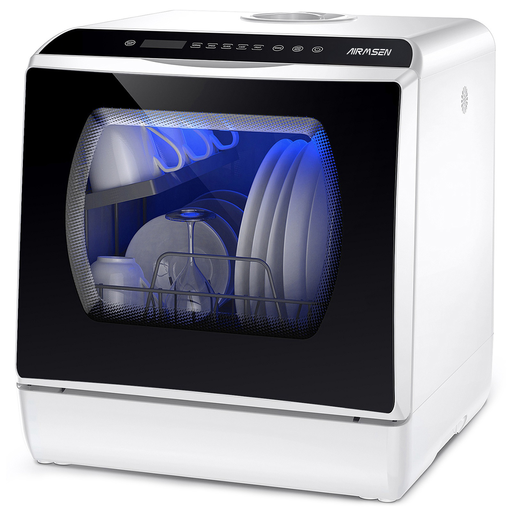 Image unavailable
AIRMSEN — compact countertop dishwasher
Worth considering if you’re short on space and want a countertop appliance filled from a water tank.
Joybuy’s product listing gives it a capacity of 4 place settings, a built-in 5 L tank and dimensions of 45,8 × 42,8 × 42,5 cm. In tank mode, wastewater needs to be drained through a hose into a container.
Joybuy
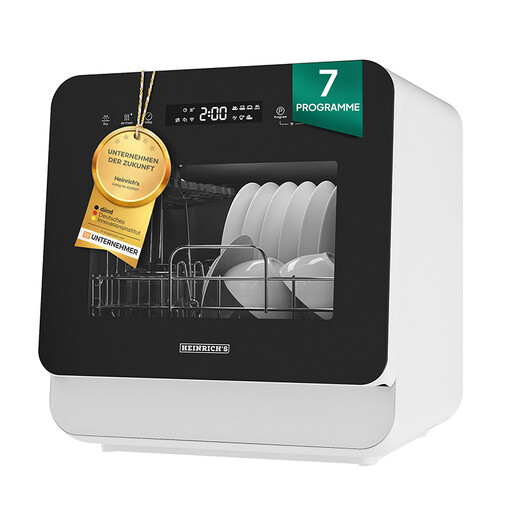 Image unavailable
Heinrich's HTG 8855
This countertop model may suit you if you’re looking for a smaller capacity and want to compare stated noise levels.
Joybuy’s product listing gives this model a capacity of 3 place settings, 7 programmes and a noise level of 56,3 dB.
Joybuy
 Image unavailable
Heinrich's HTG 8840 Schwarz
Worth considering if a countertop model with a capacity of 6 place settings suits your space and the amount of washing up you have.
Joybuy’s product listing gives this model 7 programmes, a noise level of 47 dB and water consumption of 6,5 litres per cycle.
Joybuy
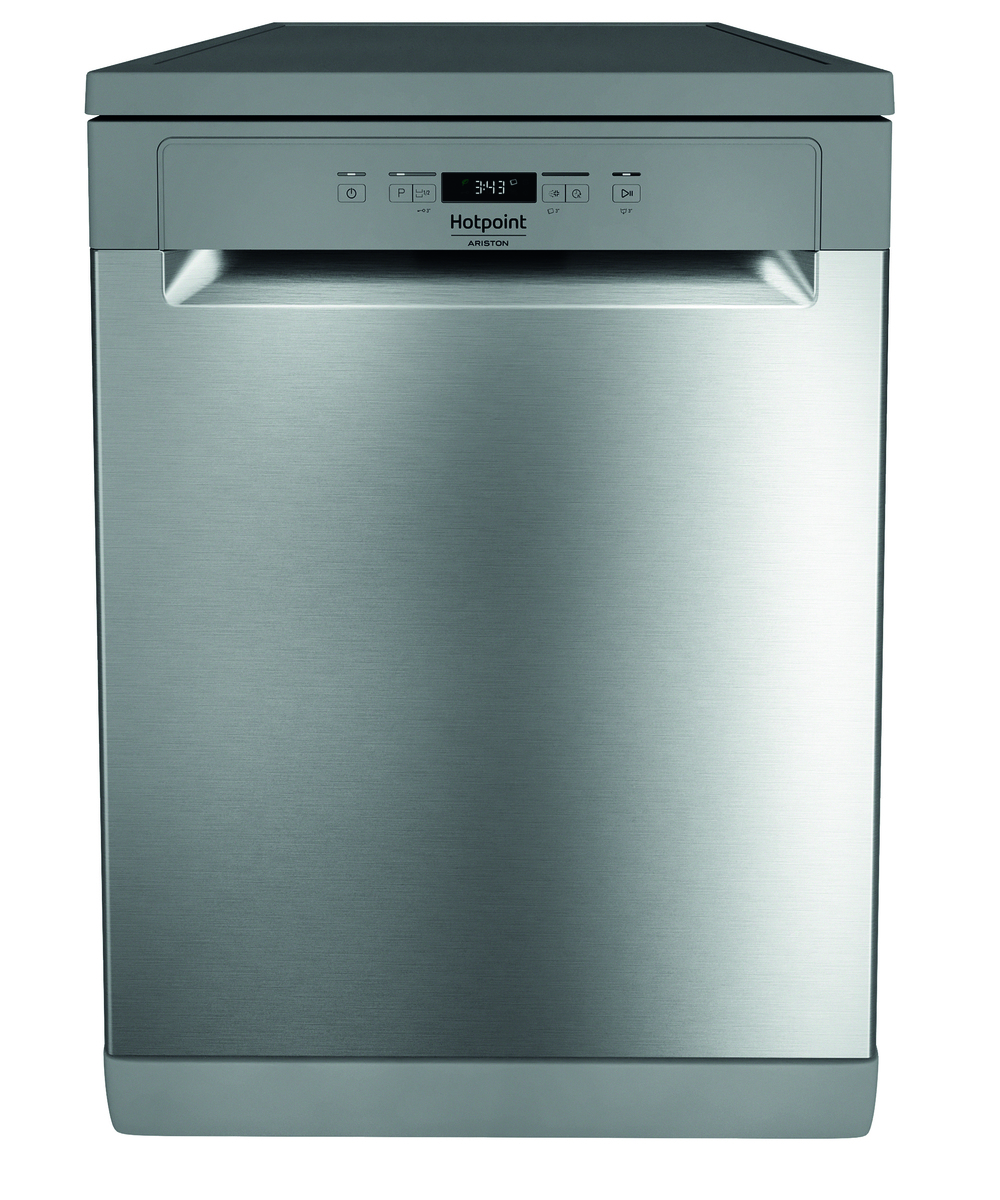 Image unavailable
Hotpoint H3FFD636X — freestanding, 60 cm
Consider this freestanding model if you have the space and connections it needs and are looking for a capacity of 14 place settings.
Joybuy’s product listing gives it 5 programmes, a noise level of 46 dB and water consumption of 11,5 litres per Eco cycle. A freestanding model needs to be connected to a water supply; follow the instructions for this model.
Joybuy
 Image unavailable
Whirlpool WFP5O41PLGX — freestanding, 60 cm
Worth considering if you have room for a freestanding model and want to compare capacity and stated noise levels.
Joybuy’s product listing gives this model a capacity of 14 place settings, 11 programmes, a noise level of 41 dB(A) and water consumption of 9,5 litres per Eco cycle.
Joybuy
Frequently asked questions
Do all formats need a water supply, a waste outlet and a socket?
Check the model’s manual before buying: water, electricity and drainage requirements vary by appliance. Daan Tech says Bob can be filled from its tank without a water supply connection in this mode, but the drain hose still needs to be connected. The words ‘freestanding’ alone don’t tell you all the connections you’ll need.
Can you install an integrated model as it is, or slide a freestanding one under a worktop?
An integrated model is designed for a housing space and a door panel; it isn’t a replacement for a finished freestanding appliance. A freestanding model can go under a worktop only if its dimensions and instructions allow it. In particular, check whether the top is removable and what clearance is needed.
What should you look at on the label to estimate running costs?
Compare stated figures on the same basis and check which cycle they apply to. Beko’s product listing for the BDFN15D431W, for example, gives kWh and litres per Eco cycle as well as dB(A). These figures don’t guarantee the energy or water consumption, or noise level, for every use.
Does a tenant need permission or insurance?
For a residential tenancy, Service Public states that tenants must have insurance covering at least rental risks, including water damage. This minimum cover doesn’t necessarily protect their belongings or those of their neighbours. Tenants can make changes to their home, but work that alters the property or the rented fixtures and fittings requires the landlord’s written consent. Check your tenancy agreement and the rules that apply to your specific plans.
What maintenance and leak protection should you plan for?
Follow the manual for care of the filter, salt and connections. If there’s a leak, Service Public recommends limiting the damage, including by turning off the appliance’s water tap. Check your insurance policy too, as some exclusions may apply to the appliance that caused the damage.


