Tenants without a usable water supply
You’re looking for a removable appliance and can fill a tank, provided you can arrange a safe way to drain the water.


If you can’t alter the kitchen, a countertop dishwasher with a tank can avoid the need for a fixed water supply, but you’ll still need to arrange a way to drain the wastewater. A freestanding model may be suitable if the connections and space are already in place. For alterations to a rented property or its fixtures, ANIL advises getting your landlord’s written permission before work begins.
You’re looking for a removable appliance and can fill a tank, provided you can arrange a safe way to drain the water.
You want to cut down on washing up by hand and may have a suitable space on the floor, without having to alter the kitchen.
If your chosen installation requires changes to the rented kitchen, identify the work involved and get your landlord’s written permission if it amounts to an alteration.
When renting, first check whether the appliance can be installed without altering the property or its fixtures. Then compare the connections, space and features that matter for everyday use.
Consider this if: you have a stable surface but no usable water supply that can be connected without work, and the model is designed for manual filling.
Bear in mind: the tank avoids the need for a fixed water supply, but you’ll still need somewhere to drain the water and space on your worktop.
Consider this if: the floor space, water supply, waste outlet and socket are already suitable for the model you’ve chosen.
Bear in mind: “freestanding” doesn’t mean “no connections needed”, and you’ll still need the required permission if rented fixtures have to be altered.
Consider this if: your chosen installation requires lasting changes to the rented property or its fixtures.
Bear in mind: ANIL says alterations require your landlord’s written permission. This doesn’t replace the technical checks needed for the installation.
| What matters | What to check | Who prioritises it |
|---|---|---|
| Avoiding alterations | Identify any planned work involving cupboards, the tap, the waste trap or the electrical installation, and check the terms of your tenancy agreement. | If I want to be able to remove the appliance without altering the kitchen, I start by checking what work is needed. Around 36% of consumers prioritise avoiding alterations. |
| Connecting and draining | Check the instructions for the water supply, the route and fixing of the drain hose, and the socket required. | If I don’t have a usable water supply, I check how to fill the appliance and drain the wastewater safely. Around 29% of consumers prioritise checking whether the connections are feasible. |
| Capacity and space | Measure the available space and door clearance, and compare the stated capacity with the dishes you typically use. | If I want to run fewer cycles without overcrowding the kitchen, I compare the full dimensions and capacity with my dishes. Around 21% of consumers prioritise capacity and space. |
| Noise and consumption | Compare the noise level, energy use per 100 Eco cycles and water use per Eco cycle on the models’ labels. | If the appliance will be used near my living area, I take its noise level and stated consumption into account. Around 14% of consumers prioritise these everyday-use features. |
A tank can avoid the need for a water-supply connection on models designed for one, but the wastewater still needs to drain away. For Bob, Daan Tech specifies a drain hose that must be secured as instructed.
Before choosing a position, check the actual route for the drain hose and how it needs to be secured, as set out in the instructions.
The type of installation doesn’t determine whether the planned work alters the property or its rented fixtures. ANIL advises that such alterations require your landlord’s written permission.
Describe the changes you’re considering and get written permission before work begins if the project amounts to an alteration.
Depth, height, door clearance and the size of your dishes all matter for everyday use.
Measure the full space and check that your plates and pans will fit in the racks of the model you’ve chosen.
Bob is an example of a countertop dishwasher with a tank or water supply connection, according to Daan Tech’s product information.
The BDFS26040X is a slimline freestanding model worth considering if you have suitable floor space and connections.
The SPS4EMI17E is a 45 cm freestanding model worth considering if installation is feasible.
The ESG42310SW is a 45 cm freestanding model to compare if capacity and noise also matter to you.
These countertop models with tanks may suit you if you’re looking for an option that doesn’t need a fixed water supply. For each model, check the drainage, available space and electrical instructions.
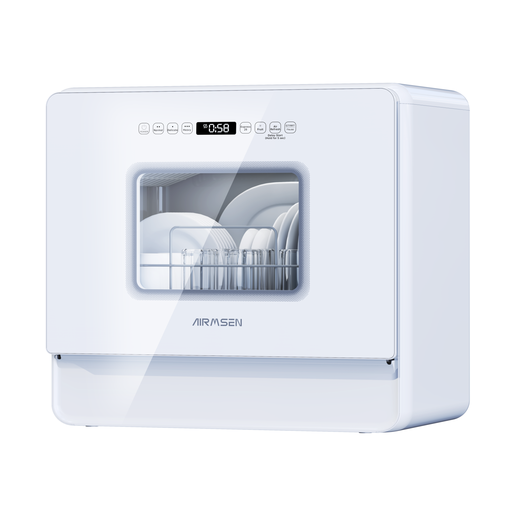 Image unavailable
The integrated 5 L tank can be filled manually, according to the product information, so no fixed water supply is needed.
The product information gives a capacity of 5 place settings, two levels and five cycles. It requires an earthed socket and advises against using an extension lead.
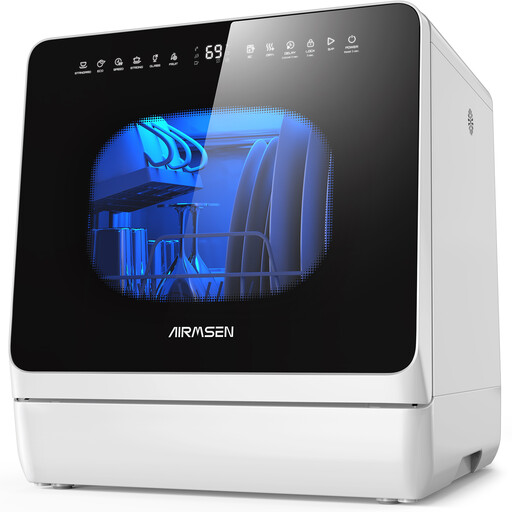 Image unavailable
The product description includes an integrated tank for manual filling, making this an option to consider if you don’t have a usable water supply.
The stated capacity is 4 place settings and the title lists 8 programmes. The instructions require an earthed socket and a dedicated circuit, and advise against using extension leads.
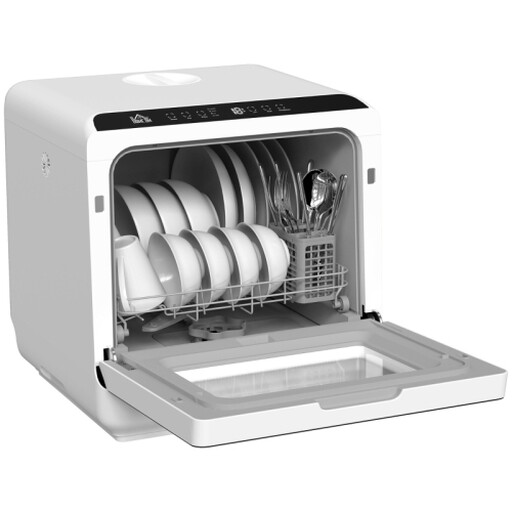 Image unavailable
The integrated 6 L tank is designed for a tabletop appliance. The product description also mentions an alternative connection to a tap.
The product information gives a capacity of 4 place settings, 5 programmes and a drying function. Check that the appliance will fit and that you can drain it in your kitchen.
 Image unavailable
The integrated 5 L tank can be filled manually, according to the product description. A tap connection is also listed.
The model has 6 programmes and 3 additional functions. The instructions require an earthed 220–240 V socket, advise against extension leads and say to secure the drain hose properly.
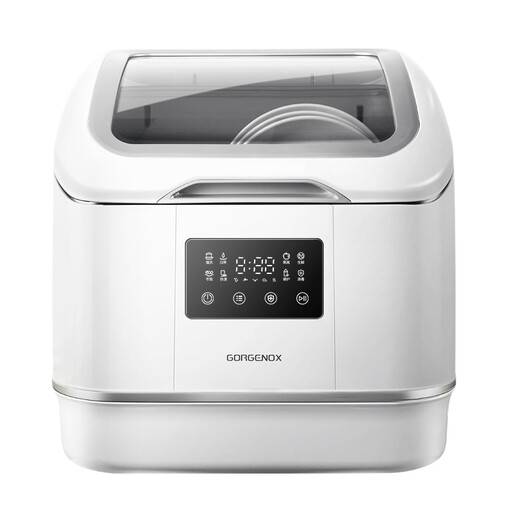 Image unavailable
The product description specifies a tap connection and a capacity of 3 place settings.
Before use, follow the instruction to place the drain hose securely in a sink or bucket.
The term “freestanding” alone doesn’t answer this: what matters is the work involved. ANIL advises that alterations to rented property or fixtures require your landlord’s written permission. Check your tenancy agreement and the nature of the work you’re considering.
No. The wastewater must be drained away, even if the appliance can be filled from a tank. For Bob, Daan Tech specifies a hose that should be directed towards a sink or another drain and secured as instructed.
Read the instructions for your chosen model and check whether it needs a water supply, where the drain hose should go and how to secure it, and whether your socket meets the appliance’s requirements. Electrolux’s pre-installation guide states that its installation service does not include plumbing or electrical work.
Compare the energy use per 100 Eco cycles and water use per Eco cycle on the models’ labels. These figures apply to the Eco programme and don’t show the consumption of every programme, so also consider how often you’ll use the appliance.
In France, you can claim under the statutory guarantee of conformity from the professional seller. For a new product, the period is two years. The French Ministry of the Economy distinguishes this mandatory guarantee from any commercial guarantee that may also be offered.