For an open-plan kitchen that leads into your living room, start by comparing the noise level and noise emission class on the energy label. Then choose a size that suits the available space, connections and the amount of washing-up you typically have. ADEME identifies noise emission classes A and B as particularly quiet, but the figure alone cannot predict how much noise you’ll notice in your room: UFC-Que Choisir’s tests also take vibrations, high-pitched sounds and beeps into account. A freestanding model means you don’t need to allow for a cabinet door, while a fully integrated one requires you to check the door panel. A compact model may suit a smaller space, but take a close look at its capacity.
Who is this guide for?
Households using the living room while the dishwasher is running
If you eat, chat or watch television near the kitchen, check the noise emission class and the level in dB. For a fuller picture, UFC-Que Choisir’s tests also assess disturbance from vibrations, high-pitched sounds and beeps.
Anyone fitting out an existing kitchen
An existing housing unit, door panel or plinth may determine which type of appliance will fit. Measure them and check the connections before choosing between a freestanding, semi-integrated or fully integrated model.
Smaller households and kitchens short on space
A slimline or compact appliance is worth considering if a full-size model won’t fit the available space. However, compare the place settings, room for your dishes, and how the model is loaded and drained.
Which features should you compare?
First rule out appliances that won’t fit your kitchen. Then compare the noise, capacity and energy and water consumption of the models that remain.
| Feature | What to check | Your needs |
|---|
| Installation |
Measure the available width, height and depth. For a model with a cabinet door, also check the door panel, plinth and hinges. Check the water supply, electricity and drainage connections. |
I want an appliance that fits in my kitchen and whose door can open without blocking the way. |
| Noise |
Compare the dB level and noise emission class on the label. ADEME identifies classes A and B as particularly quiet; UFC-Que Choisir’s tests also assess vibrations, high-pitched sounds and beeps. |
The dishwasher may be running while we’re talking or watching television in the living room. |
| Capacity |
Check the number of place settings, then look at the basket layout and the space for saucepans, dishes and glasses. Compare the overall size of the format you’re considering. |
With limited space, I could choose a compact model—but it still needs to fit the dishes I actually use. |
| Water and energy |
According to ADEME and the European Commission, the label shows kWh per 100 cycles, litres per cycle and the duration of the Eco programme. Compare these figures on the same basis. |
I want to know how much the Eco programme uses, without confusing it with a quick or intensive cycle. |
Mistakes to avoid
-
Assuming a dB figure guarantees a quiet dishwasher
The declared noise level helps you compare models, but on its own it doesn’t describe every sound you might hear from the living room. UFC-Que Choisir’s test also takes vibrations, high-pitched sounds and beeps into account.
Use the noise emission class and dB level as an initial guide, then look for an independent test of the model if one is available.
-
Ordering an integrated model based on width alone
A housing unit that’s wide enough doesn’t necessarily mean the height, depth, door panel, plinth or hinge system will be compatible.
Measure the space and kitchen fittings, then check these dimensions against the instructions for the model you’ve chosen.
Depending on your kitchen, you may also need a door panel or an adjusted plinth.
-
Looking only at the energy rating
As ADEME and the European Commission point out, the label lists energy use, water use, Eco programme duration, capacity and noise separately. So the energy rating alone won’t tell you about the other features.
Compare the details that matter for how you’ll use the dishwasher, then check the interior layout and installation requirements for the exact model.
-
Forgetting to clean the filter
According to UFC-Que Choisir, the filter catches food residue that could block the drain pump or pipes.
Clean it regularly, following the instructions for your appliance.
A guide to some of the brands
Bosch
Bosch offers freestanding, integrated and compact dishwashers, including 45 cm and 60 cm formats in some categories.
- These formats make it easier to find a model suited to your available space and planned kitchen finish.
- The range alone won’t tell you how noisy or efficient a particular model is: check its label.
Siemens
Siemens offers built-in and freestanding dishwashers. Some models compatible with Home Connect include features for planning cycles and tracking consumption.
- If you want to schedule a cycle, check that the model you’re considering has this feature.
- A connected feature won’t tell you how much noise you’ll notice in your living room.
Miele
Miele offers freestanding and integrated models, among others. Its French product information lists the declared noise level for the relevant models.
- The information for a specific model lets you compare its size, capacity and declared noise level with your requirements.
- A figure listed for one Miele model doesn’t apply to the whole range or replace an assessment of how noisy it sounds in practice.
Two dishwasher sizes on Joybuy
These two appliances show different options for an open-plan kitchen: a tabletop model when space and the amount of washing-up are limited, and a 60 cm freestanding model if you need more capacity. Compare their installation requirements and declared noise levels before deciding.
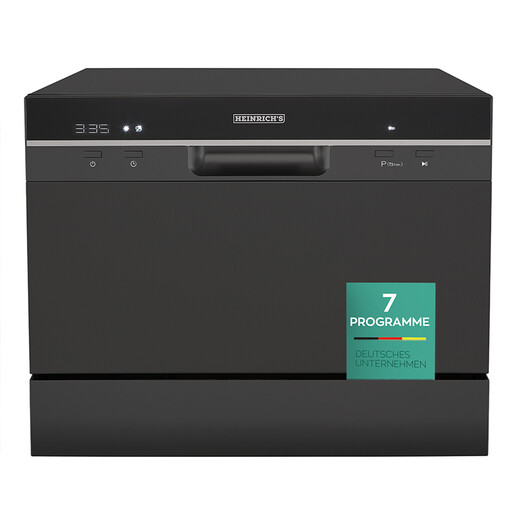 Image unavailable
Heinrich's HTG 8840 Schwarz, 6 place settings
This tabletop dishwasher is worth considering if limited space and a smaller amount of washing-up make a compact format a good fit. The product title lists 6 place settings, 7 programmes, 47 dB and an energy rating of D. Check the dimensions, connections, noise emission class and energy label for this model.
View on Joybuy
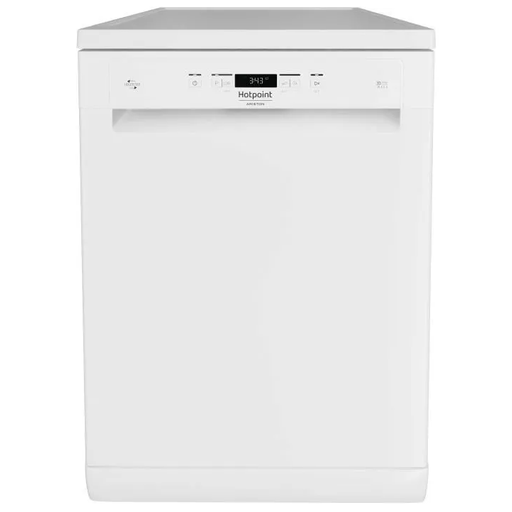 Image unavailable
White Hotpoint H4FD641A, 14 place settings, 60 cm
This freestanding model is worth comparing if you have room for a 60 cm appliance and more washing-up to load. The product title lists 14 place settings and 41 dB; this declared figure doesn’t guarantee the same level of noise in every living room. Check the space required, the connections and the energy label for this model.
View on Joybuy
Frequently asked questions
Which noise rating should you look at for an open-plan kitchen?
Compare both the dB level and the noise emission class on the energy label. ADEME says classes A and B are particularly quiet, although this doesn’t guarantee the same level of comfort in every living room.
Why aren’t decibels enough to help you choose?
The figure shown doesn’t describe every type of audible disturbance. In its testing, UFC-Que Choisir also assesses high-pitched sounds, vibrations and beeps. Check these results if they’re available for the model you’re considering.
What should you measure before buying an integrated dishwasher?
Measure the width, height and depth of the housing unit, and check the requirements for the door panel, plinth and hinges. Then check the model’s instructions for the required water, electricity and drainage connections.
Can the energy label help you compare water use and capacity?
Yes. According to ADEME and the European Commission, it lists details including kWh per 100 cycles, litres per cycle, Eco programme duration and capacity. The consumption figures are for the reference programme and don’t automatically apply to quick or intensive programmes.


