Which features should you compare?
Freestanding
Worth considering: if you have a separate space for your dishwasher and would like to be able to move or reinstall it more easily.
Bear in mind: unlike a fully integrated model, it won’t blend in behind a kitchen door panel. You’ll still need to allow for the connections and clearances.
Integrated
Worth considering: if you have a compatible appliance recess and want your kitchen doors to create a seamless look.
Bear in mind: installation depends on the kitchen unit and door system. Miele notes that a door panel, which is not supplied, may be required for some products.
Compact
Worth considering: if space is limited and your washing-up loads are relatively small.
Bear in mind: a table-top model may need to run several cycles to wash a day’s dishes, and the water supply method varies by model.
| Feature | What to check | What matters to shoppers |
|---|
| Usable capacity |
Compare the stated place-setting capacity, width and rack layout with the dishes and pans you use regularly. |
When meals produce lots of washing-up, I want to avoid running a second cycle because there isn’t enough room. Around 36% of consumers would make capacity their top priority. |
| Water, electricity and Eco programme duration |
Check the kWh per 100 cycles, litres per cycle and Eco programme duration on the label. Compare models with similar capacities. |
If I run frequent cycles, I want to know how much energy and water they use, without confusing a quick programme with the Eco programme. Consumption would be the top priority for around 29% of consumers. |
| Noise |
Check the noise emissions in dB and the noise class on the label, then think about when you usually run the dishwasher. |
In an open-plan kitchen, I’d prefer a cycle that doesn’t disrupt activities at home. Noise would be the top priority for around 21% of consumers. |
| Space and connections |
Check the instructions against the available space, any door panel, the water inlet, drainage and electrical supply. |
If space is limited by a recess or worktop, I need to know I can install the appliance before choosing its features. Around 14% of consumers would prioritise this compatibility. |
According to ADEME and the European Commission, the energy label brings together information on capacity, Eco programme consumption and duration, and noise levels. These figures are most useful when comparing appliances that suit a similar load.
Dishwashers to explore on Joybuy
These appliances illustrate the three formats covered here: integrated, freestanding and compact worktop models. Start by choosing a format that can fit your dishes and be installed in your home, then compare the specifications of each model.
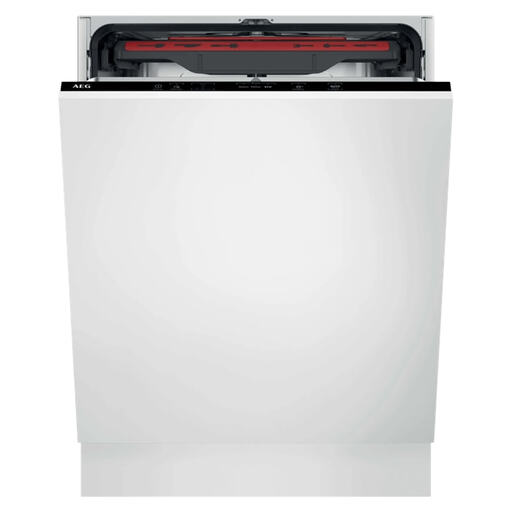 Image unavailable
AEG FSB34707Z fully integrated, 60 cm, 14 place settings
Worth considering for a fitted kitchen with an appliance recess and a large daily load. The title states 14 place settings and an energy rating of C. The dimensions given for this appliance don’t match the stated 60 cm width, so check the installation plan against your recess and door panel before choosing.
View on Joybuy
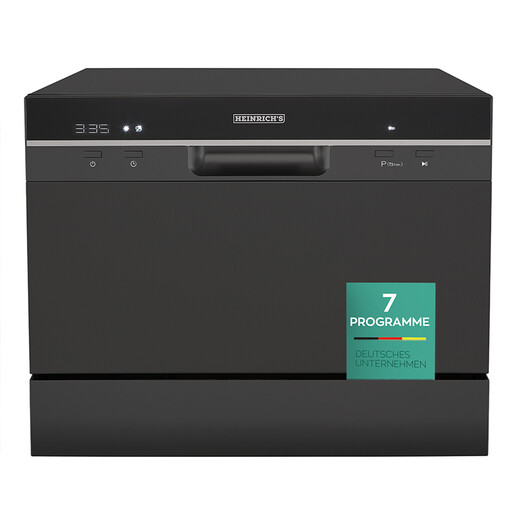 Image unavailable
Heinrich's HTG 8840 Schwarz table-top, 6 place settings
Worth considering if space is limited and 6 place settings suit your usual washing-up. The title states 7 programmes, 47 dB and an energy rating of D. Check that you have enough room on your worktop and review the connections and drainage specified in the instructions.
View on Joybuy
 Image unavailable
Hotpoint H4FD641A freestanding, 60 cm, 14 place settings
Worth considering for a separate space and plenty of daily washing-up. The title states 14 place settings, 41 dB and an energy rating of C. If you’re planning to install it under a worktop, check the model’s installation instructions, along with the available space and connections.
View on Joybuy
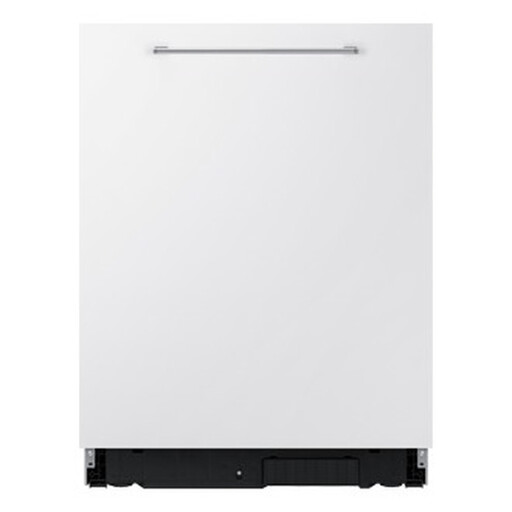 Image unavailable
Samsung DW70H72WCB0U1 integrated, 60 cm, 13 place settings
Worth considering if you’re planning to integrate the appliance into your kitchen units and 13 place settings suit your needs. The title states an energy rating of C. Before choosing this model, check its installation plan against your kitchen recess and door fitting.
View on Joybuy
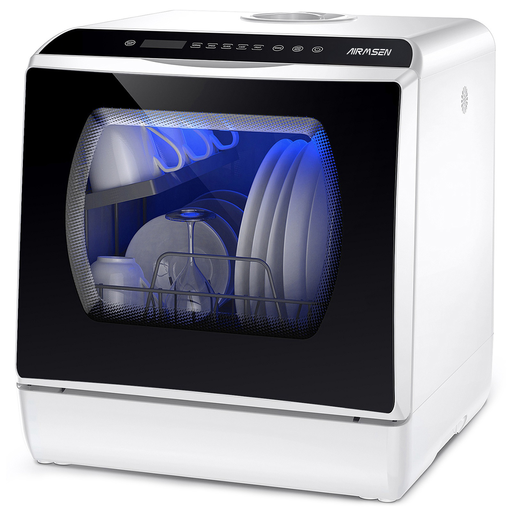 Image unavailable
AIRMSEN worktop dishwasher with built-in 5 L tank
Worth considering for small loads in a compact space. The title mentions a built-in 5 L tank and 5+1 wash cycles. Before choosing this water supply option, check the available space and the filling and drainage requirements in the instructions.
View on Joybuy
Frequently asked questions
What should I compare on a dishwasher’s energy label?
Compare the place-setting capacity, kWh per 100 cycles, litres per cycle, Eco programme duration and noise levels, as well as the energy rating. The European Commission lists these details on the label. Comparing models with similar capacities makes it easier to choose between them for the same amount of washing-up.
Does a longer Eco programme always use more energy and water?
No. You can’t work out consumption from the programme duration alone. For the models you’re considering, compare the litres per cycle and kWh per 100 cycles stated for the Eco programme, then check that its duration suits your daily routine.
Does an integrated dishwasher come with a kitchen-matching door?
Not necessarily. Miele notes that its integrated appliances may need a door panel that is not supplied. Electrolux also states that one of its fully integrated models is supplied without a door panel. Check the product details and installation plan for the exact model.
Which connections should I check for a freestanding or compact model?
Check the appliance instructions for the water inlet, drainage and electrical supply, as well as the space available. Water supply methods vary: for example, Candy states that its compact CP 6E51LS connects directly to the water inlet.
Should I check the repairability index in France?
Yes. In information published on 18 August 2026, the French Ministry of the Economy states that the repairability index is compulsory for dishwashers in France. Check the index displayed for each model you compare, and don’t confuse it with the energy rating.


