People living in a studio flat or with a small kitchen
If floor space is limited, compare the space needed for a countertop model with the overall footprint of a 45 cm dishwasher. Also measure the door clearance and check where the connections are.


Start by considering the available space and connections. A countertop model suits smaller loads if there’s room for it on your worktop. A 45 cm model can handle more regular use, provided its depth and door clearance work in your kitchen. An integrated model also needs a suitable housing unit, door panel and door mechanism. In an open-plan kitchen, compare the dB rating and noise class for the exact model rather than assuming its noise level from its width.
If floor space is limited, compare the space needed for a countertop model with the overall footprint of a 45 cm dishwasher. Also measure the door clearance and check where the connections are.
If you spend time in the living area while the dishwasher is running, noise matters just as much as size. UFC-Que Choisir highlights this for open-plan kitchens: check the dB rating and noise class on the label for the model you’re considering.
An existing housing unit may make an integrated model a good option, but its width alone won’t tell you whether it will fit. Bosch recommends measuring the housing unit; also check the required door panel and mechanism.
First rule out any models that can’t be installed in your kitchen. Then compare capacity and noise levels to find the right fit for everyday use.
| What to consider | What to check | Think about your needs |
|---|---|---|
| Size and capacity | Measure the height, width and depth, and allow enough room to open the door. Compare the place settings with the amount of washing-up you usually produce: UFC-Que Choisir describes 45 cm integrated models as holding 9 to 10 place settings, while the countertop Candy CP 6E51LS holds 6. | “I’m short on space, but I want to be able to wash the dishes we get through between cycles.” A slim model won’t necessarily solve a depth constraint. |
| Installation | For a standard installation, UFC-Que Choisir says you need a water supply, an electricity supply and a drain. For an integrated model, also check the housing unit dimensions, door panel and door mechanism. For a compact model, check how it fills and drains. | “My kitchen doesn’t have a dedicated space for a dishwasher: can I install the appliance and access its connections without unexpected work?” |
| Noise | Compare the dB rating and noise class shown on the label for the exact model. According to ADEME, noise classes A and B indicate particularly quiet appliances. Also check which cycle the figures you’re comparing refer to. | “My kitchen opens onto the living area: I want to know the stated noise level before choosing where to put the dishwasher and when to run it.” |
| Energy use and repairability | ADEME lists electricity use in kWh per 100 reference cycles and water use in litres per reference cycle. Compare these figures across models that suit your needs, and check the model’s repairability index if one is shown. | “I expect to use the dishwasher often, so I want to compare the figures on the labels without assuming the reference cycle applies to every programme.” |
A 45 cm appliance can still be deep: Bosch lists dimensions of 845 × 450 × 600 mm for its freestanding SPS4EMI17E. You’ll also need enough room to open the door.
Measure the available height, width and depth, then check the door clearance and the route to the planned location.
A countertop format doesn’t determine how the appliance gets its water. For example, Candy lists the CP 6E51LS as connecting directly to the water supply.
Check the instructions for your chosen model to find out what’s needed for the water supply, drainage and any accessories.
If the required connections aren’t available in that location, installation may involve plumbing or electrical work.
UFC-Que Choisir explains that an integrated model needs a purpose-built housing unit and is supplied without a door panel. The door fitting also depends on the model.
Before ordering, check the installation diagram, door panel dimensions and hinge system against your kitchen units.
Depending on your existing kitchen, you may also need to pay for a door panel, fitting or joinery work. Electrolux states that its installers don’t carry out this work.
A programme name or marketing description isn’t a substitute for comparable noise figures. UFC-Que Choisir includes noise among its criteria for open-plan kitchens.
Check the dB rating and noise class on each model’s label, then compare figures measured on the same basis.
These range and model examples show you what information to compare. They don’t indicate whether a different model will fit, or whether it’s included in the Joybuy selection below.
In France, the brand offers freestanding and integrated models, including 45 cm options.
The French range includes 45 cm freestanding dishwashers to consider when floor width is limited.
The brand’s countertop model can be a useful point of comparison if there’s no suitable space on the floor.
These countertop models are for kitchens where you’re considering putting the appliance on a worktop. Their inclusion here doesn’t replace comparing them with a freestanding or integrated 45 cm model if you have a suitable space.
 Image unavailable
This countertop model may suit smaller loads if your worktop and connections are suitable. Its product details list 6 place settings, 7 programmes and 47 dB. If you have an open-plan kitchen, compare the noise figure with the model’s label.
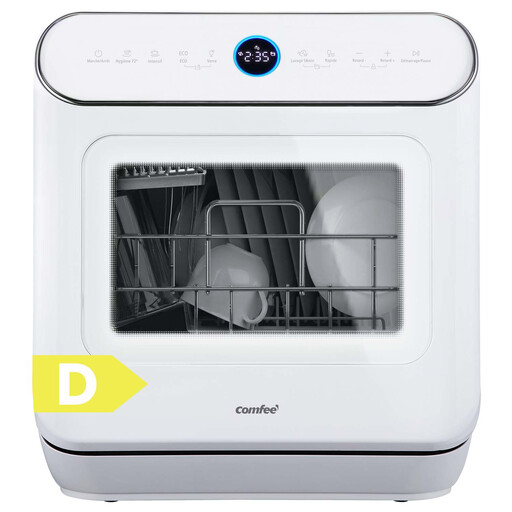 Image unavailable
This tabletop model is worth comparing with other compact dishwashers if floor space is limited. Its product title lists 7 programmes and energy class D. Check the instructions for the space it needs, its capacity and noise level, and how it fills and drains.
 Image unavailable
The built-in 5 L tank mentioned in the product title is worth considering if there’s no dedicated water supply at your chosen location. Still, check how the dishwasher drains, how much space it needs, its place-setting capacity and noise level before choosing this model.
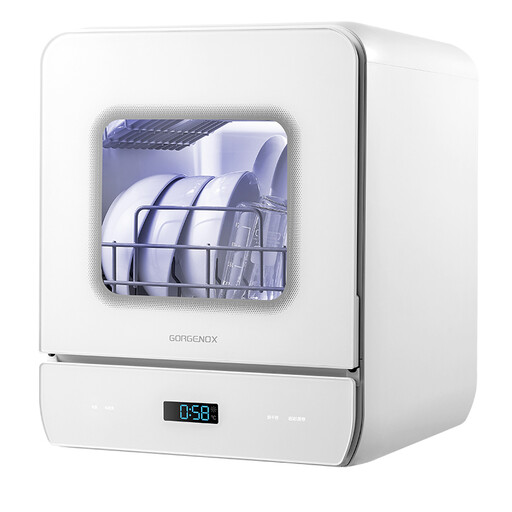 Image unavailable
The capacity of 3 place settings listed in the product title suggests this countertop model is best suited to smaller loads. Check its dimensions and noise level, and be sure to consult the instructions to find out how water enters and drains from the appliance.
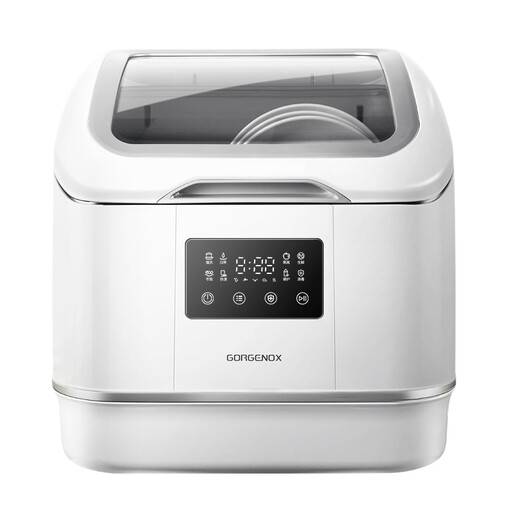 Image unavailable
This countertop model is listed as holding 3 place settings, so compare that with the amount of washing-up you produce at home. Before deciding where to put it, check the instructions for its dimensions, noise level, water supply and drainage. The phrase “no installation” doesn’t explain how these work.
Yes, as long as the space and necessary connections can be provided. For a standard installation, UFC-Que Choisir says you need a water supply, an electrical socket and a wastewater drain. Check that you can access them, and read the model’s instructions before buying.
Not necessarily. The water supply method depends on the model, and used water also needs to drain away. For example, Candy lists the CP 6E51LS as connecting directly to the water supply. Check the instructions and accessories for the compact model you’re considering.
Measure the housing unit and check the door panel and door mechanism required for the model. UFC-Que Choisir explains that an integrated dishwasher fits into a purpose-built housing unit and is supplied without a door panel. Also follow the instructions for installation requirements, including ventilation.
Compare the dB rating and noise class on the labels of models that fit your space. ADEME says classes A and B indicate particularly quiet appliances. Bear in mind that the noise you hear may vary depending on the programme you use.
Check the capacity, electricity use in kWh per 100 reference cycles, water use per reference cycle and noise information. ADEME recommends checking these figures on the label. Compare models with a format and capacity that suit your needs.