To replace daily hand-washing, first choose a format that will fit in your kitchen: freestanding, with no dedicated space required; integrated, for a suitable housing unit; or compact, if space is limited. Then check that the capacity suits the amount of washing-up you usually have—a smaller appliance may mean running more cycles. Finally, compare the Eco programme’s stated energy and water use, duration and noise level, and don’t forget maintenance.
Who are the different formats for?
Your kitchen layout determines which formats are suitable; the amount of washing-up you have will then help you choose between the appliances that fit.
Homes without a dedicated space
If you want to cut down on hand-washing without altering your kitchen units, start by measuring the available space and locating the connections. According to Que Choisir, a freestanding model gives you more flexibility with your layout than an integrated one; a slimline model may also be worth considering if width is limited.
Fitted kitchens with a housing unit
An integrated dishwasher can fit into a fitted kitchen, provided the housing unit and, where applicable, the furniture door are suitable for the model you choose. Que Choisir points out that you need a housing unit designed for this purpose, so check the installation plan before ordering.
Smaller homes with a moderate amount of washing-up
A 45 cm or compact appliance can save space. However, make sure its capacity can accommodate your plates, dishes and pans in the way you need. Que Choisir notes that some compact worktop models hold 6 place settings, but that doesn’t guarantee they’ll be enough for every household.
What should you check before choosing?
First rule out formats that won’t fit the available space or connections, then choose a capacity to suit your everyday washing-up. The Eco programme figures and maintenance requirements can help you compare the remaining models.
Freestanding
Consider it if: your kitchen has no dedicated housing unit or you want more flexibility with your layout.
Bear in mind: its visible sides won’t have the same look as an appliance built into your kitchen units.
Integrated
Consider it if: you have a suitable housing unit and want the appliance to blend in with your kitchen.
Bear in mind: the dimensions and furniture-door system must match the exact model, as Que Choisir points out.
Compact
Consider it if: a standard-size appliance won’t fit and you have a moderate amount of washing-up.
Bear in mind: its smaller capacity may mean running more cycles or washing some utensils by hand.
| Criterion |
What to check |
Who should consider it? |
| Installation and format |
Measure the available space; for an integrated model, also check the housing unit and furniture door. Make sure the connections are accessible. |
If your kitchen is already fitted, the appliance needs to fit and connect properly—don’t assume the housing unit will be suitable. Around 31% of consumers prioritise this compatibility. |
| Capacity and usage |
Compare the stated place settings with the amount you usually wash, taking dishes and pans into account, along with the basket layout. |
To avoid continuing to wash some items by hand, the amount each cycle can hold needs to suit your household’s meals. Capacity is the priority for around 31% of consumers. |
| Water and electricity |
Check the Eco programme’s water and energy consumption figures, alongside the capacity shown on the label. |
If you use your dishwasher regularly, knowing how its consumption relates to its capacity can help you choose between suitable formats. Around 19% of consumers put these figures first. |
| Noise, drying and maintenance |
Check the stated noise level, the model’s drying system and the maintenance instructions in its manual. |
Noise can affect everyday use in an open-plan kitchen. Drying and maintenance matter too, once the appliance is installed. Ease of use is the priority for around 19% of consumers. |
Mistakes to avoid
-
Choosing an integrated model based on its stated width alone
A width that looks suitable doesn’t confirm that the housing unit is tall enough or that the furniture door will fit. Installation requirements vary between models.
Measure the available space and check the installation plan for the exact model, especially the furniture door and its fittings.
-
Focusing only on the energy label rating
The rating letter alone won’t tell you how much water the appliance uses, how long the cycle takes or how noisy it is. The European regulation on dishwasher energy labelling bases comparable figures on the Eco programme loaded to its rated capacity; they don’t describe every other programme.
Consider these figures together and compare them with the capacity you need.
-
Assuming a compact model will handle all your washing-up
A 45 cm or compact model saves space, but has less capacity. If your dishes and pans don’t fit alongside your everyday load, you’ll still need to wash some items separately.
Think about the washing-up from several days before choosing a capacity, and check how the baskets can be loaded.
-
Forgetting about maintenance once the appliance is installed
Switching from hand-washing to a dishwasher doesn’t mean you can forget about maintenance. Que Choisir points out that regular care helps extend the appliance’s lifespan.
Make sure you can reach the parts that need cleaning, and follow the instructions in the manual for your chosen model.
Brands to consider, model by model
The features below relate to specific models or ranges, not every dishwasher from a particular brand. Always check the model details and installation requirements before making your decision.
Bosch
Worth considering if you’re comparing freestanding and integrated models with different drying systems and basket layouts.
- Bosch states a noise level of 40 dB for the freestanding SMS6ZCI11F and features PerfectDry on the integrated SMV6ZCX10E.
- These model-specific details don’t mean the whole range has the same noise level or drying performance. Check the product details and installation plan for the model you’re considering.
Miele
A brand to consider when comparing freestanding and integrated models, particularly if the available width will influence your choice.
- Miele France features the 45 cm freestanding G 5740 SC SL, which comes with a cutlery tray.
- Features listed in the catalogue vary by model. Check the label and dimensions of the model you’re considering rather than assuming they apply to the whole range.
Beko
A brand to explore if you want to compare 45 cm and 60 cm models, either freestanding or integrated.
- Beko France states that the BDFS26040X holds 15 place settings and the 45 cm BDFS26040XA holds 10.
- Capacity and installation dimensions vary between models. Check the details for the exact model, especially if it needs to fit into a housing unit.
Dishwashers available on Joybuy
To replace daily hand-washing, this selection features freestanding and fully integrated models with 13 or 14 place settings. First narrow down your options based on the space available, then compare capacity and the usage details that matter to you.
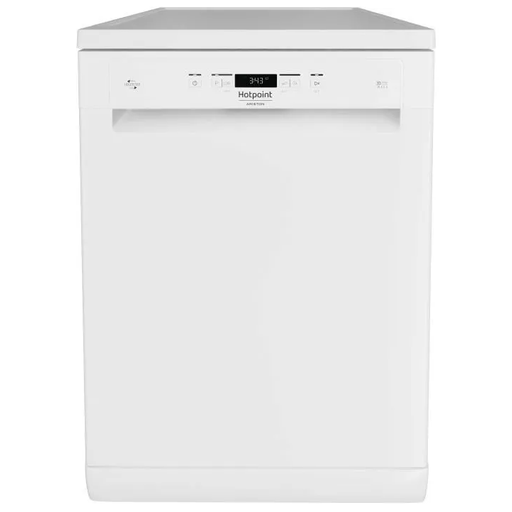 Image unavailable
Hotpoint H4FD641A freestanding dishwasher, 14 place settings
Worth considering for a large daily load if you have space for a freestanding appliance. The title states a width of 60 cm, a noise level of 41 dB and a C energy rating. Check the installation dimensions and Eco programme consumption figures on the model’s product page. Its door opens automatically at the end of the cycle, so bear in mind the hot steam mentioned in the description.
View on Joybuy
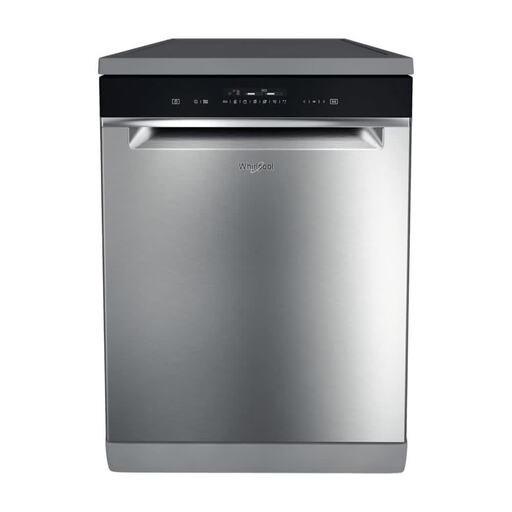 Image unavailable
Whirlpool WFP5O41PLGX freestanding dishwasher, 14 place settings
This freestanding model could suit you if you’re looking for a capacity of 14 place settings. Its title states a width of 60 cm and a C energy rating, but other dimensions given for this model don’t appear to match that width. Confirm the exact measurements before planning where to put it.
View on Joybuy
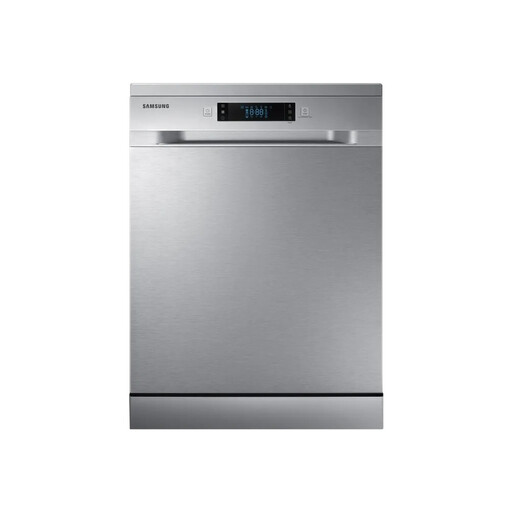 Image unavailable
Samsung DW60M6050FS freestanding dishwasher, 14 place settings
Worth comparing if you’re looking for a freestanding appliance to handle a large daily load. The title states 14 place settings and seven programmes. Check the dimensions against your kitchen, then review the energy label and filter-cleaning instructions before you choose.
View on Joybuy
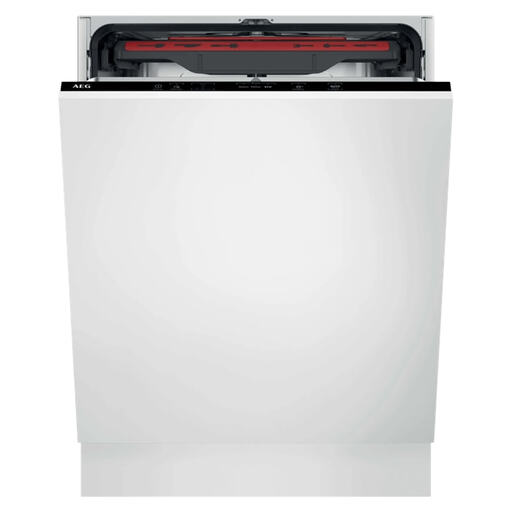 Image unavailable
AEG FSB34707Z integrated dishwasher, 14 place settings
Designed for a fitted kitchen with a suitable housing unit, this fully integrated model is listed as having 14 place settings and a C energy rating. The title states a width of 60 cm, but other dimensions given for this model aren’t clearly consistent. Confirm the appliance and housing unit measurements, as well as how the furniture door attaches, before choosing it.
View on Joybuy
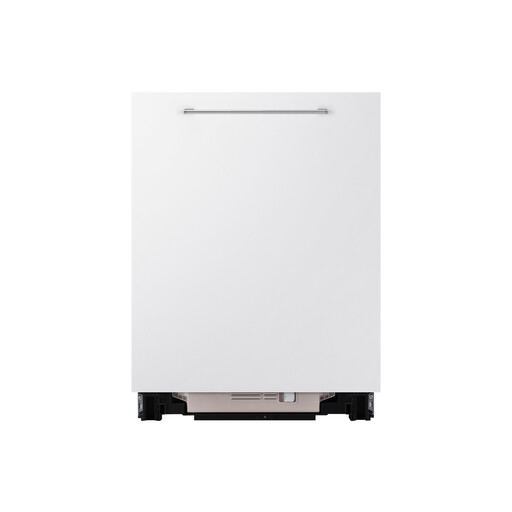 Image unavailable
Samsung DW80H72YBB0U1 integrated dishwasher, 13 place settings
Worth considering if your kitchen has a housing unit suitable for a fully integrated appliance. The title states a width of 60 cm, 13 place settings and a B energy rating. Check that the housing unit and furniture door are compatible, and review this model’s Eco programme consumption figures on its energy label.
View on Joybuy
Frequently asked questions
What should I compare on the energy label?
Compare the energy rating, energy and water consumption, Eco programme duration and noise level, while keeping the appliance’s capacity in mind. The European regulation on dishwasher energy labelling uses the Eco programme loaded to its rated capacity as the basis for these comparable figures; they won’t necessarily reflect your other cycles.
Can an integrated model directly replace a freestanding one?
Not without checking your kitchen. According to Que Choisir, an integrated model must fit into a housing unit designed for that purpose, while a freestanding model offers more flexibility with your layout. Measure the housing unit and check the installation plan, furniture door and connections for the model you’re considering.
Is an available socket all you need to install a dishwasher?
Don’t assume so. In its technical guidance for France, Promotelec states that a dishwasher socket must be connected to a dedicated circuit. If you’re unsure about the existing electrical installation, ask a qualified professional to inspect it before installation.
Will a 45 cm appliance necessarily use less energy and water?
Its width alone doesn’t tell you how much it will use. Compare the Eco programme figures on the energy labels, the usable capacity and the number of cycles you’d need to run for the amount of washing-up you have.
What should I consider for everyday use?
Choose a capacity that suits your usual loads and allow time for the maintenance described in the manual, including access to the parts that need cleaning. Que Choisir highlights the importance of maintenance for the dishwasher’s lifespan.


