If you often eat with family or friends, a 60 cm dishwasher is worth considering if your kitchen has room for one. UFC-Que Choisir states that this size accommodates 12 to 17 place settings, compared with fewer than 9 for a compact model. A freestanding dishwasher doesn’t require a built-in housing unit, while an integrated model needs a compatible cabinet space. If you’re short on space and need a compact model, check its capacity against the dishes you actually accumulate between washes.
Which size is right for you?
Households that often share meals
If plates, glasses and utensils pile up every day, compare each model’s capacity with your actual load, including dishes and saucepans. According to UFC-Que Choisir, 60 cm models generally hold 12 to 17 place settings, 45 cm models hold 9 to 10, and compact models fewer than 9.
People with an open-plan kitchen
If the dishwasher runs while others are in the living area, compare the noise levels of the models you’re considering. UFC-Que Choisir highlights noise as a particularly relevant factor in an open-plan kitchen.
Households with limited kitchen space
A cabinet space may point you towards an integrated model, while a compact dishwasher means less capacity. Before choosing, also check the positions of the water inlet, power supply and waste-water outlet: UFC-Que Choisir says all three connections are required.
What should you compare?
Start with the dishes you produce between cycles, then check the available space and the energy, water and noise figures for models that will fit.
Standard freestanding
Worth considering: for frequent shared meals, if your kitchen can accommodate a 60 cm appliance without requiring a fitted cabinet door.
Trade-off: this size takes up more room than a 45 cm or compact model. Remember to measure the space needed to open the door, too.
Built-in or integrated
Worth considering: if your fitted kitchen has a compatible cabinet space and you want the appliance to blend in with the rest of the design.
Trade-off: the cabinet space and door panel must be suitable for the model. Check what’s needed for installation before you order.
Compact
Worth considering: if space is limited and you have a relatively small amount of washing up between cycles.
Trade-off: UFC-Que Choisir gives compact models a capacity of fewer than 9 place settings. Check that your dishes and saucepans will fit, too.
| Factor | What to check | What I need |
|---|
| Capacity |
Compare the stated number of place settings and the basket layout with your dishes, saucepans and glasses. UFC-Que Choisir distinguishes between 60 cm models (12 to 17 place settings), 45 cm models (9 to 10) and compact models (fewer than 9). |
We often eat with family and friends, so I want to fit in the washing up from between washes, not just the plates and cutlery. |
| Consumption |
Check the kWh per 100 reference cycles and the litres per reference cycle. ADEME explains that both figures appear on the energy label. |
As we wash up frequently, I want to compare electricity and water use on the same reference basis. |
| Noise |
Compare the stated noise levels for the exact models, rather than relying on their marketing descriptions. UFC-Que Choisir highlights how important noise can be in an open-plan kitchen. |
The kitchen opens onto the living area, so the appliance’s noise matters when we’re eating or chatting, too. |
| Installation |
Measure the space and check the water inlet, power supply and waste-water outlet. For an integrated model, also check the cabinet space and door panel. UFC-Que Choisir states that it must be fitted into a purpose-built cabinet space. |
I want an appliance that fits in my kitchen and can be connected up at the chosen location. |
What pitfalls should you avoid?
-
Choosing a compact model based on size alone
A small appliance may struggle to keep up with the washing up from frequent meals with family and friends. UFC-Que Choisir gives compact models a capacity of fewer than 9 place settings, compared with 12 to 17 for a 60 cm model.
Before settling on a size, keep an eye on what builds up between washes over a few days, especially saucepans and dishes.
-
Comparing only the energy rating
The energy rating alone doesn’t tell you how much water and electricity the reference cycle uses. ADEME says the label shows kWh per 100 cycles and litres per cycle.
Compare both figures for models that meet your capacity needs.
-
Relying only on the word ‘quiet’
In an open-plan kitchen, dishwasher noise can matter while the room is in use. UFC-Que Choisir includes it as a factor to compare in this situation.
Check the noise levels for the exact models before choosing between two appliances.
-
Treating an integrated model like a freestanding one
According to UFC-Que Choisir, an integrated dishwasher must be fitted into a purpose-built cabinet space. Installation also requires a water inlet, power supply and waste-water outlet.
Measure the cabinet space and check the door panel, door clearance and connections before you order.
A guide to the brands
These examples highlight features to compare on specific models; they don’t necessarily apply to an entire product range.
Bosch
Bosch offers 45 cm and 60 cm freestanding dishwashers. Consider which size suits your available space and usual load.
- Bosch lists a noise level of 42 dB and Home Connect for the SMS4ECI28F freestanding model.
- These features apply to this model; check the specifications of the one you’re considering. A 45 cm model won’t necessarily offer the same capacity as a 60 cm one.
Beko
Beko’s range of integrated dishwashers includes 45 cm models and appliances listed as holding 14 place settings.
- Beko lists a noise level of 42 dB(A) for the BDIN38460.
- Don’t assume that capacity or noise levels are the same across different models. Check the exact model’s specifications and the dimensions of your cabinet space.
Miele
The G 7650 SCVi AutoDos is a fully integrated model whose specifications can be used as a point of comparison.
- Miele lists an A energy rating, 42 dB, a cutlery tray and AutoDos for this model.
- These specifications apply to the G 7650 SCVi AutoDos. Also check that the door panel required for installation is suitable.
Dishwashers to consider on Joybuy
These freestanding and integrated models are standard sizes to consider if you often share meals with family or friends. Compare their stated capacity, then check the dimensions and installation requirements of your chosen model.
 Image unavailable
Samsung DW60M6050FS, freestanding, 14 place settings
With a capacity of 14 place settings and 7 programmes, this model is designed for regular loads after meals with family or friends. Check its dimensions and the clearance needed to open the door in your kitchen.
View on Joybuy
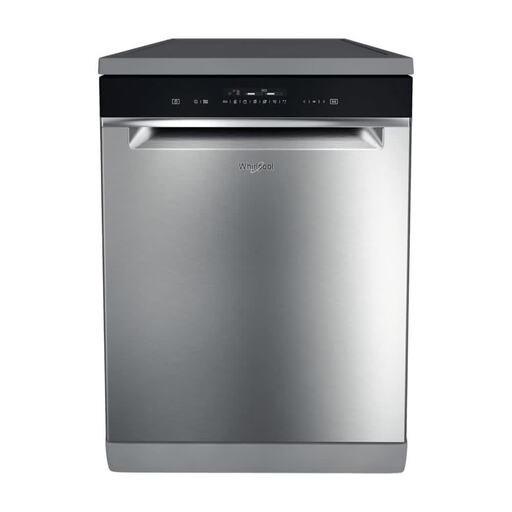 Image unavailable
Whirlpool WFP5O41PLGX, freestanding, 14 place settings, C-rated
This model is listed as 60 cm wide and is designed for households that regularly have a lot of washing up. As the listed width specifications conflict, confirm the exact dimensions before deciding where to put it.
View on Joybuy
 Image unavailable
Indesit D2F HK26 S, freestanding, 14 place settings, E-rated
The stated capacity of 14 place settings helps you assess whether it can handle washing up after shared meals. To compare it with other models for frequent use, also check the kWh per 100 cycles on its energy label.
View on Joybuy
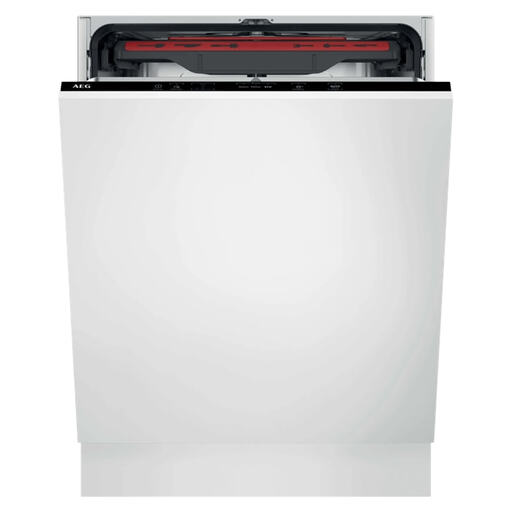 Image unavailable
AEG FSB34707Z, integrated, 14 place settings, C-rated
This model is listed as 60 cm wide and could suit a fitted kitchen and frequent meals with family or friends. As the listed width specifications conflict, confirm the dimensions of both the appliance and cabinet space, and check that the door panel is compatible.
View on Joybuy
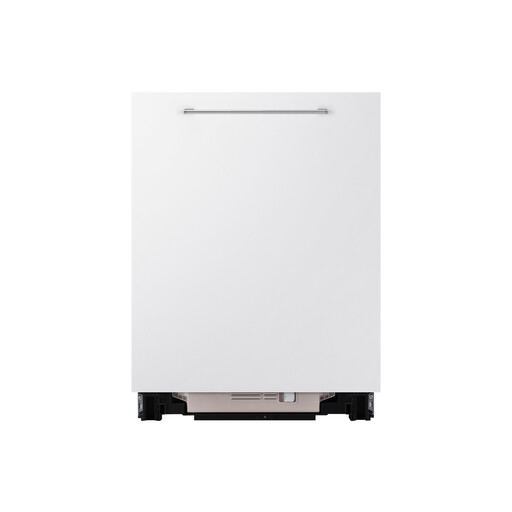 Image unavailable
Samsung DW80H72YBB0U1, integrated, 13 place settings, B-rated
This model is listed as 60 cm wide and is designed for a kitchen with a compatible cabinet space. Check that its 13 place settings are enough for the washing up you accumulate between cycles, and confirm the installation requirements.
View on Joybuy
Frequently asked questions
Is a compact dishwasher enough for a household that often eats at home?
It may be suitable if you don’t accumulate much washing up between cycles, but check its capacity against your habits. UFC-Que Choisir gives compact models a capacity of fewer than 9 place settings, compared with 12 to 17 for a 60 cm model. Remember to include dishes and saucepans in your calculations.
Which connections should I check before buying?
Check the water inlet, power supply and waste-water outlet at the intended location. UFC-Que Choisir says all three connections are needed to install a dishwasher.
How do I choose a dishwasher for an open-plan kitchen?
Compare the noise levels of the specific models that will fit, rather than relying on the word ‘quiet’. UFC-Que Choisir points out that noise matters particularly when the kitchen opens onto a living area.
What should I compare on the energy label if I’ll use it frequently?
Compare the kWh per 100 reference cycles and litres per reference cycle, two figures explained by ADEME. First, make sure the models you’re comparing have a capacity suited to your washing up.


