Households that often eat together
As well as plates and cutlery, you’ll have serving dishes and pans to wash. To avoid running extra cycles because the load is too small, check the capacity and how much usable space the racks actually offer.


If you often share meals with others, start by considering how much washing-up a typical meal creates and how much space you have. A 60 cm dishwasher gives you more room to load dishes if your kitchen can accommodate it. Choose a freestanding model for a suitable space, or an integrated model if you have a compatible kitchen unit and door. A 45 cm or compact model can work where space is limited, but you may need to run it more often. Also check the space available for serving dishes and pans, the Eco cycle information and the noise level.
The right size depends both on the dishes left after meals and on your kitchen layout.
As well as plates and cutlery, you’ll have serving dishes and pans to wash. To avoid running extra cycles because the load is too small, check the capacity and how much usable space the racks actually offer.
If the appliance needs to fit into a kitchen unit, measure the available space and check the door panel and connections. The number of place settings alone won’t tell you whether an integrated model will fit.
A slimline or compact model may suit a narrower space. However, weigh its capacity against how often you share meals and how much room you need for larger utensils.
Start by measuring the space and looking at the washing-up from a typical meal. Then compare the racks and practical features of models that will actually fit in your kitchen.
| Factor | What to check | Your needs |
|---|---|---|
| Capacity and size | Que Choisir lists capacities of 12 to 17 place settings for 60 cm models, 9 to 10 for 45 cm models and fewer than 9 for compact models. Compare these figures with a load that includes serving dishes, too. | After a meal with family or friends, I want to fit in plates, glasses and utensils without having to run a second cycle just because there isn’t enough room. |
| Rack layout | Check the space available for pans, foldable supports and, if included, an adjustable upper rack or cutlery drawer. | We often serve large dishes, so I need to check where they’ll fit once the other racks are loaded. |
| Installation | Measure the usable width, height and depth. For an integrated model, also check the kitchen unit and door panel. For any appliance, make sure the water inlet, drain and power supply are suitable. | I’d rather rule out a model that won’t fit under the worktop or whose door won’t work with my kitchen. |
| Cycles and consumption | ADEME recommends checking the energy label for electricity use per 100 cycles, water use per cycle, the duration of the reference cycle and the energy efficiency class. Compare figures measured on the same basis. | If the dishwasher runs regularly, cycle times and consumption matter to me, as well as capacity. |
| Noise | Compare the noise level in dB and the noise rating shown on the energy label, especially if your kitchen opens onto a living area. | If a cycle is running in the evening, I want to consider anyone using the next room. |
This figure doesn’t show how much room pans and serving dishes take up. In a household that often shares meals, an awkward load can mean running more cycles.
Make a note of what a typical meal leaves to wash, then check the rack layout and adjustments available on the model you’re considering.
A model described as integrated isn’t necessarily compatible with the available height or your kitchen door. For example, Electrolux states that its compact ESL2500RO is supplied without a furniture door.
Compare the kitchen unit measurements, door-panel requirements and connections with the installation diagram for the exact model.
An incompatible door panel or connections can delay installation and mean additional adjustments are needed.
As ADEME’s criteria show, energy labels should also be compared for water use, cycle duration and noise. These details matter particularly if you run cycles frequently or have an open-plan kitchen.
Note the kWh per 100 cycles, litres per cycle, Eco cycle duration and noise level for each model that suits your installation.
Detergent and maintenance are part of everyday use. If you’re replacing an appliance, you’ll also need to arrange the practical details of having the old one taken away with the seller.
Check the manual for maintenance advice, and ask about having your old dishwasher taken away before confirming your order.
These examples can help you identify configurations to compare. The features mentioned apply to the specific models listed.
The documented range includes 60 cm freestanding models and 60 or 45 cm integrated models.
The 60 cm dishwasher range includes configurations to consider based on the space available and the loads you expect to wash.
The compact integrated ESL2500RO is one option when space is limited. Electrolux lists it as 55 cm wide, with a capacity of 6 place settings.
These Joybuy dishwashers are listed as 60 cm freestanding or integrated models. To choose between them, compare the stated capacity with your typical loads, then confirm the dimensions and connections of the model you’re considering.
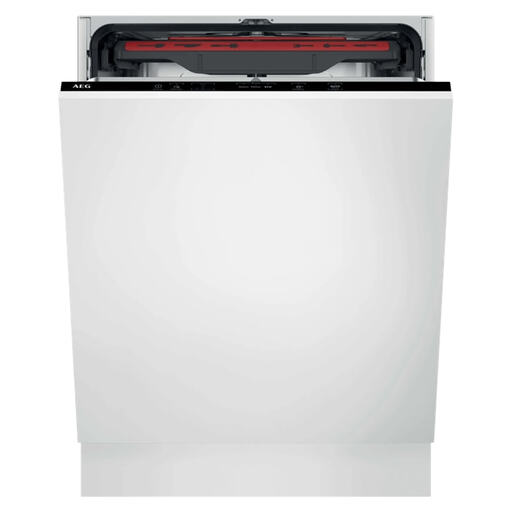 Image unavailable
If you have a fitted kitchen and often eat with family or friends, compare its stated capacity of 14 place settings with the dishes and pans you typically use. The title describes it as a 60 cm integrated model, but the dimensions listed for this appliance don’t clearly match that width. Confirm the appliance, kitchen unit and door-panel measurements before choosing.
 Image unavailable
This freestanding model could be worth considering for regular loads in a shared household, with a stated capacity of 14 place settings. The title lists it as 60 cm, but the technical dimensions don’t clearly match that width. Check the exact measurements and the space available before ordering.
 Image unavailable
Compare its stated capacity of 14 place settings with the amount of washing-up from your shared meals. The title describes it as a 60 cm freestanding model. Check the available space and connections, then look at the energy label and Eco cycle duration if how often you run the dishwasher is an important factor.
 Image unavailable
For shared meals in a fitted kitchen, consider its stated capacity of 13 place settings alongside the space you need for dishes and frying pans. The title lists it as a 60 cm integrated model. Check the kitchen unit and door panel, as well as the Eco cycle consumption and duration, before comparing it with other models.
A 60 cm model is a good starting point if your kitchen can accommodate it and you regularly fill the dishwasher after meals. Que Choisir lists capacities of 12 to 17 place settings for 60 cm models, compared with 9 to 10 for 45 cm models and fewer than 9 for compact models. Also consider the space available for serving dishes. A smaller model may still suit you if space is limited or your loads are modest.
Some models can, but freestanding doesn’t automatically mean suitable for under-worktop installation. Check the manual for the required height and whether the appliance’s top can be removed. A freestanding model already has its own finished exterior, so it isn’t installed in the same way as a fully integrated dishwasher.
Measure the usable width, height and depth of the kitchen unit, then check the door panel and connections required for the exact model. Dimensions vary: Bosch lists the SBH4HVX14E as 865 × 598 × 550 mm, while the compact Electrolux ESL2500RO is listed as 55 cm wide and supplied without a furniture door.
Compare their energy labels on the same basis: energy efficiency class, kWh per 100 cycles, litres of water per reference cycle, cycle duration and noise level in dB. These details, highlighted by ADEME, help you consider both how often you eat together and the potential disturbance in an open-plan kitchen. Don’t assume that the energy efficiency class alone tells you how much a model will cost to run.
Allow for the detergent and other products suited to your model, maintenance as set out in the manual, and the practicalities of installation. If you’re replacing an old dishwasher in France, ask the seller how to arrange for it to be taken away. The DGCCRF notes that when a new appliance is sold, an equivalent used appliance can be taken back free of charge.