If you cook every day, first choose a dishwasher that fits the space and has access to the required connections. Then pick a capacity that can handle both plates and pans in the same load. According to UFC-Que Choisir, 60 cm models are generally listed as holding 12 to 17 place settings, 45 cm models 9 to 10, and compact models fewer than 9. These figures are only a guide, so check the basket layout too. Finally, compare the energy and water use, Eco cycle duration and noise level shown on the label for the specific model.
Who are these criteria for?
Households that prepare several meals a day
If plates, cutlery and utensils quickly pile up, work out what you need to fit into one load. The stated place-setting capacity is a useful starting point, but the space taken up by dishes and pans matters too.
Households with a fitted kitchen
An existing space may make an integrated model the right choice, provided its dimensions, door panel and connections are compatible. UFC-Que Choisir notes that an integrated model must be fitted into a purpose-made housing unit.
Households with an open-plan kitchen
If the dishwasher will run close to your living area, compare the noise level in decibels and its noise class on the energy label for the model you’re considering. Also check the duration of the programme you expect to use most often.
What should you check before choosing?
The available space determines which types of dishwasher will fit. Then consider the size of a typical load to compare their capacities.
| Criteria |
What to check |
What I need |
| Installation |
Measure the height, width and depth, and allow for the door to open. Check the water inlet, waste outlet and electrical supply. An integrated model needs a compatible housing unit and door panel. |
I want an appliance that fits in my kitchen and can be connected where I plan to install it. |
| Usable capacity |
According to UFC-Que Choisir, 60 cm models are generally listed as holding 12 to 17 place settings, 45 cm models 9 to 10, and compact models fewer than 9. Check the basket layout too, especially if you need to fit larger utensils. |
I want to wash dishes and pans alongside plates and cutlery without having to run several loads. |
| Energy and water use |
Compare the kWh per 100 cycles and litres per cycle for the Eco programme on the label. Consider these figures alongside how often you expect to run the dishwasher. |
I want to understand how much water and electricity my washes are likely to use over time. |
| Programmes and results |
Check the duration of the Eco cycle and which programmes will suit your meals. To assess washing and drying performance, look for tests of the exact model where available, rather than relying on programme names alone. |
Clean, sufficiently dry dishes need to fit in with my household’s mealtimes. |
| Noise |
Compare the noise level in dB and the noise class shown on the energy label, taking the programme you’ll use into account. |
In an open-plan kitchen, I want to know how much noise to expect when deciding when to run a cycle. |
What mistakes should you avoid?
-
Choosing the type of dishwasher before measuring
An integrated model needs a suitable housing unit. If you want to fit a freestanding model under a worktop, the words “freestanding” alone don’t confirm that its top can be removed.
Measure the space and the route into your kitchen, then check that the door can open and that the connections are accessible. If needed, confirm whether the top of the specific model can be removed.
-
Relying on the energy rating alone
The rating doesn’t tell you on its own how much water or electricity an Eco cycle uses, or how long it takes. An unsuitable capacity can also affect how often you need to run the dishwasher.
For models that suit your usual load, compare the kWh per 100 cycles, litres per cycle, Eco cycle duration and capacity.
-
Assuming the dishwasher is ready to install
Fitting a compatible furniture door panel or adding a connection may require work beyond simply positioning the appliance.
Check what’s included in the service on offer and confirm what work will be needed before placing your order.
-
Assuming place settings tell you everything about capacity
The number of place settings doesn’t fully account for the space taken up by frying pans, salad bowls and large dishes when you cook often.
List the items you expect to wash together, then check the layout and adjustability of the baskets on the model you’re considering.
Which brands and models should you look at?
Comparing a specific model makes it easier to assess installation requirements and energy use than drawing conclusions about an entire brand.
Bosch
Bosch’s French product page describes the SMV2HTX08E as a fully integrated model.
- For this model, Bosch lists dimensions of 815 × 598 × 550 mm and water use of 9.0 l per Eco cycle.
- These details apply to the SMV2HTX08E; check the product page and label for any other model.
Whirlpool
The W3FD634, WH3FC14BN71X and WH6IB14BN7S1S references give you different models from the brand to compare.
- Don’t assume that the capacity, noise level or energy use of one Whirlpool model applies to another.
Beko
The BDFN15D431W and BDIN28470C references illustrate different installation types, which should be assessed separately.
- Check the dimensions, capacity and Eco programme figures for each model.
Brandt
The BF3424CX is a Brandt model worth comparing on its own specifications.
- Check its installation requirements, capacity and energy use rather than assuming that other Brandt models share the same specifications.
Indesit
The I0FD641A is one model to consider alongside others that fit your available space.
- A feature of the I0FD641A won’t necessarily apply to other Indesit models.
Dishwashers to consider on Joybuy
This selection includes freestanding models for handling everyday dishes, plus an integrated model to consider if your kitchen has a compatible housing unit. Your choice will also depend on how much space you need for larger dishes and the figures on each model’s energy label.
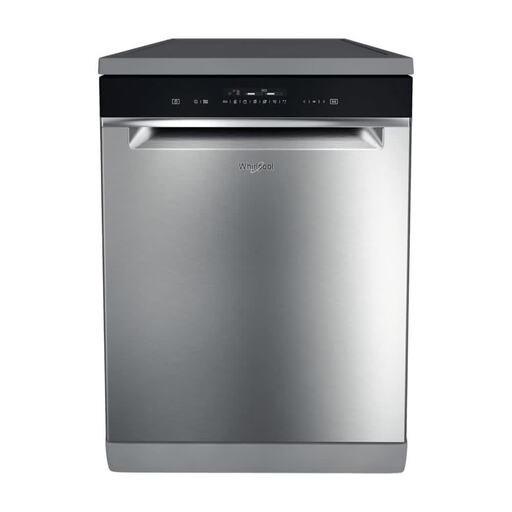 Image unavailable
Whirlpool WFP5O41PLGX, 60 cm freestanding dishwasher, 14 place settings
Its stated capacity of 14 place settings may suit you if you combine dishes from several meals, but check there’s room for your larger utensils too. The product title lists an energy rating of C and a stainless-steel finish. Check the exact dimensions and the connections available in your chosen space.
View on Joybuy
 Image unavailable
Hotpoint H4FD641A, 60 cm freestanding dishwasher, 14 place settings
This model, listed as holding 14 place settings, is worth considering if you combine dishes from several meals in one load. The title lists a noise level of 41 dB, an energy rating of C and a white finish. Check the exact dimensions before deciding whether it will fit in your kitchen.
View on Joybuy
 Image unavailable
Indesit D2F HK26 S, 60 cm freestanding dishwasher, 14 place settings
The stated capacity of 14 place settings gives you a point of comparison if you wash dishes from several meals together. The title lists an energy rating of E and a grey finish. Check the model’s label to compare its energy and water use, and make sure it will fit in your chosen space.
View on Joybuy
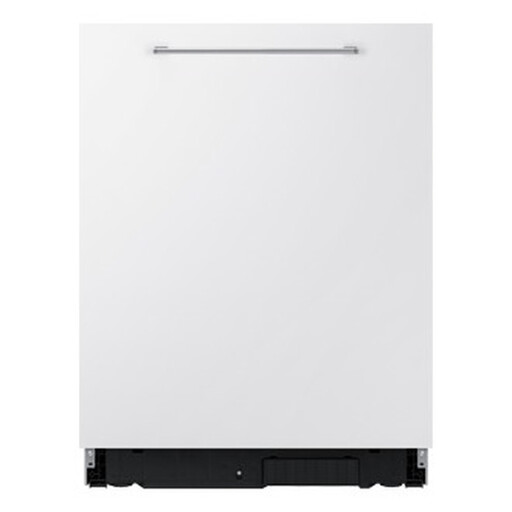 Image unavailable
Samsung DW70H72WCB0U1, 60 cm integrated dishwasher, 13 place settings
This integrated model, listed as holding 13 place settings, is worth considering if your kitchen has a purpose-made housing unit. The title lists an energy rating of C. Check the exact dimensions, door-panel compatibility and connections before choosing it.
View on Joybuy
Frequently asked questions
Which connections should you check before buying?
A dishwasher needs a water supply, an electrical supply and a waste-water outlet, as UFC-Que Choisir points out. Check that these are accessible from your chosen location, then follow the model’s instructions for connection requirements and hose lengths.
Should you choose a 60 cm, 45 cm or compact model?
Choose a width that suits your available space and the dishes you need to wash in one cycle. UFC-Que Choisir generally lists 12 to 17 place settings for 60 cm models, 9 to 10 for 45 cm models and fewer than 9 for compact models. Then check that the baskets can accommodate your dishes and pans.
What should you compare on the energy label?
Compare the energy rating, kWh per 100 cycles, litres per cycle, capacity, Eco programme duration and noise level. ADEME and the European Commission present these figures as useful points of comparison; the figures for the Eco cycle won’t necessarily reflect a quick programme.
How can you estimate energy and water use over a year?
Start with the number of Eco cycles you expect to run. Multiply the kWh per 100 cycles shown on the label by that number, then divide by 100. To estimate water use, multiply the litres per cycle by the same number of cycles; divide by 1,000 if you want the result in cubic metres. These calculations apply to the programme used for the figures on the label.


