What should you check before choosing?
Start with the available space and connections, then check the capacity against your usual loads. To compare how different models perform, ADEME and European energy labelling rules provide benchmarks based on the Eco programme.
| Priority |
What to check |
Think about your needs |
| Size and capacity |
Measure the width, height and depth; compare the number of place settings with the space needed for the connections. Bosch, for example, offers 45 and 60 cm freestanding models, as well as tabletop models. Check the dimensions of each specific model. |
I want to wash my usual loads without installing an appliance that gets in the way or sticks out beyond its allotted space. |
| Water and electricity |
According to ADEME, the energy label shows electricity use in kWh per 100 reference cycles and water use in litres per cycle. Compare these figures across models, then consider how often you’ll use yours. |
I do washing-up often enough that I want to compare running costs, rather than choosing based on the energy rating alone. |
| Cycle duration |
Check the Eco programme duration on the energy label. European rules use this programme as the basis for comparison, so the figures don’t tell you how long a quick cycle takes or how much it uses. |
If I need clean dishes again quickly, the cycle duration needs to work with my daily routine. |
| Noise |
Compare the noise level in dB and the noise rating shown on the labels of the models you’re considering. Don’t assume noise levels based on width alone. |
In an open-plan kitchen, I expect to run the dishwasher while people are using the living area. |
| Installation |
Check the model’s instructions for its location, water inlet, drainage and electrical connection. For a built-in appliance, also check its installation diagram. |
Before delivery, I want to know whether the appliance can be installed in the space I’ve chosen and connected to my existing setup. |
Which brands should you compare?
These brands offer a range of sizes and features to compare, though specifications vary by model.
Bosch
Bosch’s French range includes 45 and 60 cm freestanding models, as well as compact tabletop appliances.
- These sizes let you weigh up space constraints and the capacity you need separately.
- Check the dimensions, place settings, noise and consumption figures for the specific model: size alone won’t tell you these.
Beko
Beko’s French range includes freestanding models with different capacities, including one advertised as holding 15 place settings.
- Depending on the model, Beko’s product information includes details such as capacity, a delay start or noise level.
- Don’t assume a feature or energy rating applies to the whole range. Check the energy label and instructions for the model you choose.
Miele
Miele offers 60 cm freestanding models, with features and noise figures that vary by model.
- Miele’s product information for the G 5812 SC Active Plus lists an A energy rating, 42 dB and a 3D Multiflex cutlery tray.
- These specifications apply to this model, not to every Miele dishwasher.
Dishwashers to consider on Joybuy
This selection on Joybuy includes freestanding models for 14 place settings and a tabletop appliance for six. Compare their size and capacity with your kitchen and washing-up routine. Choosing a built-in model for an existing space involves additional checks.
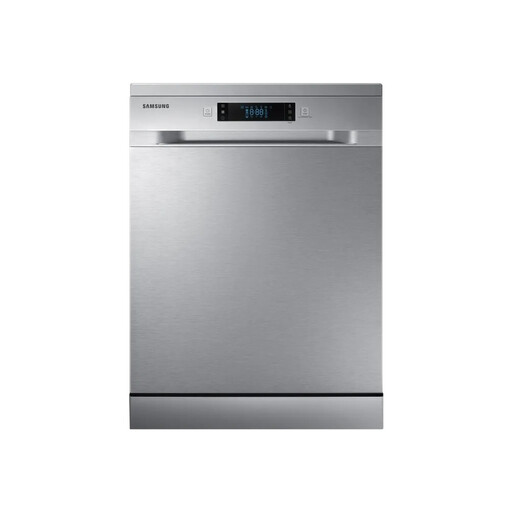 Image unavailable
Samsung DW60M6050FS, freestanding, 14 place settings
Worth considering if your daily loads call for a capacity of 14 place settings. The product name lists seven cycles; check the dimensions, connections and Eco programme figures for this model.
View on Joybuy
 Image unavailable
Indesit D2F HK26 S, 60 cm freestanding, 14 place settings
Check that this 60 cm model and its capacity suit your available space and washing-up loads. The product name lists an E energy rating; check the model’s label for its consumption figures and Eco programme duration.
View on Joybuy
 Image unavailable
Hotpoint H4FD641A, 60 cm freestanding, 14 place settings
For regular loads, the product name lists 14 place settings, 41 dB and a C energy rating. Check these details against the model’s energy label. The description warns of a burn risk when the door opens automatically after a hot cycle. Keep children away and follow the instructions.
View on Joybuy
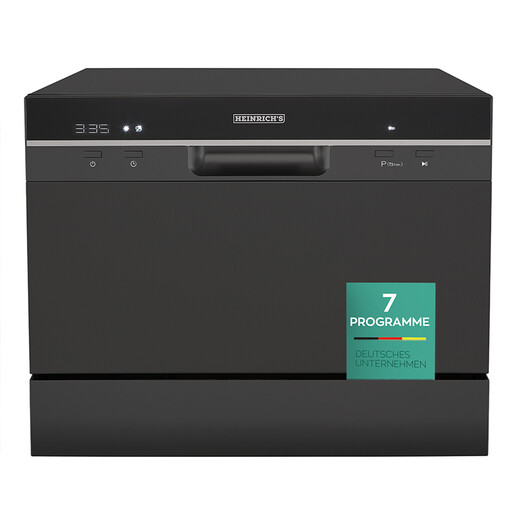 Image unavailable
Heinrich's HTG 8840 Schwarz, tabletop, six place settings
This tabletop model could suit smaller loads if six place settings are enough for your household. Its name lists seven programmes, 47 dB and a D energy rating. Measure the space available and check the exact dimensions and connections before ordering.
View on Joybuy
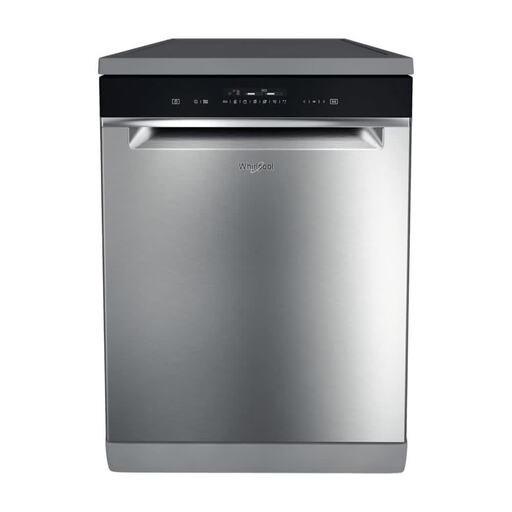 Image unavailable
Whirlpool WFP5O41PLGX, 60 cm freestanding, 14 place settings
Its stated capacity could suit larger loads, but check its overall size first: the 60 cm width in the product name doesn’t match the dimensions in the description. Check the installation diagram and model label for noise levels and Eco programme duration.
View on Joybuy
Frequently asked questions
How much washing-up makes a first dishwasher worthwhile?
Think about the loads you can build up regularly rather than a set number of people or meals. Compare this with the place settings listed for the model, then check whether its Eco programme duration works with your routine.
Which figures should you compare on the energy label?
Compare capacity, kWh per 100 cycles, litres per cycle, Eco programme duration and noise, as well as the energy rating. ADEME and European rules show consumption figures based on the reference programme; they don’t directly describe a quick cycle.
What should you check before delivery?
Measure the width, height and depth of the space, then check the model’s instructions for the water inlet, drainage and electrical connection. A stated width of 45 or 60 cm is no substitute for checking the exact model’s dimensions and installation instructions.
How should you look after your dishwasher day to day?
Follow the model’s instructions for cleaning the filter and, where applicable, using dishwasher salt and rinse aid. Whirlpool recommends cleaning the filter regularly; always follow the instructions for your appliance on how and how often to do this.
What should you do with an old dishwasher in France?
An old dishwasher should be disposed of through the waste electrical and electronic equipment (WEEE) scheme. France’s Ministry for Ecological Transition outlines a collection and treatment system for household appliances. Ask the retailer, your local authority or a collection point which option is right for you.


