If meals regularly fill your dishwasher, first consider a 60 cm model if you have the space. Then compare the basket layout, noise levels and Eco programme figures. An integrated model also needs a compatible niche, door front and plinth; a 45 cm model is an option when width is limited, but leaves less room for dishes and cookware.
Who is this guide for?
Households with lots of washing-up
If plates, pans and dishes pile up between cycles, start by checking how much usable space the baskets offer. A 60 cm model is worth considering if you have the width; the stated number of place settings alone won’t tell you whether your larger dishes will fit.
Households with an open-plan kitchen or evening cycles
If the appliance runs near your living space, compare its decibel rating and noise class rather than relying on a general claim that it’s “quiet”. ADEME notes that a 3 dB increase corresponds to almost twice the noise level.
Households with limited space
A narrow kitchen may point you towards a 45 cm model. If you’re replacing an integrated appliance, measure the niche, door front and plinth too: Bosch says these can determine which door system is suitable for an integrated model.
What should you check?
Start with the space and connections, then compare the stated capacity with the dishes you use regularly. Freestanding and integrated describe installation types; they don’t replace the choice between 45 cm and 60 cm.
| Factor |
What to check |
Who is it for? |
| Usable capacity |
Compare the number of place settings and the space available for dishes in the baskets. Don’t assume that width alone tells you how much you can load. |
If washing-up from meals piles up, I want to fit my pans and dishes in too, without having to run extra cycles; around 40% of consumers put this capacity first. |
| Space and installation |
Measure the width, height and depth, and locate the water inlet, waste outlet and electrical supply. For an integrated model, check the door front and plinth too. |
If I’m replacing an integrated appliance or have limited width, the new model needs to fit and connect properly above all else; around 30% of consumers prioritise this compatibility. |
| Noise |
Check the model’s dB rating and noise class rather than relying on marketing descriptions. |
In an open-plan kitchen, I want to be able to start a cycle without it disrupting time spent in the living space; quiet operation is the main concern for around 20% of consumers. |
| Consumption and cycle length |
Compare energy use in kWh/100 cycles, water use in litres/cycle and the Eco programme duration on the same basis. |
When I run cycles frequently, I want to know the stated consumption and plan when the dishes will be ready; around 10% of consumers put these figures first. |
Mistakes to avoid
-
Choosing based only on “45 cm” or “60 cm”
Width tells you how much space an appliance takes up, not how much room there is for each dish. As examples specific to their own models, Whirlpool states that its 45 cm WSFO 3T223 P holds 10 place settings, while Electrolux states that its 60 cm KESC7300L holds 13.
Compare the place-setting capacity, full dimensions and basket layout with the items you use regularly.
-
Ordering an integrated model before measuring your kitchen
Compatible width isn’t enough if the niche, door front or plinth prevents the chosen model from being installed.
Measure the niche in all three dimensions, note the plinth height and door-front type, then check the installation diagram for the exact model.
You may need to modify the unit or door front, or arrange installation work, if the door system isn’t compatible.
-
Taking “quiet” as a measured noise level
Noise matters particularly when the dishwasher runs in an open-plan kitchen or in the evening. According to ADEME, an extra 3 dB corresponds to almost twice the noise level.
Compare the decibel ratings and noise classes for the models you’re considering, while also taking capacity and dimensions into account.
-
Confusing a quick cycle with the Eco programme
The duration of a quick programme doesn’t necessarily reflect the cycle used for consumption figures. The EU regulation on dishwasher energy labelling links the displayed water, energy and duration figures to the Eco programme.
Use the Eco figures to compare appliances, then check the duration and conditions of the quick cycle separately if you plan to use it.
Brands to consider
Bosch
In France, Bosch offers 45 cm and 60 cm dishwashers, both freestanding and integrated.
- Model specifications include details such as dimensions and Eco programme figures, which are useful when comparing two specific models.
- For an integrated model, check the niche, door front and plinth for the model you’ve chosen: Bosch’s installation advice doesn’t mean all its appliances are interchangeable.
Whirlpool
In France, Whirlpool offers 45 cm and 60 cm models, both freestanding and integrated.
- Whirlpool states that its 45 cm WSFO 3T223 P holds 10 place settings, a useful figure to compare with your usual load.
- This capacity and the programmes on this model don’t represent the whole range; check the installation instructions for your chosen model too.
Miele
Miele offers freestanding and integrated models in slim and standard sizes; the brand states that its freestanding models hold between 9 and 14 place settings, depending on the model.
- This range gives you options for different width and loading requirements, with details available in the specifications for each model.
- Don’t assume that a basket, drying method or quick programme listed for one model will be available on others.
Dishwashers available on Joybuy
These 60 cm models, both freestanding and integrated, are worth considering for frequent meals. First choose the installation type that suits your kitchen, then check the loading space and specifications of the exact model.
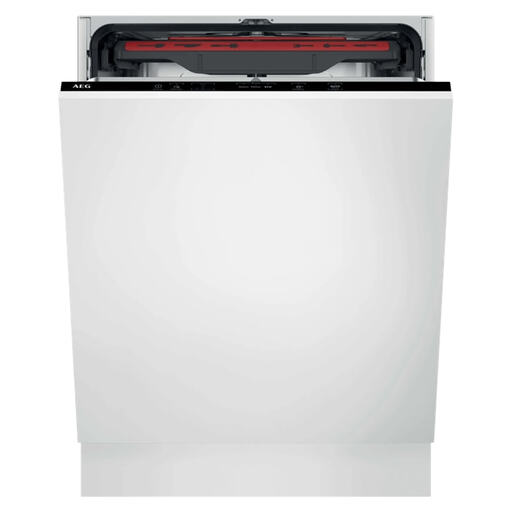 Image unavailable
AEG FSB34707Z fully integrated, 14 place settings, class C
Worth considering for regular loads in a kitchen designed for a fully integrated appliance. The title states 60 cm, but another dimension of 68 cm appears in the information for this model. Check the appliance and niche measurements in the instructions before ordering.
View on Joybuy
 Image unavailable
Indesit D2F HK26 S freestanding, 60 cm, 14 place settings, class E
A freestanding model is suitable if you have the space and connections, and don’t need a unit door fitted to the front. It’s stated to hold 14 place settings; check that the baskets can accommodate the dishes you use regularly too. To compare consumption, look at the Eco programme figures rather than the duration of another cycle.
View on Joybuy
 Image unavailable
Samsung DW60M6050FS freestanding, 14 place settings, 7 cycles
This freestanding model is worth considering if you need a stated capacity of 14 place settings for frequent loads. Check its dimensions against the space available, then compare the consumption figures and Eco programme duration in the model specifications.
View on Joybuy
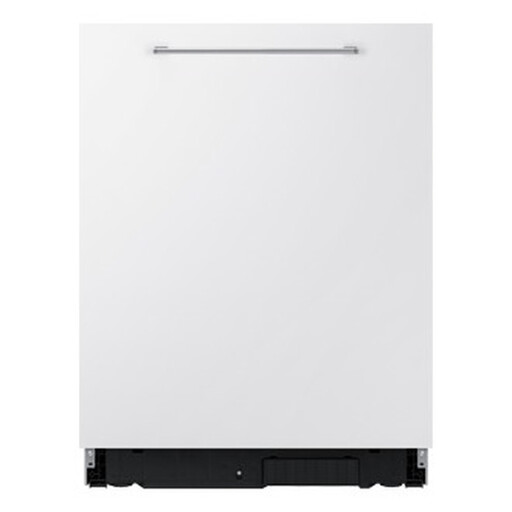 Image unavailable
Samsung DW70H72WCB0U1 integrated, 60 cm, 13 place settings, class C
Consider this model if your kitchen is set up for an integrated appliance and its stated capacity of 13 place settings suits your loads. Check the niche, door front and connections before choosing it. For frequent use, compare its Eco figures with those of the other appliances you’re considering too.
View on Joybuy
 Image unavailable
Samsung DW80H72YBB0U1 integrated, 60 cm, 13 place settings, class B
This integrated model, stated to hold 13 place settings, is worth considering if you often run cycles in the evening. Compare noise levels for the programme you plan to use: a rating given for Extra Silence doesn’t describe every cycle. Check the niche, door front and Eco figures for the model too.
View on Joybuy
Frequently asked questions
How do you compare the energy and water use of two dishwashers?
Compare the figures for the Eco programme: energy, water and duration. EU dishwasher energy-labelling regulations require these values to be measured or calculated on this basis, at rated capacity; don’t use the duration of a quick cycle instead.
Is a 45 cm dishwasher big enough if you cook often?
A 45 cm model may suit you if space is limited and its capacity and baskets can accommodate your dishes, even if you need to run cycles more often. UFC-Que Choisir says this size may suit a small family, with the appliance potentially running daily; above all, check that there’s enough room for your dishes.
What should you check before installing an integrated model?
Measure the niche and check that the door front, plinth and door system are compatible with the model, using its instructions as a guide. Also make sure there’s a water inlet, waste outlet and electrical supply where the appliance will go.
Should you pre-rinse dishes before every cycle?
No. ADEME advises against pre-rinsing dishes and recommends waiting until the dishwasher is full before starting it. Remove large food scraps, following the instructions for your appliance.


