No water supply at the worktop
You’ll need to supply water to the appliance without a permanent connection, and direct the waste water to a sink or another suitable drain. Daan Tech describes both steps for its Bob model with a tank.


If there’s no fixed water supply where you plan to put your dishwasher, a mini dishwasher with a tank avoids the need for a permanent connection, but you’ll need to fill it by hand and drain the waste water. A model that connects temporarily to the tap is another option if your tap is compatible. A permanently connected appliance is only suitable if a water supply and drain are available, or can be installed in line with the rules for your home.
You’ll need to supply water to the appliance without a permanent connection, and direct the waste water to a sink or another suitable drain. Daan Tech describes both steps for its Bob model with a tank.
A tank model or one that connects temporarily to the tap can avoid changes to your plumbing. If you’re considering any work, check your tenancy agreement and the rules that apply to your home first.
Place settings alone won’t help you decide between sizes. Also compare your plates and the amount of washing-up you produce between cycles. The capacities listed for the tabletop models reviewed by Daan Tech and Klarstein differ from that of the compact Valberg model featured by Electro Dépôt.
In a kitchenette without a fixed water supply, a tank, a temporary tap connection and a permanent connection each have different installation requirements. Whatever you choose, plan where the appliance will go and how you’ll drain the water.
Consider this if : you can fill the appliance and position its drain hose to reach a suitable drain, without needing a fixed water supply.
Be prepared for : filling it by hand and arranging the drainage every time you use it.
Consider this if : your tap is accessible and compatible with the model’s connector. Klarstein says its Oceana and Aquatica models can connect to a tap without a permanent installation.
Be prepared for : the tap being occupied for the duration of the cycle, and the hoses needing to be fitted without being pulled tight.
Consider this only if : a permanent water supply and drain are available, or can be installed in your home.
Be prepared for : this option won’t, on its own, solve the lack of a water supply where you plan to put the appliance. Any changes to your home need to be checked first.
| Criteria | What to check | Who this matters to |
|---|---|---|
| Water supply and drainage | Check how the appliance is filled or whether your tap is compatible, then check the route and positioning of the drain hose. | Without a fixed supply, I want to run the appliance without building work and be able to drain the water after every cycle. Around 42 % of consumers would prioritise this freedom to manage the water supply and drainage. |
| Capacity and dishes | Compare the stated capacity with the dishes from one meal and check the maximum plate diameter it can accommodate. | If several meals’ worth of washing-up quickly fills the sink, I’d rather cut down on cycles and handling water. This would be the main requirement for around 33 % of consumers. |
| Reversible installation | Find a suitable socket away from potential leaks. Before making any permanent changes, check the rules for your home and whether you need permission. | In a rented home, I want to be able to remove the appliance without having altered the kitchen. Reversible installation and placement would be priorities for around 25 % of consumers. |
The tank replaces the water supply for filling the appliance, not the drain for the waste water. For Bob, Daan Tech specifies a hose that should be directed into the sink or another suitable drain.
Measure the distance to the drain and check the hose length and how it will stay in place throughout the cycle.
A stated capacity doesn’t guarantee that your large plates or all the dishes from a meal will fit in the rack. Daan Tech lists Bob as holding 2 place settings under the European standard, Klarstein lists 3 for Oceana, and Electro Dépôt lists 6 for the Valberg 6S47 D WAD929C V2.
Measure your plates and compare the dishes from a typical meal with the usable dimensions given for each model.
Plan the water and electricity routes together. Promotelec advises against installing a socket above the sink basin or hob, for example.
Choose a position where the hoses and their connections won’t direct a leak towards the socket.
Connecting an appliance temporarily and altering the plumbing in your home are not the same thing. The ADIL de la Moselle notes that tenants need their landlord’s permission to make changes to the premises or equipment.
Before planning a permanent connection, check exactly what work is involved and ask your landlord for permission if required.
The Bob model is an example of a tabletop dishwasher supplied from a tank, with the option of connecting it to a water supply, according to Daan Tech.
Klarstein says its Oceana and Aquatica tabletop models can connect directly to a tap, without a permanent installation.
The Valberg 6S47 D WAD929C V2 is a useful comparison if you’re looking at a compact appliance with a larger capacity.
These tabletop models are worth considering for small loads in a kitchenette. The first four list a tank or manual filling in their specifications. For the last one, check how it’s supplied with water before choosing it for a location without a fixed supply. In every case, make sure you can drain the waste water.
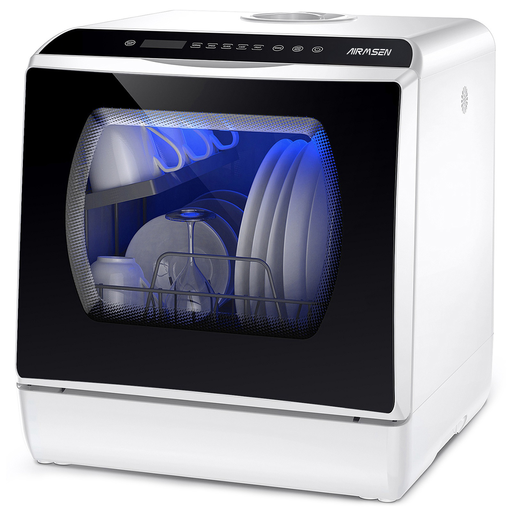 Image unavailable
Worth considering if you want to fill the appliance without a fixed water supply where it will be installed.
The title lists a built-in 5 L tank and 5 + 1 wash cycles. Before choosing a spot, check that the drain hose will reach the drain and stay in place.
 Image unavailable
The tank makes manual filling an option if there’s no fixed water supply where you plan to put the appliance.
The title lists 6 + 3 programmes. Check the route and positioning of the drain hose. If you’d rather connect it to a tap, check that the tap is compatible and find out which accessories you’ll need.
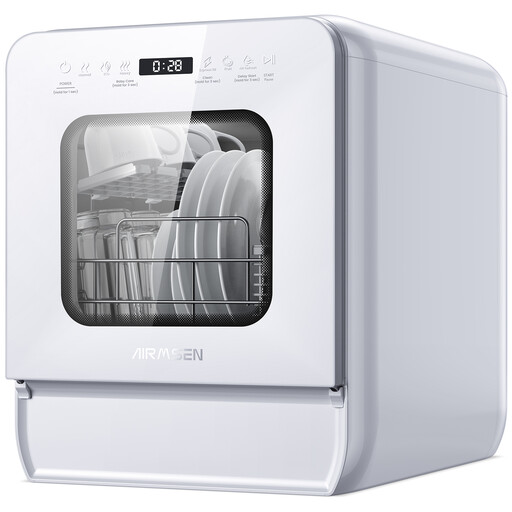 Image unavailable
The tank listed meets the need for filling the appliance without a fixed supply, but make sure you measure the available worktop space.
The title lists 9 programmes and dimensions of 37 × 50 cm. Check the drainage system, the hose length and how you’ll keep it in place at your drain.
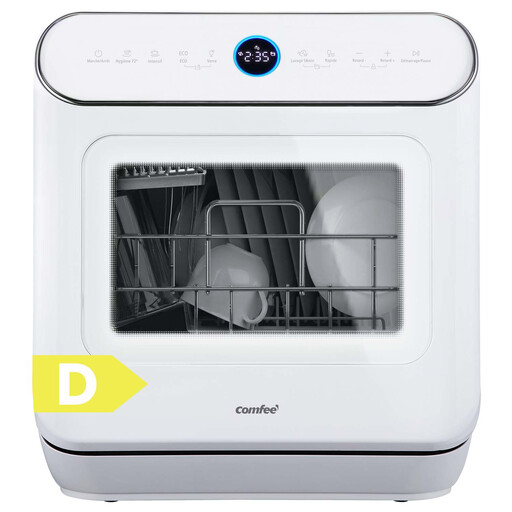 Image unavailable
Its manual filling option is worth considering if you can’t connect the appliance to a fixed water supply.
The title lists 7 programmes. Before buying, check how the waste water is drained and whether the hose can reach a suitable drain and stay in place.
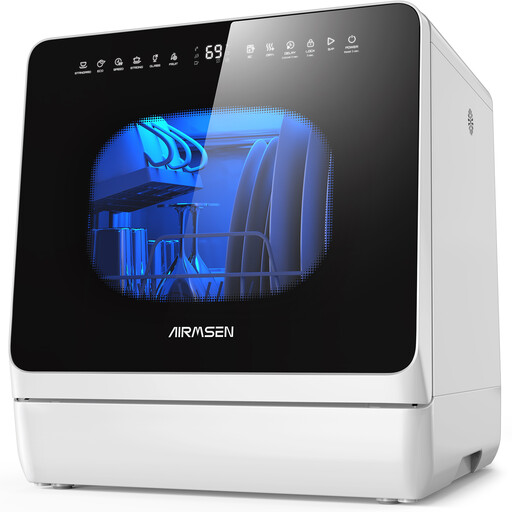 Image unavailable
This tabletop model is worth considering for a kitchenette, provided you can confirm that it can be supplied with water where you plan to put it.
The title lists 8 programmes but doesn’t specify the water supply method behind its claim that no connection is needed. Also check how to route the waste water hose and keep it in place.
Yes, if you can fill its tank by hand, but you’ll still need to drain the waste water. For Bob, Daan Tech specifies a hose that should be placed in a sink or another suitable drain. Check that this will work in your chosen location.
No. You’ll need to check that the model is compatible with your tap. Klarstein says its Oceana and Aquatica models can connect to a tap. Before choosing this option, check the connector, whether you need an adapter and how the hoses will run.
Position it so the water can drain without exposing the electrical supply to leaks. Promotelec advises that sockets should not be installed above the sink basin or hob. Also check the actual route of the connectors and hoses.
Before making a permanent change to the plumbing, check what work is involved and ask your landlord for permission if required. The ADIL de la Moselle distinguishes between alterations and changes to the premises or equipment, which require the landlord’s permission. The rules that apply to your home may also be relevant.